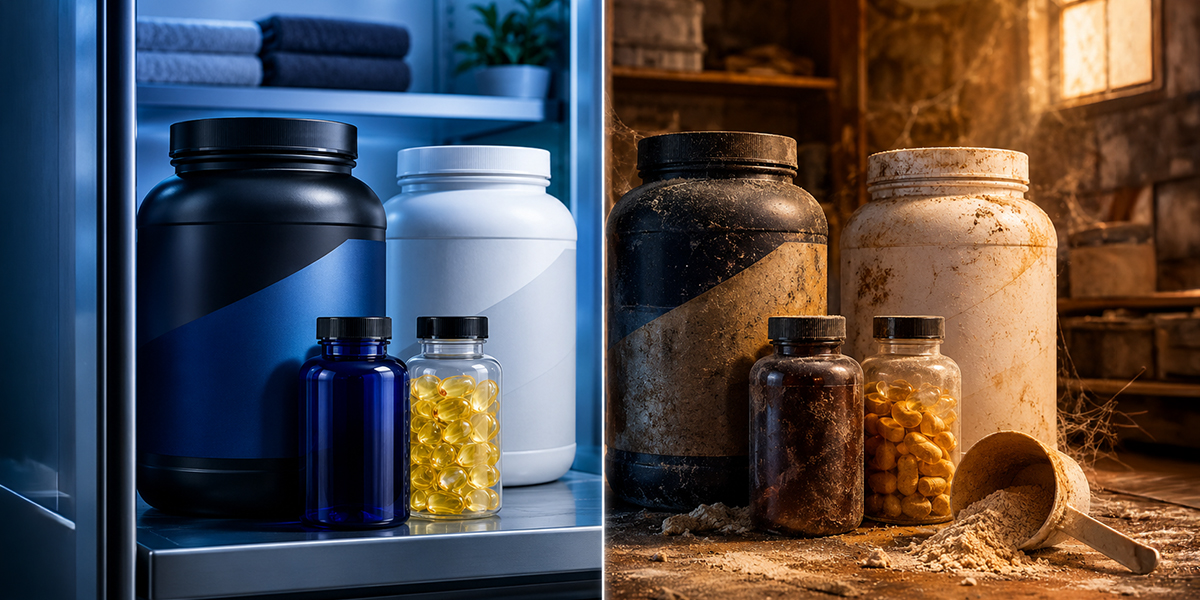


Proper storage plays a major role in maintaining the quality, potency, and safety of dietary supplements, including vitamins and protein powders.
Exposure to heat, direct light, moisture, or air may reduce supplement effectiveness over time. This can affect the nutritional value, taste, texture, shelf life, and overall performance benefits of the product.
Table of Contents
Why Supplement Storage Matters
Vitamins, minerals, protein powders, amino acids, and other supplements are made with ingredients that may be sensitive to environmental conditions.
Poor storage may reduce product stability, change texture, affect flavor, and lower the potency of certain nutrients before the expiry date.
This is especially important in hot climates or places where supplements may be exposed to temperature changes, humidity, sunlight, or air after opening.
How Heat Affects Vitamins
High temperatures can reduce the stability of some vitamins, especially those that are more sensitive to heat.
Vitamin C and several B-complex vitamins may lose potency when exposed to prolonged heat. This means the supplement may still look normal, but the active nutrient amount may gradually decrease.
Keeping vitamins in hot areas such as cars, near windows, or close to cooking appliances may shorten their shelf life and reduce their nutritional value.
- Heat may break down sensitive vitamins.
- Vitamin C and B vitamins are more vulnerable to heat exposure.
- Long-term heat can reduce product potency.
- Hot storage areas may shorten shelf life.
- Cool, stable storage helps preserve vitamin quality.
The Impact of Light and Air
Light and oxygen can accelerate oxidation, a process that may reduce the stability of some nutrients.
Fat-soluble vitamins such as vitamins A, D, and E may be affected by oxidation over time, especially if containers are left open or stored in transparent packaging exposed to light.
Repeated exposure to air after opening may also reduce freshness and quality, particularly when lids are not closed tightly.
| Storage Factor | Possible Effect | Best Practice |
|---|---|---|
| Heat | May reduce vitamin potency | Store in a cool place |
| Light | May accelerate nutrient degradation | Keep away from direct sunlight |
| Air | May increase oxidation | Close lids tightly after use |
| Moisture | May cause clumping or spoilage risk | Keep products dry |
Moisture and Its Effect on Protein
Moisture is one of the biggest enemies of protein powders and powdered supplements.
Humidity can cause protein powder to clump, harden, change texture, or lose freshness. In poor storage conditions, moisture may also increase the risk of microbial growth, especially if the product is contaminated with wet scoops or exposed to humid air frequently.
Keeping protein powder dry helps maintain its quality, mixability, flavor, and safety throughout its shelf life.
Best Storage Practices
The best way to preserve supplement quality is to store products in a stable environment that is cool, dry, and protected from direct sunlight.
Avoid storing supplements in places where temperature and humidity change frequently, such as kitchens, bathrooms, cars, or near windows.
For protein powders, always keep the scoop dry, close the lid immediately after use, and avoid leaving the container open for long periods.
- Store supplements in a cool, dry place.
- Keep them away from direct sunlight.
- Avoid bathrooms, cars, and hot kitchens.
- Close containers tightly after every use.
- Keep scoops dry and clean.
- Do not expose powders to steam or humidity.
- Follow the storage instructions on the label.
Why Packaging Matters
Original supplement containers are designed to protect products from environmental factors such as light, air, and moisture.
Transferring supplements into unsealed, transparent, or unsuitable containers may reduce protection and increase exposure to heat, light, humidity, and oxygen.
Keeping supplements in their original packaging with the lid tightly closed helps preserve product quality and makes it easier to track expiry dates, batch numbers, and usage instructions.
| Packaging Practice | Why It Matters | Recommendation |
|---|---|---|
| Original Container | Designed to protect the product | Keep supplements in original packaging |
| Tightly Closed Lid | Reduces air and moisture exposure | Close immediately after each use |
| Transparent Containers | May allow light exposure | Avoid unless designed for supplement storage |
| Loose Bags or Unsealed Jars | Increase risk of moisture and contamination | Use sealed, protective packaging only |
Frequently Asked Questions
Can heat reduce the effectiveness of vitamins?
Yes. Prolonged heat exposure may reduce the potency of sensitive vitamins, especially vitamin C and some B-complex vitamins.
Can protein powder go bad from moisture?
Moisture can cause protein powder to clump, change texture, lose freshness, and may increase spoilage risk if storage conditions are poor.
Is it safe to store supplements in the kitchen?
It is better to avoid storing supplements near ovens, stoves, steam, or heat sources. A cool, dry cabinet away from heat may be acceptable.
Should I keep supplements in the original container?
Yes. Original containers are designed to protect the product and keep important information such as expiry date, batch number, and usage instructions.
Can I leave supplements in the car?
No. Cars can become very hot and may expose supplements to temperature changes that can reduce quality and shelf life.
Conclusion
Proper storage helps protect the potency, freshness, and safety of vitamins and protein supplements.
Keeping supplements away from heat, light, moisture, and air can help preserve their effectiveness and support better health and performance results. Simple habits such as closing lids tightly, avoiding humid areas, and using original packaging can make a big difference in product quality over time.