

Creatine is one of the most researched sports nutrition supplements, widely used to support strength, power, muscle performance, and training adaptation.
One of the most common concerns about creatine is water retention. Many people believe it causes bloating or water storage under the skin, but the scientific understanding is different. Creatine-related water retention occurs mainly inside muscle cells, where it supports muscle fullness, hydration, and performance.
Table of Contents
Why Creatine Is Linked to Water Retention
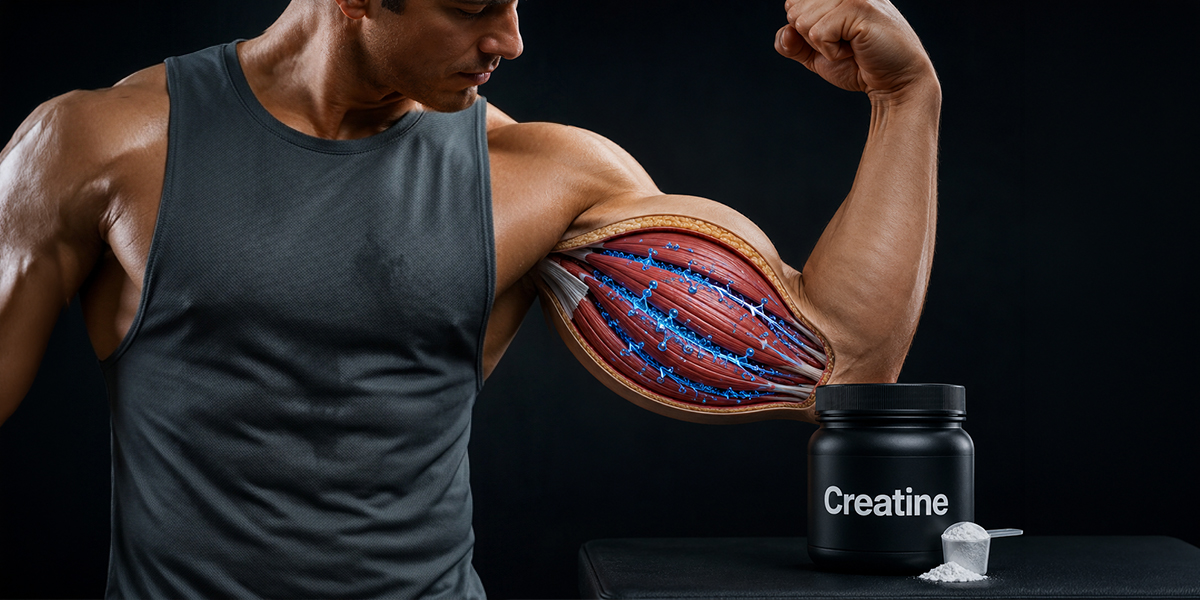
Creatine helps increase the amount of stored creatine and phosphocreatine inside muscle cells.
As creatine levels rise in the muscles, water can also move into the muscle cells to support cellular hydration. This is why some people notice a small increase in body weight during the first days or weeks of creatine use.
This increase is not the same as fat gain or unhealthy water retention. In most cases, it reflects better water content inside the muscle tissue.
Intramuscular vs. Subcutaneous Water Retention
It is important to understand the difference between intramuscular and subcutaneous water retention.
Intramuscular water retention means water is stored inside muscle cells. This is generally considered a positive effect because it supports muscle fullness, hydration, and training performance.
Subcutaneous water retention means water is held under the skin or between tissues, which may make the body appear softer or more swollen. This type of water retention is not the typical effect associated with creatine use.
| Type of Water Retention | Where It Happens | Effect on the Body |
|---|---|---|
| Intramuscular Water Retention | Inside muscle cells | Supports muscle fullness, hydration, strength, and performance |
| Subcutaneous Water Retention | Under the skin and between tissues | May create a softer or bloated appearance |
| Creatine-Related Water Increase | Primarily inside muscles | Usually improves muscle volume without increasing body fat |
How Creatine Draws Water into Muscle Cells
When creatine levels increase inside muscle fibers, the osmotic balance inside the muscle cell changes.
This causes water to move into the muscle cells, a process often described as cell volumization.
Cell volumization is not just temporary water weight. It may act as a positive cellular signal that supports an anabolic environment, helping the muscles recover and adapt to training.
- Creatine increases storage inside muscle cells.
- Water follows creatine into the muscle cell.
- This improves cellular hydration.
- Better hydration may support muscle performance.
- The effect is different from water retention under the skin.
Effects on Muscle Appearance and Performance
Increased water content inside muscles can make them appear fuller, firmer, and more volumized.
This does not mean creatine increases body fat or reduces muscle definition. In many users, creatine can improve the look of muscle fullness without causing a soft or watery appearance.
In addition to appearance, intramuscular hydration may support strength, power output, repeated sprint ability, and performance during high-intensity training.
Does Creatine Cause Bloating?
Some people may feel bloated when using creatine, but this is usually related to digestive discomfort, large single doses, or aggressive loading protocols.
This type of bloating is different from subcutaneous water retention. It usually happens in the digestive system rather than under the skin.
Using smaller daily doses, taking creatine with enough water, and avoiding excessive loading can reduce the chance of stomach discomfort.
- Use a moderate daily dose instead of very large doses.
- Split the dose if your stomach is sensitive.
- Drink enough water throughout the day.
- Take creatine with food if it causes stomach discomfort.
- Choose creatine monohydrate from a reliable brand.
Long-Term Benefits of Cellular Hydration
Intramuscular water retention from creatine is generally viewed as a beneficial physiological effect.
Better cellular hydration may support muscle protein synthesis, reduce muscle breakdown, and improve the environment for muscle growth and recovery.
Over time, when combined with resistance training and proper nutrition, creatine can support strength gains, improved training volume, and better long-term performance.
Frequently Asked Questions
Does creatine cause water retention?
Yes, creatine can increase water retention, but this occurs mainly inside muscle cells, not under the skin.
Does creatine make you look bloated?
Creatine usually does not cause subcutaneous water retention. If bloating occurs, it is more often related to digestive discomfort or high loading doses.
Will creatine make me gain fat?
No. Creatine does not increase body fat. Any early weight increase is usually related to water stored inside muscles and increased creatine storage.
Is water inside muscles a good thing?
Yes. Intramuscular water supports muscle fullness, hydration, strength, and may help create a better environment for training adaptation.
How can I reduce stomach bloating from creatine?
Use smaller doses, avoid unnecessary high loading doses, take it with food if needed, and drink enough water throughout the day.
Conclusion
Creatine does not typically cause water retention under the skin as commonly believed.
Instead, it increases water content inside muscle cells, which may improve muscle fullness, strength, recovery, and high-intensity performance. Understanding the difference between intramuscular and subcutaneous water retention helps correct common misconceptions and supports the safe, effective use of creatine when taken properly.