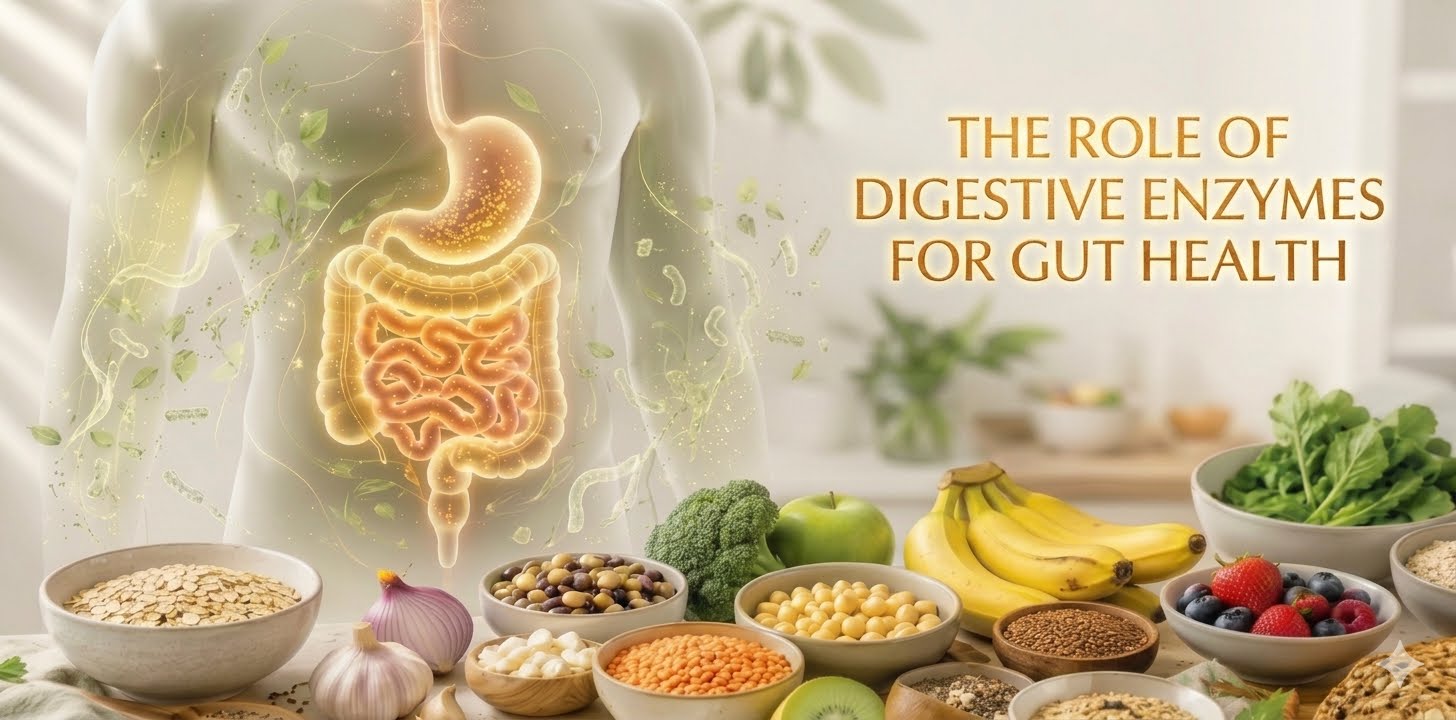


Digestive enzymes play a fundamental role in overall digestive health and nutrient utilization. Every time you eat, your body relies on a complex system of enzymes to break down food into smaller, absorbable components. Without this process, nutrients from proteins, fats, and carbohydrates cannot be properly absorbed, which may lead to digestive discomfort and nutritional deficiencies over time.
In today’s world, factors such as processed diets, stress, aging, and gut imbalance can reduce the body’s natural enzyme production. As a result, many individuals experience bloating, indigestion, fatigue after meals, and poor nutrient absorption. This is where digestive enzyme support becomes important.
Understanding how digestive enzymes work, their types, benefits, and natural sources can help improve digestion, enhance energy levels, and support long-term gut health.
Table of Contents
- What Are Digestive Enzymes and How Do They Work?
- Types of Digestive Enzymes and Their Functions
- Key Benefits of Digestive Enzymes for Gut Health
- Digestive Enzymes and Nutrient Absorption Improvement
- Signs You May Need Digestive Enzyme Support
- Natural Sources of Digestive Enzymes
- Digestive Enzymes vs Probiotics: What’s the Difference?
- Best Time and Way to Take Digestive Enzymes
- Possible Side Effects and Safety Considerations
- Who Can Benefit Most from Digestive Enzymes
- FAQ
- Conclusion
What Are Digestive Enzymes and How Do They Work?
Digestive enzymes are specialized proteins produced mainly by the pancreas, stomach, and small intestine. Their essential role is to break down food into smaller, absorbable components so the body can efficiently extract nutrients and energy.
Every time food enters the digestive system, enzymes are activated at different stages of digestion to ensure complete breakdown of macronutrients.
- In the mouth: Salivary enzymes begin breaking down carbohydrates into simpler sugars.
- In the stomach: Gastric enzymes start breaking down proteins in an acidic environment.
- In the small intestine: Pancreatic enzymes complete the digestion of proteins, fats, and carbohydrates.
Each enzyme is highly specific, meaning it targets only one type of nutrient. This precision allows food to be converted into amino acids, fatty acids, and glucose, which are then absorbed into the bloodstream and used for energy production, tissue repair, and essential cellular functions.
When enzyme production is insufficient, food may not be fully broken down. This can lead to bloating, indigestion, fatigue after meals, and poor nutrient absorption over time.
Types of Digestive Enzymes and Their Functions
Different digestive enzymes work together as a coordinated system, each responsible for breaking down specific nutrients in the diet.
1. Amylase
Amylase is responsible for breaking down carbohydrates into simple sugars such as glucose. It is found in saliva and pancreatic secretions and plays a key role in providing quick energy for the body.
Example product: Papaya Enzyme Supplement
2. Protease
Protease enzymes break down proteins into amino acids. These amino acids are essential for muscle repair, immune system function, hormone production, and overall tissue regeneration.
3. Lipase
Lipase is responsible for breaking down dietary fats into fatty acids and glycerol. These nutrients are important for brain health, hormone regulation, and long-term energy storage.
4. Lactase
Lactase breaks down lactose, the natural sugar found in dairy products. Low levels of lactase may lead to lactose intolerance, which often causes symptoms such as bloating, gas, and digestive discomfort after consuming dairy.
Example product: Lactase Enzyme Supplements
5. Cellulase
Cellulase is not naturally produced by the human body, but it plays an important role in breaking down plant fibers (cellulose). This supports better digestion of vegetables and plant-based foods, improving overall gut efficiency.
Each enzyme works in synergy to ensure that food is properly digested, nutrients are absorbed efficiently, and the digestive system functions smoothly without unnecessary strain.
Key Benefits of Digestive Enzymes for Gut Health
Digestive enzymes provide several essential benefits that directly support gut health, digestion efficiency, and overall well-being. When enzyme activity is balanced, the digestive system works more smoothly and comfortably.
1. Improved Digestion Efficiency
Digestive enzymes help the body break down food more effectively, reducing the workload on the stomach and intestines. This allows the digestive system to function more efficiently and prevents unnecessary digestive strain.
2. Reduced Bloating and Gas
When food is properly broken down, it is less likely to ferment in the gut. This helps reduce common digestive issues such as bloating, gas formation, and abdominal pressure after meals.
3. Better Digestive Comfort
Enzymes support smoother and more complete digestion, which helps reduce feelings of heaviness, discomfort, and sluggishness after eating. This leads to a more comfortable post-meal experience.
4. Enhanced Gut Function
Efficient digestion contributes to a healthier gut environment. By reducing undigested food particles in the digestive tract, enzymes help maintain better gut balance and lower digestive stress over time.
Digestive Enzymes and Nutrient Absorption Improvement
One of the most important roles of digestive enzymes is their ability to improve nutrient absorption. Even a nutrient-dense diet becomes less effective if the body cannot properly break down food.
When enzyme activity is optimal, the body can efficiently extract and utilize essential nutrients:
- Proteins: Broken down into amino acids that support muscle repair, immune defense, and hormone production.
- Fats: Converted into fatty acids that support brain function, hormone balance, and long-term energy storage.
- Carbohydrates: Transformed into glucose, the body’s primary source of energy.
This efficient breakdown process ensures that vitamins and minerals are properly absorbed into the bloodstream, supporting immunity, energy production, and overall health.
When digestive enzymes are insufficient, nutrient absorption may decline, potentially leading to deficiencies even when dietary intake appears adequate.
Signs You May Need Digestive Enzyme Support
Low digestive enzyme activity or poor digestion can present through several noticeable symptoms. These signs often indicate that the body is struggling to break down food efficiently.
- Frequent bloating after meals
- Excess gas or abdominal discomfort
- Feeling overly full even after small meals
- Presence of undigested food in stool
- Low energy or fatigue after eating
- Nutrient deficiencies despite a balanced diet
When these symptoms occur regularly, it may suggest that the digestive system is not producing enough enzymes or is not functioning optimally. Addressing this early can help improve overall digestive comfort and nutrient utilization.
Natural Sources of Digestive Enzymes
Natural food sources can play an important role in supporting the body’s enzyme activity and improving overall digestive function. Including enzyme-rich foods in your daily diet may help enhance digestion and reduce digestive discomfort.
Pineapple (Contains Bromelain)
Pineapple is a rich natural source of bromelain, a powerful enzyme that helps break down proteins and supports smoother digestion.
Papaya (Contains Papain)
Papaya contains papain, an enzyme known for supporting protein digestion and improving gut comfort.
Mango
Mango contains natural enzymes that may support digestion and improve nutrient breakdown.
Explore Mango Extract Products
Bananas
Bananas support digestive health through their fiber content and natural enzyme activity that helps maintain gut balance.
Avocado
Avocado contains healthy fats and enzymes that support digestion and nutrient absorption while promoting gut comfort.
Fermented Foods
Fermented foods such as yogurt, kefir, kimchi, and sauerkraut naturally support digestive enzyme activity and promote a healthy gut environment.
Including these foods regularly in your diet can naturally enhance digestive function and support long-term gut health.
Digestive Enzymes vs Probiotics: What’s the Difference?
Although digestive enzymes and probiotics are often confused, they perform completely different but complementary roles in digestive health.
- Digestive enzymes: Break down food into smaller, absorbable nutrients such as amino acids, fatty acids, and glucose.
- Probiotics: Are beneficial bacteria that help maintain a balanced gut microbiome and support overall intestinal health.
In simple terms, enzymes act during digestion to break food down, while probiotics work continuously to maintain a healthy gut environment. Together, they support optimal digestive performance and gut balance.
Explore Digestive Enzyme Products
Best Time and Way to Take Digestive Enzymes
To achieve the best results, digestive enzyme supplements should be taken at the right time in relation to meals.
- Take enzymes just before eating or at the first bite of a meal.
- They are most effective when consumed with food containing proteins, fats, or complex carbohydrates.
Taking enzymes at the correct time ensures they mix properly with food in the stomach and small intestine, maximizing their digestive effectiveness.
Possible Side Effects and Safety Considerations
Digestive enzymes are generally safe when used correctly, but in some cases, mild side effects may occur, especially when starting supplementation.
- Mild stomach discomfort
- Nausea in sensitive individuals
- Rare allergic reactions
Individuals with underlying medical conditions, pregnant or breastfeeding women, or those taking medications should consult a healthcare professional before using digestive enzyme supplements.
Proper dosage and responsible use are important to ensure safety and effectiveness.
Who Can Benefit Most from Digestive Enzymes
Digestive enzyme support may be beneficial for a wide range of individuals, especially those experiencing ongoing digestive discomfort or reduced digestive efficiency.
- Individuals with frequent bloating or indigestion
- People with enzyme deficiencies
- Older adults with reduced natural enzyme production
- Those consuming high-protein or high-fat diets
- Individuals with food intolerances
Digestive enzymes can be especially helpful for improving digestion quality, supporting better nutrient absorption, and promoting overall gut comfort and balance.
FAQ
1. What are digestive enzymes used for?
They help break down food into smaller nutrients that the body can absorb and use for energy, repair, and overall health.
2. Are digestive enzymes safe to take daily?
Yes. They are generally considered safe when used appropriately, especially when taken with meals according to recommended dosage.
3. Can digestive enzymes help with bloating?
Yes. They may help reduce bloating by improving digestion and preventing undigested food from fermenting in the gut.
4. Do digestive enzymes improve nutrient absorption?
Yes. They support the breakdown of food into absorbable nutrients, allowing better absorption of vitamins, minerals, and macronutrients.
5. Who needs digestive enzyme supplements?
People with digestive issues, enzyme deficiencies, food intolerances, or poor nutrient absorption may benefit the most from supplementation.
Conclusion
Digestive enzymes are essential for maintaining an efficient and well-functioning digestive system. They play a critical role in breaking down food into usable nutrients, reducing digestive discomfort, and supporting overall gut health.
When enzyme activity is balanced—either through natural dietary sources or supplementation—digestion becomes smoother, nutrient absorption improves, and energy levels may increase.
Combining digestive enzyme support with a balanced diet and healthy lifestyle habits can significantly enhance long-term digestive wellness and overall quality of life.