

The dietary supplement industry has seen major developments in recent years, especially in how vitamins and nutrients are delivered and absorbed by the body.
Among these innovations, liposomal technology is considered one of the most important advances because it does not simply focus on increasing dosage. Instead, it focuses on improving nutrient protection, delivery, absorption, and cellular availability.
Table of Contents
What Is Liposomal Technology?
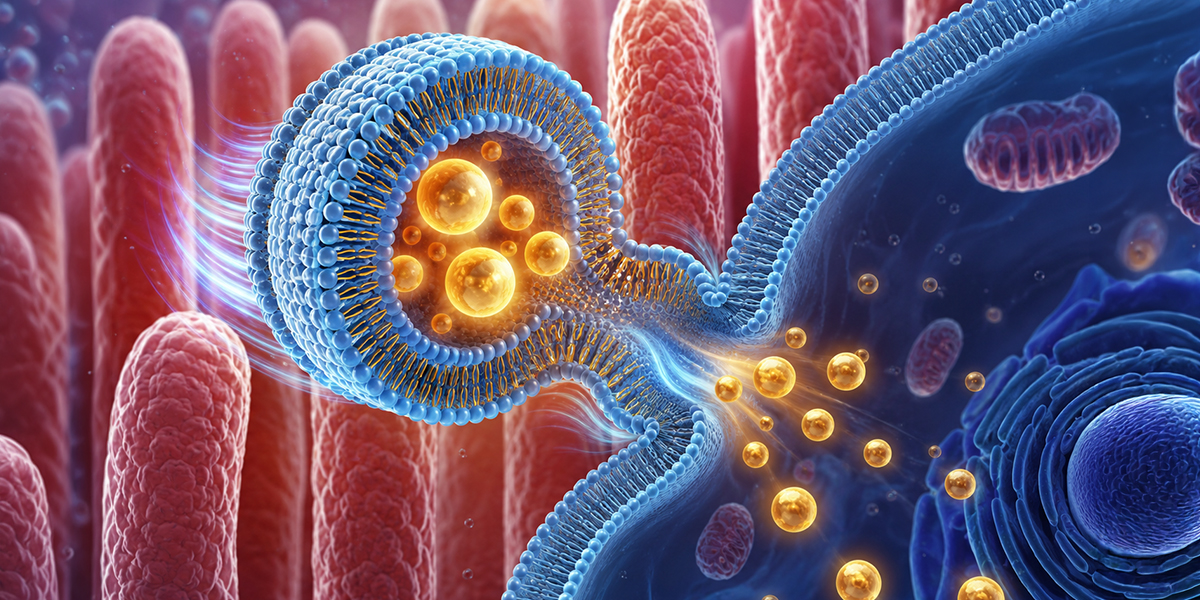
Liposomal technology is a delivery method that encapsulates nutrients inside tiny lipid-based structures called liposomes.
These liposomes are made from fat-like compounds that resemble the structure of human cell membranes. This design helps protect the nutrient and may support better interaction with the body’s natural absorption pathways.
Instead of relying only on a high dose, liposomal supplements aim to improve how efficiently the active ingredient reaches the bloodstream and becomes available for use.
The Problem with Traditional Absorption
With conventional supplements, vitamins and nutrients must pass through the digestive system before reaching the bloodstream.
During this process, nutrients may be exposed to stomach acid, digestive enzymes, bile, food interactions, and intestinal barriers. As a result, only part of the original dose may be absorbed and used by the body.
This does not mean traditional supplements are ineffective, but it explains why some nutrients may have limited absorption or may require larger doses to achieve the desired nutritional effect.
| Absorption Challenge | What Happens | Possible Result |
|---|---|---|
| Stomach Acid | May break down sensitive compounds | Lower active nutrient availability |
| Digestive Enzymes | May alter or degrade some nutrients | Reduced absorption efficiency |
| Intestinal Barriers | Nutrients must cross the intestinal lining | Only part of the dose may enter the bloodstream |
| Food Interactions | Some nutrients compete or interact with meals | Variable absorption between individuals |
How Liposomes Change This Equation
Liposomal technology changes the delivery process by surrounding the active ingredient with a protective lipid layer.
This lipid layer may help shield the nutrient during digestion, reducing breakdown before absorption. It also helps carry the nutrient in a form that is more compatible with biological membranes.
Because liposomes resemble cell membrane structures, they may help improve the way nutrients interact with the intestinal lining and support more efficient delivery compared with some traditional forms.
- Protects sensitive nutrients during digestion.
- Helps reduce nutrient breakdown before absorption.
- Uses lipid structures similar to cell membranes.
- May improve delivery into the bloodstream.
- Can support better utilization of the same dose in some cases.
Absorption Closer to the Body’s Natural Processes
One reason liposomal technology is considered advanced is that it works in a way that is closer to the body’s natural biological structures.
Human cell membranes are largely made of lipid layers. Liposomes use a similar concept, which may allow smoother interaction with the intestinal surface and cellular membranes.
This does not mean every liposomal product is automatically superior, but it shows why the delivery method has gained attention in advanced supplement formulation.
| Feature | Traditional Supplements | Liposomal Supplements |
|---|---|---|
| Delivery Method | Standard tablet, capsule, powder, or liquid | Nutrient encapsulated in lipid-based liposomes |
| Protection During Digestion | Depends on nutrient stability and formulation | May offer greater protection from breakdown |
| Bioavailability | Can vary depending on the nutrient | May be improved for selected nutrients |
| Dose Efficiency | May require higher doses for some nutrients | May improve utilization of smaller or similar doses |
Increased Bioavailability and Reduced Nutrient Loss
Bioavailability refers to the amount of a nutrient that reaches the bloodstream and becomes available for use by the body.
Liposomal technology may help increase bioavailability by protecting the nutrient and supporting more efficient transport through the digestive system.
Instead of compensating for poor absorption by simply increasing the dose, liposomal delivery focuses on reducing nutrient loss from the beginning. This can make some formulations more efficient when they are well-designed and properly manufactured.
| Benefit | How Liposomal Technology Helps | Why It Matters |
|---|---|---|
| Better Protection | Encapsulates nutrients inside lipid layers | May reduce breakdown in digestion |
| Improved Bioavailability | Supports delivery into the bloodstream | May improve nutrient utilization |
| Reduced Nutrient Loss | Limits exposure to harsh digestive conditions | May make the same dose more effective |
| Cell-Friendly Delivery | Uses lipid structures similar to cell membranes | May support smoother biological interaction |
Expanding Possibilities in Supplementation
Liposomal technology is now used in many advanced supplement formulas, especially with nutrients that may benefit from improved delivery.
Common examples include liposomal vitamin C, liposomal glutathione, certain B vitamins, curcumin, CoQ10, and other compounds where absorption or stability may be a challenge.
As supplement science continues to develop, many companies are focusing on formulas designed for better nutrient protection, faster delivery, and improved biological efficiency.
- Liposomal vitamin C for improved delivery and antioxidant support.
- Liposomal glutathione for better protection of a sensitive compound.
- Liposomal B vitamins for targeted nutritional support.
- Liposomal CoQ10 for enhanced delivery of a fat-soluble compound.
- Liposomal herbal extracts such as curcumin in advanced formulas.
Frequently Asked Questions
What does liposomal technology mean?
Liposomal technology means encapsulating nutrients inside tiny lipid-based particles called liposomes to help protect them and improve delivery through the digestive system.
Why is liposomal absorption considered better?
It may be better for some nutrients because liposomes can help protect the active ingredient from digestive breakdown and support more efficient absorption.
Does liposomal technology mean I need a lower dose?
Not always. Some liposomal products may improve dose efficiency, but the correct dose depends on the nutrient, formula quality, health goal, and individual need.
Are all liposomal supplements high quality?
No. Product quality depends on proper manufacturing, stable liposomes, ingredient quality, testing, and storage conditions.
Which nutrients are commonly used in liposomal form?
Common examples include vitamin C, glutathione, B vitamins, CoQ10, curcumin, and other nutrients or compounds that may benefit from improved delivery.
Conclusion
Liposomal technology is considered a revolution in nutrient absorption because it changes the way nutrients are protected, transported, and delivered in the body.
Rather than simply increasing dosage, it focuses on improving bioavailability and reducing nutrient loss during digestion. However, its real effectiveness depends on product quality, formulation stability, ingredient choice, and proper manufacturing standards.