

Potassium is an essential mineral that supports muscle contraction, nerve signaling, fluid balance, and normal heart rhythm.
Although potassium is vital for health, the safety margin between too little and too much can be relatively narrow. For this reason, potassium supplements are pharmaceutically restricted in strength to help protect consumer health and reduce the risk of serious complications.
Table of Contents
What Are the Safe Dosages of Potassium Supplements?
Potassium supplements available without a prescription typically contain relatively low doses, often around 90 to 100 mg of elemental potassium per serving.
These amounts are generally considered safe for most healthy individuals when used appropriately and according to label directions.
However, the total daily potassium intake should also include potassium from food, fortified products, electrolyte drinks, medications, and any additional supplements.
Why Is Excess Potassium Dangerous?
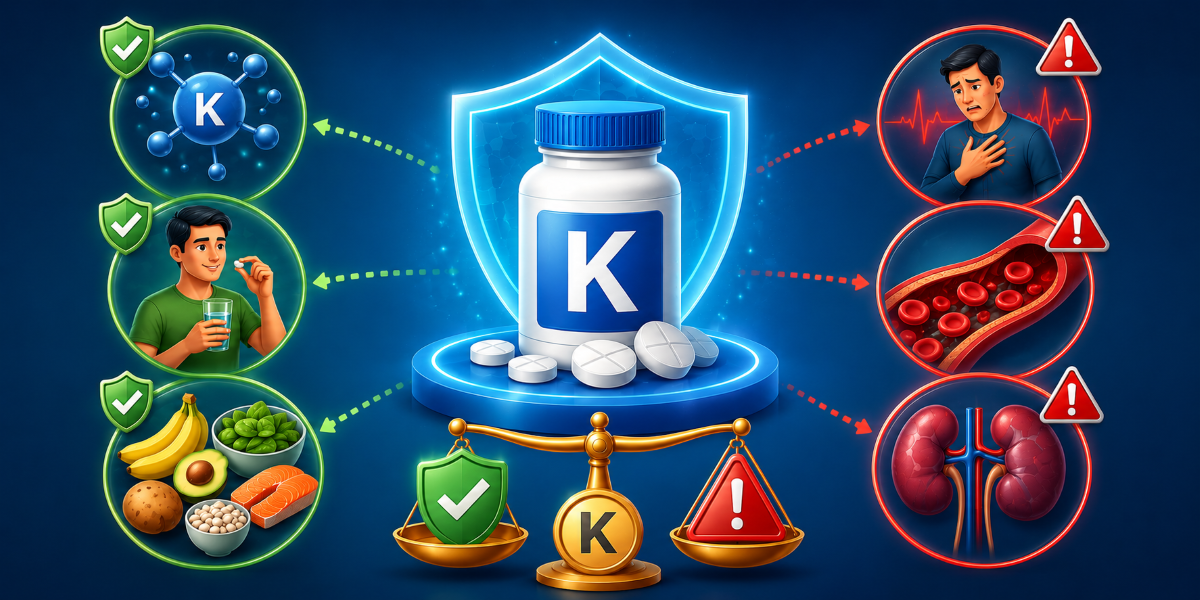
Elevated blood potassium levels, known as hyperkalemia, can interfere with the electrical activity of the heart.
This may cause slowed, irregular, or dangerous heartbeats. In severe cases, very high potassium levels may lead to life-threatening cardiac arrest.
Because symptoms may not always appear early, potassium excess can become dangerous before a person realizes there is a problem.
- Irregular heartbeat or palpitations.
- Muscle weakness or heaviness.
- Nausea or digestive discomfort.
- Fatigue or unusual weakness.
- Potentially dangerous heart rhythm disturbances in severe cases.
The Pharmaceutical Reason for Dosage Restrictions
Potassium dosage restrictions exist because potassium can be absorbed relatively quickly and has direct effects on cardiac electrical activity.
Higher supplemental doses may raise blood potassium levels too rapidly in sensitive individuals, especially those with kidney problems or those using medications that affect potassium balance.
In addition, concentrated potassium may irritate the stomach lining and, in some cases, contribute to gastrointestinal discomfort or ulceration, which reinforces the need for strict control over supplement strength.
| Potassium Source | How It Enters the Body | Safety Consideration |
|---|---|---|
| Food Sources | Absorbed gradually with other nutrients and fiber | Generally safer for most healthy people |
| Low-Dose Supplements | Provide concentrated potassium in small amounts | Usually limited to reduce risk |
| Prescription Potassium | Higher doses used for medical correction | Requires medical supervision and blood monitoring |
Dietary Potassium vs. Supplements
Dietary potassium is usually absorbed as part of whole foods, alongside fiber, water, carbohydrates, and other minerals.
This allows the body to regulate potassium more gradually and helps maintain stable blood levels in most healthy individuals.
Supplements, on the other hand, deliver potassium in a more concentrated form, which may increase the risk of sudden elevations in blood potassium, especially when taken in high doses or combined with certain medications.
When Are Higher Doses Used?
Higher doses of potassium may be used when medically necessary, such as in cases of confirmed deficiency or in patients taking certain diuretics that increase potassium loss.
In these situations, potassium dosing is carefully adjusted by a healthcare professional and usually monitored with blood tests.
This medical supervision helps reduce the risk of hyperkalemia and ensures that potassium levels remain within a safe range.
Practical Safety Tips
The safest approach for most people is to obtain potassium mainly from a balanced diet unless supplementation is specifically needed.
Potassium-rich foods can help support normal intake without exposing the body to concentrated supplemental doses.
- Prioritize potassium from foods such as bananas, potatoes, beans, lentils, spinach, avocado, yogurt, and tomatoes.
- Do not use high-dose potassium supplements without medical supervision.
- Check electrolyte drinks and multivitamins for potassium content.
- Be cautious if you take medications that affect potassium levels.
- Stay hydrated and follow medical guidance if you have kidney or heart concerns.
- Seek evaluation if you suspect potassium deficiency instead of self-prescribing high doses.
Frequently Asked Questions
Why are potassium supplements usually low dose?
They are usually low dose because excessive potassium may raise blood potassium levels and affect heart rhythm, which can be dangerous.
Is potassium from food safer than supplements?
For most healthy people, potassium from food is generally safer because it is absorbed more gradually and comes with other nutrients.
Can too much potassium affect the heart?
Yes. High blood potassium can disturb cardiac electrical activity and may cause irregular heartbeat or serious complications in severe cases.
Who should avoid potassium supplements?
People with kidney disease, heart conditions, or those taking medications that affect potassium levels should avoid potassium supplements unless advised by a healthcare professional.
When are higher potassium doses prescribed?
Higher doses may be prescribed for confirmed deficiency or certain medication-related potassium loss, but only with medical supervision and blood monitoring.
Conclusion
The restriction of potassium supplement dosages is not arbitrary; it is a necessary pharmaceutical safety measure designed to protect cardiac, neurological, and digestive health.
For most people, relying on dietary potassium sources is the safest approach, while potassium supplements should be used cautiously and under medical guidance when higher doses are needed.