

Iron is an essential mineral required for hemoglobin production and oxygen transport in the blood. It also plays an important role in energy metabolism, immune function, cognitive performance, and overall vitality.
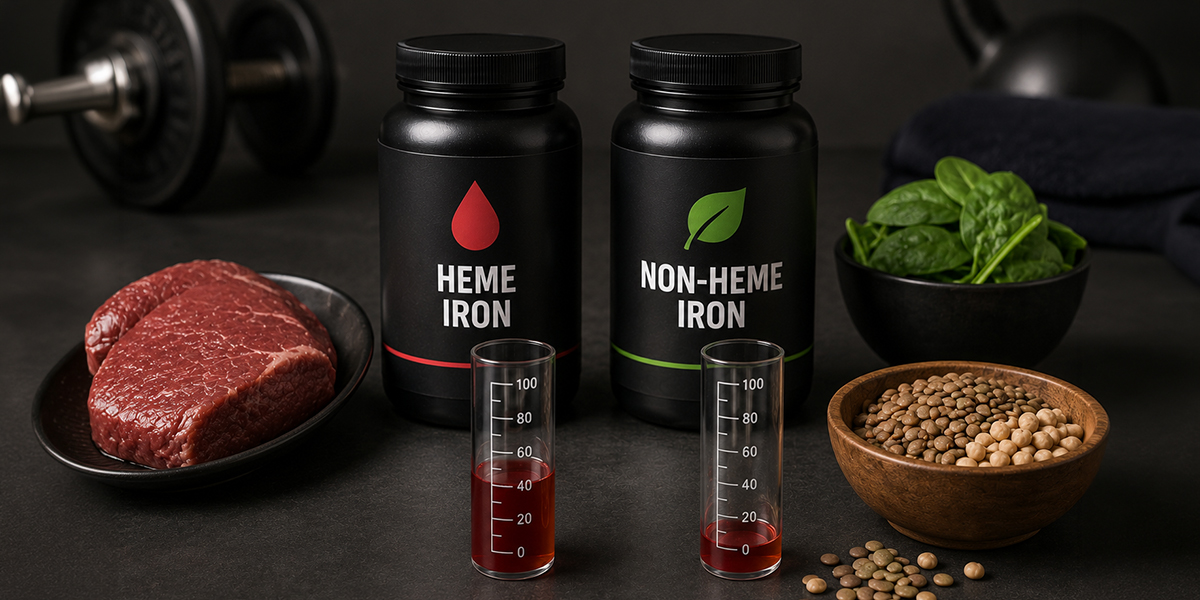
Dietary iron exists in two main forms: heme iron and non-heme iron. Although both forms can support daily iron needs, they differ significantly in absorption rate, food sources, and the way other dietary factors influence their uptake.
Table of Contents
What Is Heme Iron?
Heme iron is the form of iron found in animal-based foods such as red meat, poultry, fish, and seafood. It is part of hemoglobin and myoglobin, which are proteins involved in oxygen transport and storage.
This form is absorbed more efficiently because it enters the body in a structure that is easier for the intestine to take up. Heme iron absorption is also less affected by other meal components compared with non-heme iron.
What Is Non-Heme Iron?
Non-heme iron is found mainly in plant-based foods such as legumes, leafy greens, grains, nuts, seeds, and fortified foods. It is also present in smaller amounts in some animal foods.
Unlike heme iron, non-heme iron has lower and more variable absorption. Its uptake depends heavily on the overall composition of the meal, including enhancers such as vitamin C and inhibitors such as phytates or tannins.
Absorption Rates: A Scientific Comparison
The body typically absorbs heme and non-heme iron at very different rates. Heme iron is absorbed more efficiently, while non-heme iron absorption is generally lower and more sensitive to meal composition.
| Iron Type | Main Sources | Typical Absorption Rate |
|---|---|---|
| Heme Iron | Red meat, poultry, fish, seafood | About 15% to 35% |
| Non-Heme Iron | Legumes, leafy greens, grains, nuts, fortified foods | About 2% to 10% |
This difference helps explain why people following vegetarian or vegan diets may need to pay closer attention to iron intake and absorption strategies.
Factors Affecting Non-Heme Iron Absorption
Non-heme iron absorption can be either improved or reduced depending on what is consumed in the same meal.
Common inhibitors include:
- Phytates found in grains, legumes, and some seeds.
- Tannins found in tea and coffee.
- High calcium intake in the same meal.
- Some polyphenol-rich foods when consumed with iron-rich meals.
Common enhancers include:
- Vitamin C from citrus fruits, berries, peppers, and kiwi.
- Combining plant iron sources with animal protein when suitable.
- Proper soaking, sprouting, or fermenting of legumes and grains.
When Is Non-Heme Iron Sufficient?
Non-heme iron can meet daily iron needs when the diet is carefully planned. This is especially important for vegetarians, vegans, women of reproductive age, athletes, and individuals with increased iron requirements.
To improve non-heme iron intake, focus on:
- Eating iron-rich plant foods regularly.
- Combining iron sources with vitamin C.
- Avoiding tea and coffee immediately with iron-rich meals.
- Using fortified foods when appropriate.
- Monitoring iron status if at higher risk of deficiency.
Certain groups, such as pregnant women or individuals with iron-deficiency anemia, may require medical evaluation and supplementation when diet alone is not enough.
Frequently Asked Questions
Which iron type is absorbed better?
Heme iron is absorbed better, typically around 15% to 35%, compared with about 2% to 10% for non-heme iron.
What foods contain heme iron?
Heme iron is mainly found in red meat, poultry, fish, and seafood.
What foods contain non-heme iron?
Non-heme iron is found in legumes, leafy greens, grains, nuts, seeds, and fortified foods.
How can I improve plant-based iron absorption?
Pair plant-based iron sources with vitamin C-rich foods and avoid tea or coffee immediately with iron-rich meals.
Do vegetarians need more iron?
Vegetarians may need careful planning because non-heme iron is less efficiently absorbed than heme iron.
Conclusion
Heme iron and non-heme iron differ greatly in absorption efficiency. Heme iron, found in animal foods, is absorbed at a higher and more consistent rate, while non-heme iron from plant foods is absorbed less efficiently and is more affected by meal composition.
Understanding these differences helps individuals choose better dietary strategies, reduce the risk of iron deficiency, and support energy, oxygen transport, and overall health through appropriate food choices or supplementation when needed.