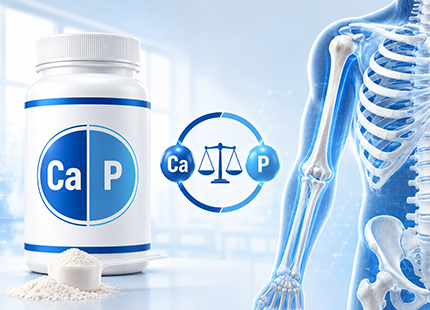


Minerals are essential nutrients that support countless functions in the body, including energy production, muscle function, immune health, nerve signaling, and hormone regulation.
While mineral deficiencies can negatively affect health, excessive intake is not always beneficial. For this reason, health authorities establish what is known as the Tolerable Upper Intake Level, or UL, which represents the highest average daily intake unlikely to pose health risks for most people.
Table of Contents
What Is the Tolerable Upper Intake Level?
The Tolerable Upper Intake Level is the maximum amount of a nutrient that can be consumed daily over time without a significant risk of adverse effects for most healthy people.
It serves as a safety guideline designed to help prevent toxicity, nutrient imbalance, and unwanted health complications from excessive nutrient intake.
The UL does not mean the ideal target intake. Instead, it represents a safety limit that should generally not be exceeded without professional guidance.
Why Can Excess Minerals Become a Problem?
Minerals are required in specific amounts, and the body depends on balance to maintain normal function.
Unlike some water-soluble nutrients that may be more easily eliminated, certain minerals can accumulate or interfere with normal physiological processes when consumed in excessive amounts.
High intake may place additional stress on organs such as the kidneys, liver, digestive system, or cardiovascular system, depending on the mineral involved and the person’s health status.
| Issue | How It May Happen | Possible Result |
|---|---|---|
| Excess Mineral Intake | High-dose supplements or multiple products containing the same mineral | Higher risk of side effects or toxicity |
| Nutrient Imbalance | One mineral interferes with absorption or use of another | Reduced nutrient balance and possible deficiency-like effects |
| Hidden Daily Intake | Food, fortified products, and supplements all contribute | Accidental intake near or above the UL |
The Impact on Nutrient Balance
Taking large amounts of one mineral may affect the absorption, transport, or utilization of another mineral.
Because minerals often work together inside the body, excessive intake of one nutrient can sometimes create unintended imbalances that affect overall health.
For example, excessive intake of some minerals may reduce the absorption of others or increase the body’s need for balancing nutrients.
- High intake of one mineral may interfere with another mineral’s absorption.
- Minerals often share transport pathways in the body.
- Long-term imbalance may affect energy, immunity, nerves, bones, or muscles.
- Supplement stacking increases the risk of accidentally exceeding safe limits.
Potential Digestive and Systemic Effects
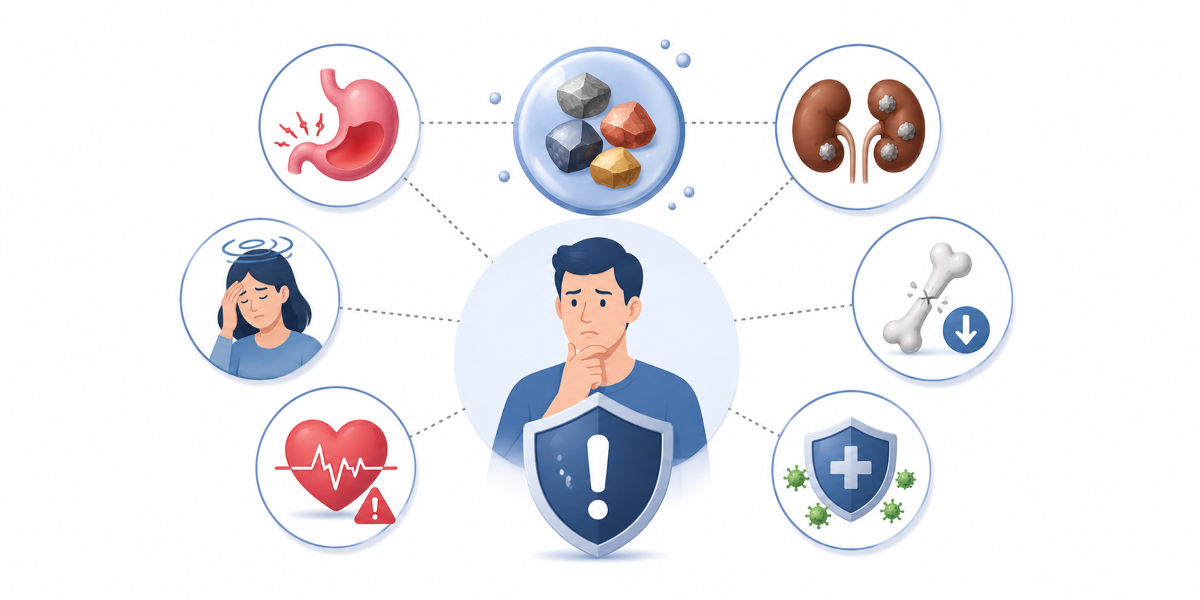
Consuming minerals above the Upper Intake Level may increase the likelihood of digestive discomfort.
Common digestive effects may include nausea, stomach irritation, abdominal discomfort, constipation, or diarrhea, depending on the specific mineral and dose.
In some cases, prolonged excessive intake may also affect other body systems, including kidney function, liver function, heart rhythm, blood pressure, or neurological function.
Supplements and Hidden Intake
Many people focus only on the dosage listed on a supplement label without considering minerals obtained from food, fortified products, electrolyte drinks, multivitamins, and additional supplements.
The total daily intake from all sources is what determines whether a person is approaching or exceeding the Upper Intake Level.
Unintentional overconsumption can happen when several products contain the same mineral, such as a multivitamin, bone formula, electrolyte powder, and single-mineral supplement used together.
More Is Not Always Better
A common misconception is that if a nutrient is beneficial, larger amounts must provide greater benefits.
In reality, the relationship between nutrient intake and health is balanced. Once the body’s needs are met, excessive intake may offer no additional advantage and may increase the risk of unwanted effects.
The goal should be to correct deficiency, meet individual needs, and avoid unnecessary intake above established safety limits.
- Do not use high-dose mineral supplements without a clear reason.
- Check all supplements for overlapping mineral content.
- Consider mineral intake from fortified foods and drinks.
- Follow recommended dosages unless advised otherwise by a professional.
- Use blood tests or clinical assessment when needed to guide supplementation.
Frequently Asked Questions
What does UL mean in nutrition?
UL stands for Tolerable Upper Intake Level. It is the highest average daily intake unlikely to cause adverse effects for most people.
Is the UL the recommended daily dose?
No. The UL is not a target dose. It is a safety limit that should generally not be exceeded without medical or professional guidance.
Can minerals become toxic?
Yes. Some minerals may cause side effects or toxicity when consumed in excessive amounts over time, especially from high-dose supplements.
How can I avoid exceeding the UL?
Read supplement labels, avoid stacking multiple products with the same mineral, consider fortified foods, and use supplements only when needed.
Who should be most careful with mineral supplements?
People with kidney disease, heart conditions, chronic illness, pregnancy, medication use, or abnormal blood tests should consult a healthcare professional before using high-dose minerals.
Conclusion
The Tolerable Upper Intake Level exists to help ensure that mineral intake remains within a safe range and to reduce the risk of adverse effects from excessive intake.
While minerals are vital for health, consuming excessive amounts may disrupt nutrient balance and increase the risk of digestive, metabolic, or systemic complications. The safest approach is to meet individual needs without unnecessarily exceeding established safety limits.