


Vitamin D is a fat-soluble vitamin that plays a crucial role in regulating calcium and phosphorus absorption. It also supports bone health, muscle function, and immune system activity.
However, excessive intake through high-dose supplements over extended periods, particularly without medical supervision, can lead to elevated vitamin D levels and complications related to increased calcium levels in the blood.
Table of Contents
How Does Vitamin D Excess Occur?
In most cases, vitamin D toxicity does not result from sun exposure or normal dietary intake.
Instead, it is usually associated with prolonged use of high-dose vitamin D supplements that exceed the body’s requirements.
Excessive vitamin D can significantly increase calcium absorption from the intestines, which may raise calcium concentrations in the blood and lead to health complications.
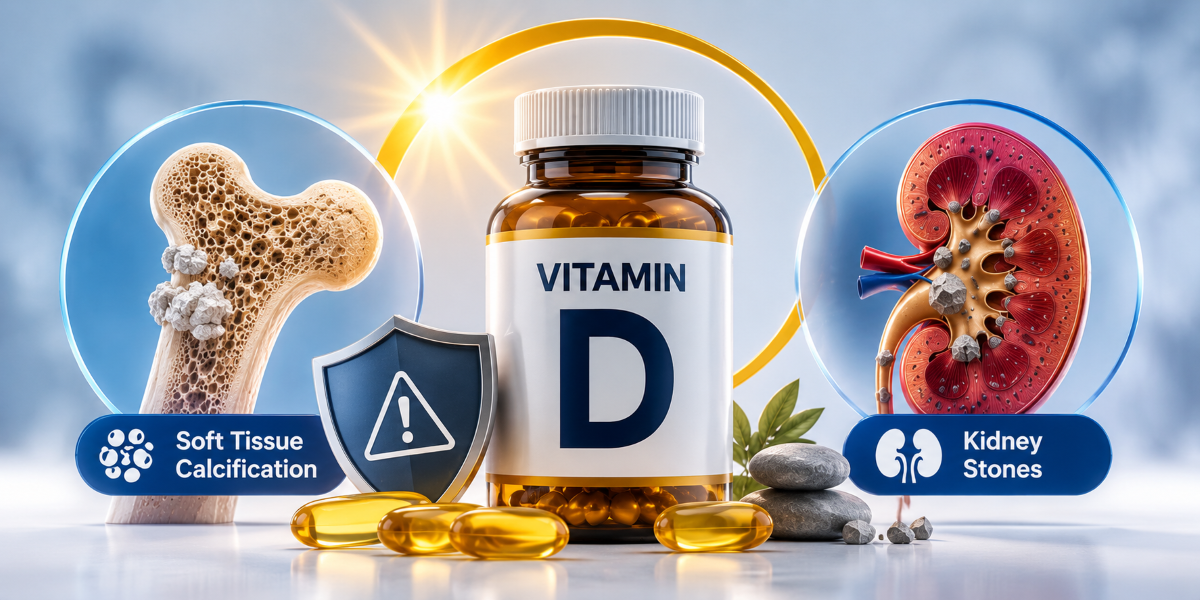
Soft Tissue Calcification
One of the most serious consequences of chronic vitamin D excess is the abnormal deposition of calcium in tissues where it does not normally accumulate.
This may include blood vessels, kidneys, and other organs. This condition is known as soft tissue calcification.
Over time, soft tissue calcification may interfere with the normal function of affected tissues and place additional stress on the cardiovascular system and kidneys.
Kidney Stones
Elevated blood calcium levels caused by excessive vitamin D intake can increase the amount of calcium excreted in the urine.
This may raise the risk of kidney stone formation, especially in individuals who already have additional risk factors such as inadequate fluid intake, high calcium excretion, or a previous history of kidney stones.
Maintaining hydration and avoiding unnecessary high-dose vitamin D supplementation are important steps for reducing this risk.
| Risk | How It Happens | Possible Outcome |
|---|---|---|
| High Blood Calcium | Excess vitamin D increases calcium absorption | Nausea, thirst, fatigue, weakness |
| Soft Tissue Calcification | Calcium deposits in tissues where it should not accumulate | Potential stress on blood vessels, kidneys, and organs |
| Kidney Stones | More calcium may be excreted in urine | Increased risk of stone formation |
Symptoms of Vitamin D Toxicity
Vitamin D toxicity often presents with symptoms related to hypercalcemia, which means high blood calcium levels.
Common symptoms may include nausea, vomiting, loss of appetite, constipation, excessive thirst, frequent urination, fatigue, and muscle weakness.
In more severe cases, kidney function and cardiovascular health may also be affected, especially if toxicity continues without being corrected.
- Nausea or vomiting
- Loss of appetite
- Constipation
- Excessive thirst
- Frequent urination
- Fatigue and weakness
- Muscle weakness
- Possible kidney-related symptoms in severe cases
The Importance of Appropriate Dosage
Although vitamin D is essential for health, consuming amounts far beyond the body’s needs does not provide additional benefits.
Following recommended intake guidelines is especially important when supplements are used for long periods.
Monitoring vitamin D levels may be appropriate for individuals using higher doses, those with deficiency, people with medical conditions, or anyone taking multiple supplements that contain vitamin D.
Preventing Vitamin D Toxicity
The best way to prevent vitamin D toxicity is to avoid unnecessary high-dose supplementation and use vitamin D according to individual needs.
It is also important to carefully read product labels and check whether multiple supplements contain vitamin D, as unintentional overconsumption can occur when several products provide the same nutrient.
- Use vitamin D supplements only at appropriate doses.
- Avoid long-term high-dose use without medical guidance.
- Check supplement labels for vitamin D content.
- Be cautious when combining multivitamins, bone formulas, and vitamin D products.
- Monitor vitamin D and calcium levels when advised by a healthcare professional.
- Stay hydrated, especially if you are prone to kidney stones.
Frequently Asked Questions
Can too much vitamin D be harmful?
Yes. Excessive vitamin D intake can raise blood calcium levels and may lead to complications such as soft tissue calcification and kidney stones.
Does vitamin D toxicity happen from sunlight?
Vitamin D toxicity usually does not occur from sun exposure. It is more commonly linked to prolonged high-dose supplement use.
What are signs of too much vitamin D?
Possible signs include nausea, vomiting, loss of appetite, constipation, excessive thirst, frequent urination, fatigue, and muscle weakness.
Can excess vitamin D cause kidney stones?
Yes, excessive vitamin D may increase calcium in the blood and urine, which can raise the risk of kidney stone formation in some individuals.
How can vitamin D toxicity be prevented?
Use appropriate doses, avoid unnecessary high-dose supplementation, check supplement labels, and monitor vitamin D levels when recommended.
Conclusion
Vitamin D is vital for maintaining overall health, but excessive intake can lead to elevated calcium levels and potentially serious complications.
Soft tissue calcification and an increased risk of kidney stones are among the key concerns linked to long-term high-dose vitamin D use. Maintaining a balanced intake that aligns with individual needs remains the safest approach to benefiting from this important vitamin.