

Dietary fiber plays an important role in appetite management, digestive health, and weight control. It helps slow digestion, supports gut function, and may reduce the desire to snack between meals.
One of the most notable soluble fibers is glucomannan, a fiber known for its ability to absorb water and expand in the stomach. This effect may help increase feelings of fullness and support healthier eating habits when combined with a balanced diet and active lifestyle.
Table of Contents
What Is Glucomannan?
Glucomannan is a type of soluble dietary fiber extracted from the roots of the konjac plant.
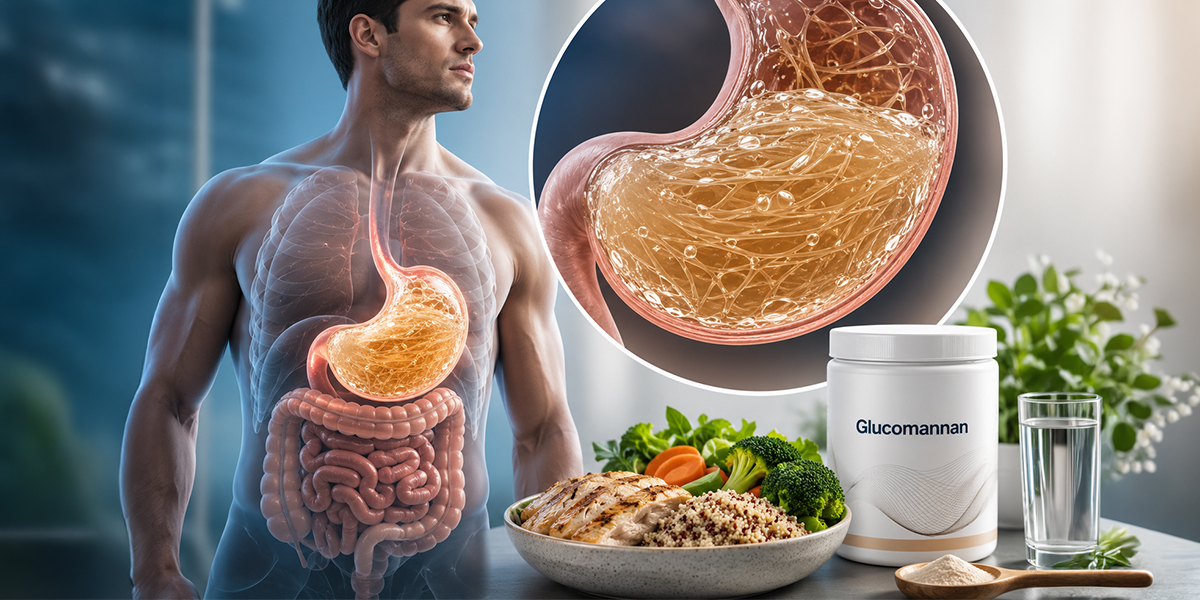
It is well known for its strong water-absorbing ability. When taken with enough water, glucomannan can swell and form a gel-like substance in the stomach.
This gel-like effect increases the volume of stomach contents, slows digestion, and may help create a longer-lasting feeling of fullness after meals.
How Glucomannan Supports Fullness
Satiety refers to the feeling of fullness that helps control appetite after eating.
When glucomannan absorbs water, it expands in the stomach and increases the physical volume of stomach contents. This may help the body feel fuller with less food.
By slowing gastric emptying and digestion, glucomannan may also help prolong the feeling of fullness between meals, making it easier to manage calorie intake.
- Absorbs water and forms a gel in the stomach.
- Increases stomach volume and promotes fullness.
- May reduce the urge to snack between meals.
- Supports better appetite control during diet plans.
- Works best when combined with balanced meals.
Effect of Fiber on Digestion and Metabolism
Soluble fiber can slow the digestion and absorption of certain nutrients, including carbohydrates and fats.
This slower absorption may help support steadier blood sugar levels after meals, which can reduce sudden hunger, energy crashes, and cravings.
Fiber also supports digestive regularity and helps create a healthier gut environment, which may positively influence metabolism and overall wellness.
| Fiber Effect | How It Works | Potential Benefit |
|---|---|---|
| Increases Fullness | Absorbs water and expands in the stomach | May reduce appetite and snacking |
| Slows Digestion | Forms a gel-like texture in the digestive tract | Helps prolong satiety after meals |
| Supports Blood Sugar Balance | Slows carbohydrate absorption | May reduce sudden cravings and energy dips |
| Supports Gut Health | Encourages beneficial gut bacteria | May improve digestion and bowel regularity |
Using Glucomannan Supplements
Glucomannan is commonly used as a supplement before meals to help support appetite control.
It should always be taken with plenty of water because it expands when hydrated. Taking it without enough fluid may cause discomfort or difficulty swallowing.
For best results, glucomannan should be used as part of a structured nutrition plan that includes protein, vegetables, whole foods, and regular physical activity.
Additional Benefits of Dietary Fiber
Dietary fiber does more than support fullness. It also plays a key role in digestive health and long-term wellness.
A fiber-rich diet may help support bowel regularity, reduce constipation, improve gut bacteria balance, and promote better overall digestive comfort.
Because gut health is closely linked to metabolism and appetite regulation, adequate fiber intake can be an important part of a healthy lifestyle.
- Supports digestive regularity.
- Helps reduce constipation.
- Supports beneficial gut bacteria.
- May improve meal satisfaction.
- Supports healthy metabolic response.
- Helps make weight management plans easier to follow.
Fiber and Healthy Weight Management
Fiber can support weight management by helping people feel fuller and more satisfied after meals.
When meals are rich in fiber, protein, and whole foods, appetite control usually becomes easier. This can reduce the need for frequent snacking and help maintain a more consistent calorie intake.
However, fiber is not a magic weight-loss solution. It works best when combined with a balanced diet, portion control, hydration, exercise, and sustainable daily habits.
| Goal | How Fiber Helps | Best Practice |
|---|---|---|
| Reduce Snacking | Increases fullness between meals | Take fiber with water before meals when appropriate |
| Improve Diet Control | Helps meals feel more satisfying | Combine fiber with protein and vegetables |
| Support Digestion | Promotes bowel regularity | Increase fiber gradually and drink enough fluids |
Frequently Asked Questions
What is glucomannan?
Glucomannan is a soluble fiber extracted from the konjac plant. It absorbs water and forms a gel-like substance in the stomach.
How does glucomannan promote fullness?
It expands after absorbing water, increasing stomach volume and slowing digestion, which may help you feel full for longer.
Can glucomannan help with weight loss?
It may support weight management by helping control appetite, but it works best with a balanced diet, calorie control, hydration, and physical activity.
When should glucomannan be taken?
It is commonly taken before meals with plenty of water to support fullness and appetite control.
Is dietary fiber only useful for appetite control?
No. Fiber also supports digestion, bowel regularity, beneficial gut bacteria, and overall metabolic health.
Conclusion
Dietary fibers such as glucomannan may help increase satiety, control appetite, and reduce unnecessary snacking by absorbing water and expanding in the stomach.
In addition to supporting fullness, fiber contributes to digestive health, bowel regularity, and a healthier gut environment. For best results, glucomannan and other fibers should be used alongside a balanced diet, adequate hydration, and an active lifestyle.