

Mineral balance plays a central role in regulating blood pressure, with potassium and sodium being two of the most important minerals involved in this process.
When the relationship between potassium and sodium becomes imbalanced, it may contribute to higher blood pressure and increase the long-term risk of cardiovascular problems. Understanding this balance can help support better heart and vascular health.
Table of Contents
- The Role of Potassium in Blood Pressure Regulation
- The Effect of Excess Sodium on Blood Pressure
- The Interrelationship Between Potassium and Sodium
- Effect of Mineral Balance on Heart Health
- Who Benefits Most from Increased Potassium?
- Practical Tips to Improve Potassium-Sodium Balance
- Frequently Asked Questions
The Role of Potassium in Blood Pressure Regulation
Potassium helps support healthy blood pressure by contributing to the relaxation of blood vessel walls. This may reduce resistance to blood flow and support smoother circulation.
Potassium is also important for normal muscle function, including the heart muscle. It helps maintain proper electrical signaling, which supports a regular heartbeat.
A diet rich in natural potassium sources may therefore support cardiovascular health, especially when combined with reduced sodium intake and a balanced lifestyle.
The Effect of Excess Sodium on Blood Pressure
Excess sodium intake can cause the body to retain more fluid. This may increase blood volume and raise pressure inside blood vessels.
This effect may become more noticeable when potassium intake is low, because the body has less support for removing excess sodium efficiently.
Processed foods, fast foods, salty snacks, canned foods, and high-sodium sauces are common sources of excess sodium in the modern diet.
The Interrelationship Between Potassium and Sodium
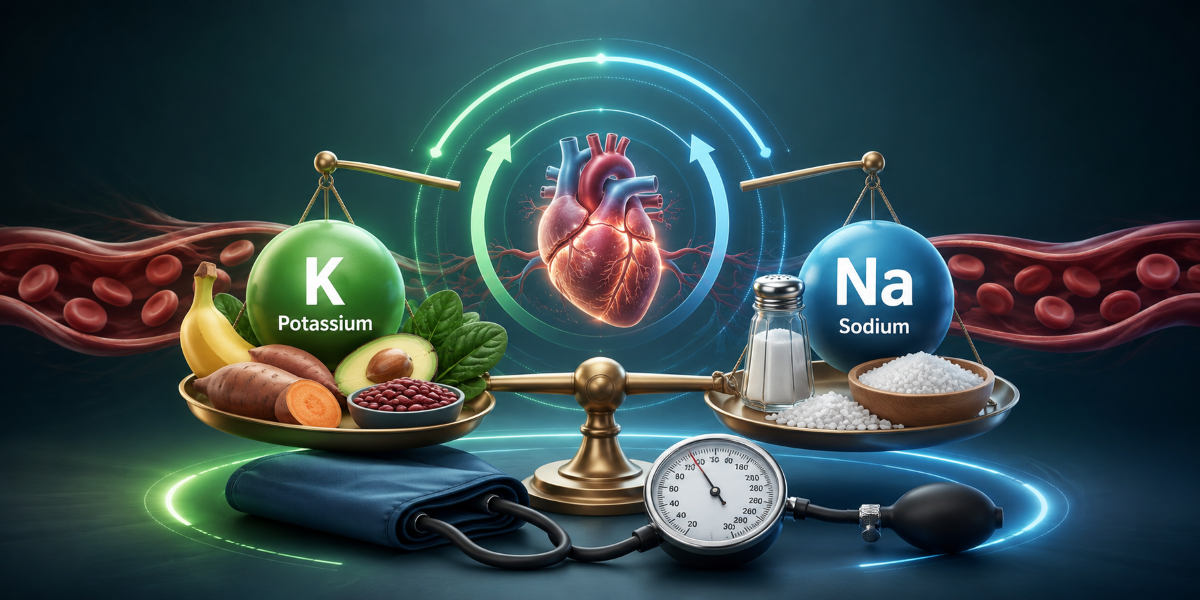
Potassium acts as a natural counterbalance to sodium. It helps the kidneys excrete excess sodium through urine, which may support better fluid balance and blood pressure control.
The higher the potassium-to-sodium ratio in the diet, the more favorable it may be for maintaining healthy blood pressure levels.
This means that improving blood pressure regulation is not only about reducing sodium, but also about increasing potassium-rich whole foods when appropriate.
| Mineral | Main Effect | Dietary Focus |
|---|---|---|
| Potassium | Supports blood vessel relaxation and sodium excretion | Increase natural sources such as fruits, vegetables, legumes, and whole foods |
| Sodium | May increase fluid retention and blood volume when consumed excessively | Limit added salt and high-sodium processed foods |
| Potassium-Sodium Balance | Supports healthier blood pressure regulation | Combine more potassium-rich foods with lower sodium intake |
Effect of Mineral Balance on Heart Health
Maintaining a healthy balance between potassium and sodium may help reduce stress on the cardiovascular system.
This balance supports normal vascular function and may reduce the risk of complications associated with long-term high blood pressure, such as heart strain and stroke risk.
A balanced diet, regular physical activity, healthy body weight, adequate hydration, and regular blood pressure monitoring all contribute to better heart health.
Who Benefits Most from Increased Potassium?
Some groups may benefit more from focusing on potassium-rich foods while reducing sodium intake.
- Individuals with high blood pressure or borderline blood pressure.
- Older adults who are more sensitive to sodium intake.
- People who consume large amounts of processed or salty foods.
- Individuals with low fruit and vegetable intake.
- People seeking long-term heart and vascular health support.
However, potassium intake should be personalized, especially for people with kidney disease or those taking certain blood pressure medications.
Practical Tips to Improve Potassium-Sodium Balance
Improving potassium-sodium balance can often be achieved through simple dietary habits.
- Eat more potassium-rich foods such as bananas, oranges, potatoes, spinach, beans, lentils, avocado, and yogurt.
- Reduce processed foods, salty snacks, fast foods, and instant meals.
- Use herbs, lemon, garlic, vinegar, and spices instead of excess salt.
- Read nutrition labels and choose lower-sodium options when possible.
- Increase vegetables and legumes in main meals.
- Drink enough water and maintain regular physical activity.
Frequently Asked Questions
How does potassium help regulate blood pressure?
Potassium supports blood vessel relaxation and helps the kidneys remove excess sodium, which may contribute to healthier blood pressure levels.
Why does too much sodium raise blood pressure?
Excess sodium may increase fluid retention, which can raise blood volume and pressure inside blood vessels.
What foods are high in potassium?
Common potassium-rich foods include bananas, potatoes, spinach, beans, lentils, oranges, avocado, yogurt, and many fruits and vegetables.
Should I take potassium supplements?
Potassium supplements should only be used under professional guidance, especially for people with kidney issues or those taking blood pressure medications.
Is reducing sodium enough for blood pressure control?
Reducing sodium helps, but improving potassium intake from natural foods, exercising regularly, maintaining a healthy weight, and following medical advice are also important.
Conclusion
The balance between potassium and sodium is essential for blood pressure regulation and long-term heart health.
Focusing on natural potassium sources while limiting added sodium and processed foods is an effective lifestyle strategy that may help support healthy blood pressure and reduce cardiovascular risk over time.