


Water-soluble vitamins are vitamins that dissolve easily in body fluids and are not stored in large amounts for long periods. This group includes vitamin C and most B vitamins, which are involved in many essential functions such as energy production, nervous system support, immune function, and red blood cell formation.
Because these vitamins are not stored in the same way as fat-soluble vitamins, many people assume they are always safe at any dose. However, the body’s handling of water-soluble vitamins is more complex, and very high intakes over time may still cause unwanted effects in some cases.
Table of Contents
How Are Water-Soluble Vitamins Absorbed?
After ingestion, water-soluble vitamins are absorbed mainly through the small intestine into the bloodstream. Once absorbed, they are transported to tissues where they support important biological processes.
For example, B vitamins help support energy metabolism and nervous system function, while vitamin C supports antioxidant protection, collagen formation, and immune health.
The Role of the Kidneys in Removing Excess
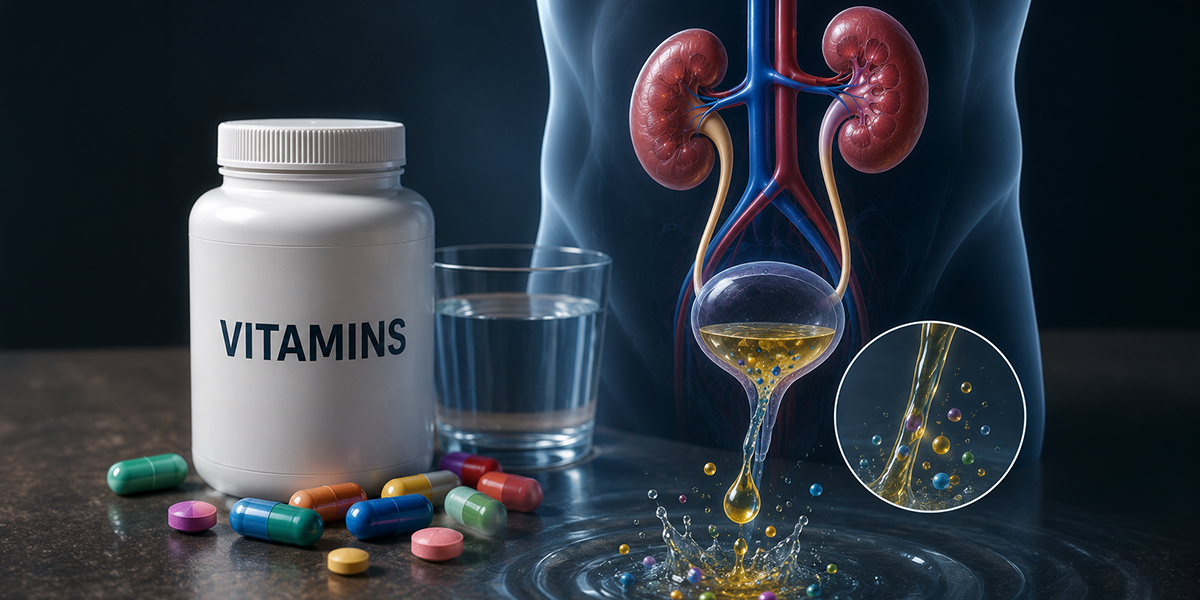
The kidneys are the main organs responsible for regulating the levels of water-soluble vitamins in the body. When intake exceeds what the body needs, the kidneys filter the excess from the blood.
These extra amounts are then excreted through urine, helping the body maintain balance and reduce the risk of long-term accumulation.
This urinary elimination is one of the reasons water-soluble vitamins are generally less likely to build up in the body compared with fat-soluble vitamins.
Why Aren’t They Stored in Large Amounts?
Unlike fat-soluble vitamins, water-soluble vitamins do not have large storage sites in body fat or liver tissue. Instead, the body uses what it needs and eliminates much of the excess.
Because of this, regular intake from food is important to maintain adequate levels. A balanced diet usually provides the daily amounts needed for most people.
| Vitamin Type | Storage in Body | Main Elimination Route |
|---|---|---|
| Water-Soluble Vitamins | Limited storage | Urine through the kidneys |
| Fat-Soluble Vitamins | Stored in fat tissue and liver | Slower elimination |
Does This Mean Toxicity Cannot Occur?
Not necessarily. Although the body can eliminate excess water-soluble vitamins more efficiently than fat-soluble vitamins, very high doses taken for long periods may still cause side effects.
A well-known example is vitamin B6. Long-term high intake of vitamin B6 has been associated with nerve-related symptoms in some individuals.
High doses of vitamin C may also cause digestive discomfort in certain people, especially when taken in large amounts.
Why Does Urine Color Change Sometimes?
Some people notice bright yellow urine after taking B-complex supplements. This is most commonly linked to riboflavin, also known as vitamin B2.
Riboflavin has a naturally strong yellow color, and when the body eliminates excess amounts through urine, the urine may appear brighter than usual.
This color change is generally considered normal and does not automatically indicate a health problem.
Frequently Asked Questions
How does the body remove excess water-soluble vitamins?
The kidneys filter excess amounts from the blood and eliminate them through urine.
Are water-soluble vitamins stored in the body?
They are not stored in large amounts for long periods, so regular intake from food is important.
Can water-soluble vitamins become toxic?
Yes, in some cases. Very high doses taken for long periods may still cause side effects, such as nerve-related issues with excessive vitamin B6.
Why does urine turn bright yellow after B-complex vitamins?
This often happens because excess riboflavin, or vitamin B2, is excreted through urine and has a bright yellow color.
Do higher doses provide better benefits?
Not always. The body uses what it needs, and excess amounts are usually eliminated. More is not always better.
Conclusion
The body primarily relies on the kidneys to eliminate excess water-soluble vitamins through urine. This helps reduce the risk of accumulation compared with fat-soluble vitamins, which are stored more readily in the body.
However, water-soluble does not mean risk-free at unlimited doses. Consistently high-dose supplementation may still cause side effects, so balanced intake, proper dosing, and individual needs should guide vitamin use.