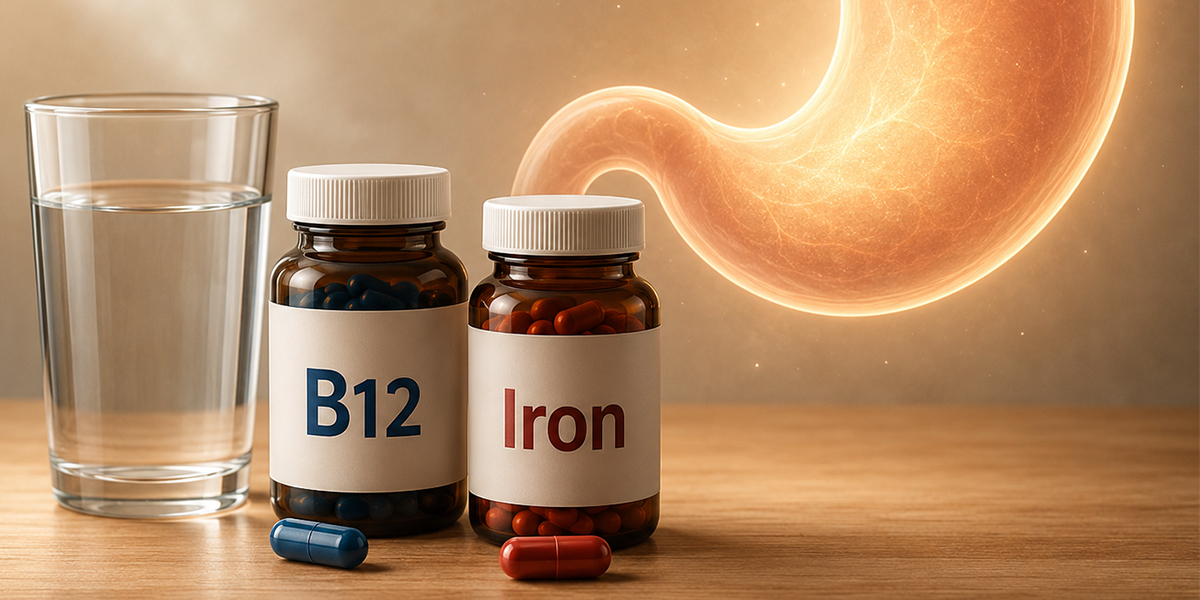


The effectiveness of vitamins and minerals depends not only on the dose, but also on the timing, supplement form, digestive health, and whether they are taken with food or away from competing nutrients.
Some nutrients, such as iron and certain forms of vitamin B12, may be taken on an empty stomach to support better absorption. However, tolerance matters, and some people may need to take them with a light meal to reduce stomach discomfort.
Table of Contents
Why Timing Matters for Absorption
Food can sometimes improve nutrient absorption, but in other cases it may reduce absorption by competing with the nutrient or changing the digestive environment.
Minerals are especially sensitive to timing because they may compete with each other for absorption. For example, calcium may reduce iron absorption when both are taken together.
Coffee, tea, high-fiber meals, and certain medications may also interfere with some nutrients, which is why timing can make a meaningful difference for people correcting deficiencies.
Vitamin B12 and Empty-Stomach Absorption
Vitamin B12 is essential for red blood cell formation, nerve function, DNA synthesis, and energy metabolism.
In supplement form, vitamin B12 may be taken before meals or on an empty stomach, especially when using sublingual tablets, sprays, or high-dose oral forms.
However, B12 absorption also depends on stomach acid, intrinsic factor, gut health, medication use, and age. For this reason, taking B12 on an empty stomach may be helpful for some people, but it is not the only factor that determines absorption.
| B12 Factor | Why It Matters | Practical Tip |
|---|---|---|
| Supplement Form | Sublingual and oral forms may differ in use and tolerance | Follow product directions consistently |
| Stomach Acid | Helps release B12 from food proteins | People on acid reducers may need monitoring |
| Intrinsic Factor | Needed for normal B12 absorption | Low levels may require medical evaluation |
| Diet Type | B12 is mainly found in animal foods | Vegans and vegetarians may need supplementation |
Iron and When to Take It
Iron is commonly recommended on an empty stomach because food can reduce its absorption, especially when the meal contains calcium, tea, coffee, whole grains, or high amounts of fiber.
Taking iron away from these inhibitors may help the body absorb more of the dose, which is especially important for people with low ferritin, iron deficiency, or anemia.
However, iron can irritate the stomach in some individuals. If nausea, cramps, or discomfort occur, iron may be taken with a small light meal, even if absorption is slightly reduced.
| What to Avoid with Iron | Why It Matters | Better Timing |
|---|---|---|
| Calcium Supplements | May compete with iron absorption | Separate by a few hours when possible |
| Milk and Dairy | Calcium may reduce iron uptake | Avoid taking iron with dairy foods |
| Coffee and Tea | Polyphenols and tannins can reduce non-heme iron absorption | Keep away from iron supplements |
| High-Fiber Meals | Some fibers and phytates may reduce mineral absorption | Take iron separately if deficiency is being corrected |
Enhancing Iron Absorption
Vitamin C is one of the most helpful nutrients for supporting non-heme iron absorption.
Taking iron with a vitamin C source, such as citrus, kiwi, berries, or bell peppers, can help keep iron in a more absorbable form.
This strategy is especially useful for people who rely on plant-based iron sources or who are using iron supplements to correct low ferritin or iron deficiency.
| Absorption Strategy | How It Helps | Example |
|---|---|---|
| Add Vitamin C | Improves non-heme iron absorption | Iron with orange, kiwi, or vitamin C drink |
| Separate from Calcium | Reduces mineral competition | Iron in the morning, calcium later |
| Avoid Coffee and Tea | Prevents tannins from binding iron | Drink coffee a few hours away from iron |
| Use a Gentle Form | May improve tolerance | Consider well-tolerated forms if advised |
Who Should Pay Attention to Timing?
Supplement timing is especially important for people who are trying to correct an existing deficiency or who have higher nutrient needs.
People with iron deficiency, anemia, low ferritin, heavy menstrual bleeding, pregnancy, vegetarian or vegan diets, digestive conditions, or frequent fatigue may benefit from better timing of iron and B12.
Athletes and people with high training volume may also need to monitor iron status, especially if they experience poor endurance, unusual fatigue, or slow recovery.
- People with low ferritin or confirmed iron deficiency.
- Individuals with anemia symptoms or persistent fatigue.
- Women with heavy menstrual bleeding.
- Pregnant women or those planning pregnancy.
- Vegetarians and vegans who may need B12 support.
- People taking acid-reducing medications long term.
- Athletes with reduced endurance or unexplained low energy.
Practical Supplement Timing Guide
A simple timing routine can improve consistency and reduce unwanted nutrient interactions.
Iron is often best taken away from food inhibitors and paired with vitamin C, while B12 may be taken before meals or at a consistent time that suits the individual.
For people with sensitive stomachs, comfort should also be considered because a supplement only works well when it can be taken consistently.
| Nutrient | Common Timing | Best Taken Away From |
|---|---|---|
| Iron | Empty stomach or with vitamin C | Calcium, coffee, tea, dairy, high-fiber meals |
| Vitamin B12 | Before meals or consistent daily timing | No major food restriction for most people |
| Multivitamins | Usually with a meal | Coffee or tea if the formula contains iron |
| Mineral Formulas | Often with food for tolerance | Separate competing minerals when needed |
Frequently Asked Questions
Is vitamin B12 best taken on an empty stomach?
Vitamin B12 can be taken on an empty stomach, especially in supplement forms such as sublingual or high-dose oral B12. However, consistency, digestive health, and individual needs also matter.
Is iron best absorbed on an empty stomach?
Yes, iron is often better absorbed on an empty stomach, but people with sensitive stomachs may take it with a small meal to reduce discomfort.
Can I take iron with coffee?
It is better not to take iron with coffee or tea because compounds in these drinks can reduce non-heme iron absorption.
Can vitamin C improve iron absorption?
Yes. Vitamin C can support non-heme iron absorption and is often paired with iron supplements or plant-based iron foods.
Should all vitamins be taken on an empty stomach?
No. Fat-soluble vitamins such as vitamins A, D, E, and K are usually better taken with meals containing fat. Some minerals are also better tolerated with food.
Conclusion
Certain nutrients, especially iron, are often better absorbed when taken on an empty stomach and away from calcium, coffee, tea, dairy, and high-fiber meals.
Vitamin B12 may also be taken before meals or on an empty stomach, depending on the supplement form and individual tolerance. The best approach is to match timing with the nutrient type, digestive comfort, deficiency status, and professional guidance when needed.