

Fat-soluble vitamins differ from water-soluble vitamins in the way they are absorbed, transported, stored, and eliminated from the body.
This group includes vitamins A, D, E, and K. Because they can be stored in the liver and fatty tissues, they may provide an important nutritional reserve. However, excessive long-term intake, especially from high-dose supplements, may lead to accumulation beyond the body’s needs and affect normal physiological balance.
Table of Contents
What Are Fat-Soluble Vitamins?
Fat-soluble vitamins are vitamins that dissolve in fat and are absorbed more efficiently when consumed with dietary fat.
Unlike many water-soluble vitamins, which are more easily excreted through urine when consumed in excess, fat-soluble vitamins can be stored in the liver and fatty tissues.
This storage ability can be beneficial because it allows the body to maintain reserves. However, it also means that excessive intake over time may increase the risk of unnecessary accumulation.
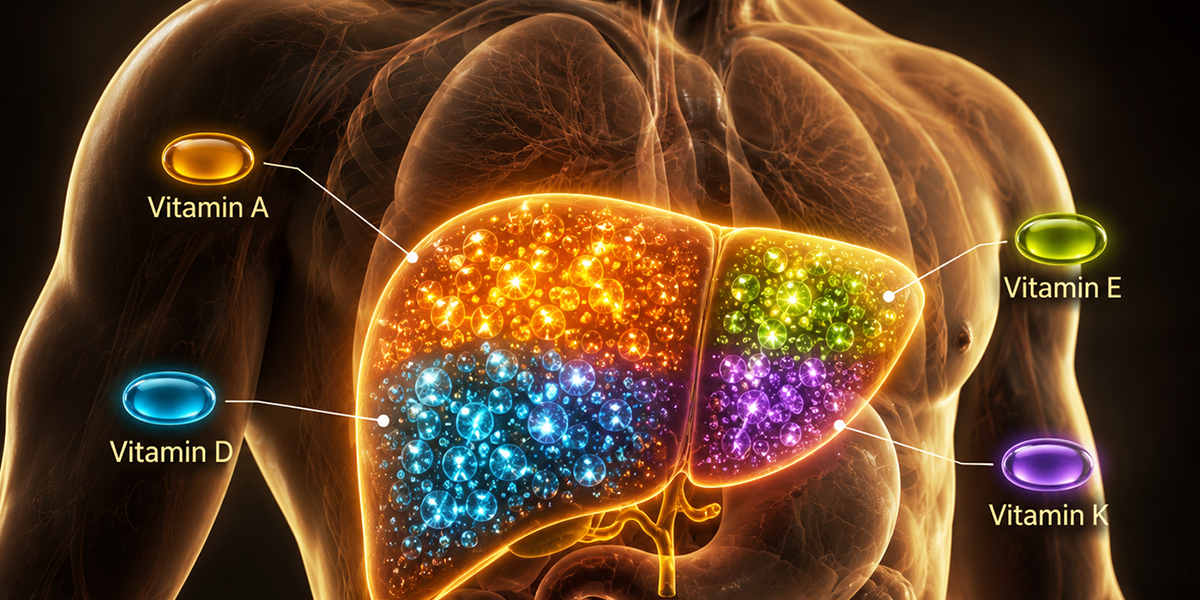
Why Are These Vitamins Stored in the Liver?
The liver acts as a major nutrient storage and regulation center in the body.
It helps store certain vitamins and release them when needed, allowing the body to maintain essential functions even when dietary intake changes from day to day.
For fat-soluble vitamins, this storage system helps support vision, immunity, bone health, antioxidant protection, blood clotting, and other important biological processes.
- Vitamin A supports vision, immunity, and skin health.
- Vitamin D supports calcium balance, bone health, and immune function.
- Vitamin E supports antioxidant protection and cell membrane health.
- Vitamin K supports normal blood clotting and bone metabolism.
- The liver helps regulate storage and availability of these vitamins.
How Does Accumulation Occur?
Accumulation may occur when fat-soluble vitamins are consumed in amounts that consistently exceed the body’s actual needs.
This is more likely to happen with high-dose supplements than with a balanced diet, although total intake from food, fortified foods, and multiple supplements should all be considered.
Because the body stores a portion of these vitamins instead of removing all excess immediately, levels may gradually rise over time.
| Vitamin | Main Storage Area | Why Excess Intake Matters |
|---|---|---|
| Vitamin A | Mainly liver | Long-term high intake may increase storage beyond needs |
| Vitamin D | Fat tissue and liver-related metabolism | Excess may affect calcium balance and related processes |
| Vitamin E | Fatty tissues and cell membranes | Very high intake may affect normal biological balance |
| Vitamin K | Liver and tissues | Important for clotting; supplement use should consider medications |
The Effects of Excess Vitamins A, D, E, and K
Each fat-soluble vitamin has important benefits, but excessive intake may create different concerns depending on the vitamin, dose, duration, and individual health status.
Vitamin A
Vitamin A is one of the fat-soluble vitamins most readily stored in the liver. While it is essential for vision, immunity, and skin health, long-term excessive intake from supplements may increase body stores beyond what is needed.
Vitamin D
Vitamin D plays a critical role in calcium balance and bone health. However, excessive supplementation may raise vitamin D levels too high, potentially disturbing calcium regulation and other physiological processes.
Vitamin E
Vitamin E is known for its antioxidant role. In appropriate amounts, it supports cell protection, but very high supplemental intakes over extended periods may not always provide extra benefit and may affect normal balance in certain individuals.
Vitamin K
Vitamin K is important for normal blood clotting and bone health. It is generally considered less likely to accumulate to harmful levels compared with vitamins A and D, but people using blood-thinning medications should be especially careful with vitamin K supplements.
Why Balance Matters More Than High Doses
The ability to store fat-soluble vitamins does not mean that higher doses are always better.
The goal is to meet the body’s needs, not to overload storage systems. Excessive intake may create unnecessary accumulation, especially when several products contain the same vitamins.
Balanced intake helps maintain the benefits of vitamins A, D, E, and K while reducing the risk of excessive levels.
- Check supplement labels for repeated vitamins across products.
- Avoid combining multiple high-dose formulas without a clear need.
- Use blood testing when monitoring vitamin D status.
- Be cautious with long-term high-dose vitamin A supplementation.
- Discuss vitamin K supplementation if taking blood-thinning medication.
Practical Tips for Safe Supplement Use
Safe use of fat-soluble vitamins depends on matching intake to individual needs.
Food sources are usually part of a healthy balanced diet, while supplements may be useful when deficiency, low intake, restricted diet, or increased need is present.
The safest approach is to choose appropriate doses, avoid unnecessary stacking, and monitor when using higher amounts.
- Take fat-soluble vitamins with a meal containing healthy fats for better absorption.
- Choose doses based on need, not the highest number on the label.
- Review all supplements to avoid duplicate intake.
- Use vitamin D testing when supplementing regularly.
- Seek professional advice before high-dose or long-term use.
Frequently Asked Questions
Which vitamins are fat-soluble?
The main fat-soluble vitamins are vitamins A, D, E, and K. They dissolve in fat and can be stored in the liver and fatty tissues.
Why can fat-soluble vitamins accumulate?
They can accumulate because the body stores part of the excess instead of eliminating it quickly like many water-soluble vitamins.
Is vitamin A more likely to be stored in the liver?
Yes. Vitamin A is strongly associated with liver storage, and long-term excessive supplemental intake may raise body stores beyond what is needed.
Can too much vitamin D be a problem?
Yes. Excessive vitamin D supplementation may raise levels too high and affect calcium balance, so monitoring is important when using higher doses.
Should everyone avoid fat-soluble vitamin supplements?
No. These vitamins are essential, and supplements can be useful when needed. The key is using the right dose for the right reason and avoiding unnecessary long-term excess.
Conclusion
Fat-soluble vitamins A, D, E, and K are essential nutrients that support many vital functions, and the liver plays an important role in storing and regulating them.
However, excessive long-term intake may lead to gradual accumulation, especially with high-dose supplements. Maintaining a balanced intake that matches individual needs is the best approach for supporting health while avoiding unnecessary excess.