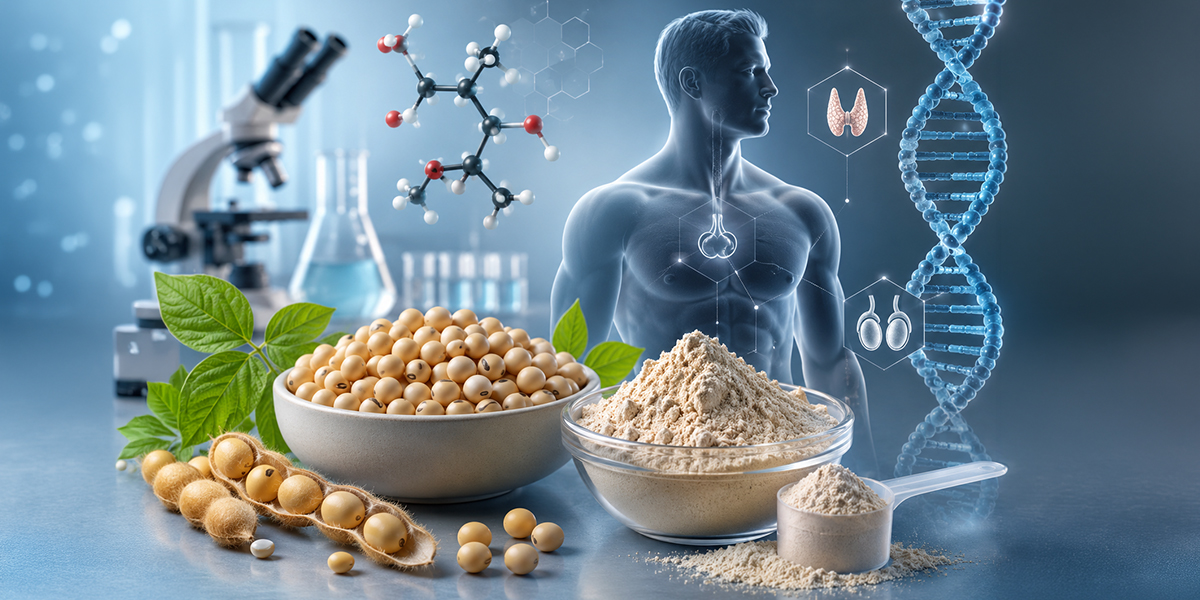


Soy protein is one of the most popular plant-based protein sources used to support muscle building, recovery, and general health.
However, many people still have concerns about its possible effects on hormones, especially testosterone and estrogen, because soy naturally contains plant compounds called isoflavones. Understanding the science behind these compounds helps separate facts from myths.
Table of Contents
What Is Soy Protein?
Soy protein is a plant-based protein derived from soybeans. It is commonly used in protein powders, bars, meat alternatives, and functional foods.
Unlike many plant proteins, soy protein contains all essential amino acids, making it a complete protein source. This makes it useful for people following vegetarian, vegan, or mixed diets.
Soy protein can support muscle repair and daily protein intake when used as part of a balanced nutrition plan.
What Are Isoflavones?
Isoflavones are natural plant compounds found in soy. They are often described as phytoestrogens because they can interact with estrogen receptors in the body.
However, phytoestrogens are not the same as human estrogen. Their effect is much weaker and depends on the amount consumed, individual metabolism, gut bacteria, hormone status, and overall diet.
In moderate amounts, soy isoflavones do not usually cause major hormonal changes in healthy adults.
| Compound | Found In | Hormonal Effect |
|---|---|---|
| Isoflavones | Soybeans and soy products | Weak interaction with estrogen receptors |
| Human Estrogen | Produced naturally by the body | Strong biological hormone activity |
| Phytoestrogens | Plant foods such as soy | Much weaker than natural estrogen |
Effect of Soy on Testosterone
One of the most common concerns about soy protein is whether it lowers testosterone levels in men.
Scientific evidence generally shows that moderate soy protein intake as part of a normal diet does not reduce testosterone levels in healthy men.
Hormonal problems are usually discussed only in cases of extremely high and unrealistic isoflavone intake, which does not reflect typical soy protein consumption.
- Moderate soy protein intake does not usually reduce testosterone.
- Soy isoflavones are much weaker than natural estrogen.
- Normal servings are not the same as excessive isoflavone intake.
- Overall diet quality matters more than one protein source alone.
- Men can include soy protein as part of a balanced diet.
Effect of Soy on Estrogen and Fertility
Soy isoflavones may weakly interact with estrogen receptors, but this does not mean they act like strong estrogen hormones in the body.
Moderate soy protein intake has not been shown to cause noticeable negative effects on fertility or reproductive health in healthy men or women.
For women, soy may have different effects depending on life stage, hormone status, and overall diet. In some postmenopausal women, soy isoflavones may even support hormonal comfort and general wellness.
Health Benefits of Soy Protein
Soy protein provides all essential amino acids and can help support daily protein intake, muscle maintenance, and recovery.
In addition to its protein content, soy may support heart health by helping improve cholesterol balance when used as part of a healthy diet.
Soy foods may also provide fiber, minerals, and plant compounds depending on the form consumed, such as tofu, soy milk, edamame, tempeh, or soy protein isolate.
| Benefit | How Soy Protein May Help | Best Context |
|---|---|---|
| Muscle Support | Provides essential amino acids | After training or as part of daily protein intake |
| Heart Health | May support healthier cholesterol levels | Balanced diet with reduced saturated fat |
| Plant-Based Nutrition | Offers a complete plant protein source | Vegetarian and vegan diets |
| Hormonal Comfort | Isoflavones may support some postmenopausal women | Moderate intake within a healthy diet |
Tips for Safe Use
For most healthy individuals, soy protein can be consumed safely in moderate amounts as part of a varied diet.
A common practical range is around 20–30 grams of soy protein per day, depending on total protein goals, body size, diet type, and activity level.
It is also helpful to combine soy protein with other protein sources such as dairy, eggs, fish, meat, legumes, pea protein, rice protein, or mixed plant protein blends to diversify amino acid intake and overall nutrition.
| Use Tip | Why It Helps | Practical Example |
|---|---|---|
| Use Moderate Amounts | Supports balance and avoids over-reliance | 20–30 g soy protein daily when suitable |
| Diversify Protein Sources | Improves overall nutrient variety | Soy plus legumes, dairy, eggs, or mixed plant proteins |
| Choose Quality Products | Supports purity and accurate labeling | Trusted soy protein isolate or whole soy foods |
| Consider Personal Health | Individual needs may vary | Ask a professional if you have hormone or thyroid concerns |
Frequently Asked Questions
Does soy protein lower testosterone?
Moderate soy protein intake does not usually lower testosterone levels in healthy men when consumed as part of a normal balanced diet.
Does soy increase estrogen?
Soy contains isoflavones, which are weak phytoestrogens. They can interact with estrogen receptors, but they are much weaker than natural estrogen and do not usually cause major hormonal changes in moderate amounts.
Is soy protein good for muscle building?
Yes. Soy protein contains all essential amino acids and can support muscle repair and growth when total protein intake and training are adequate.
Can women use soy protein safely?
Yes, moderate soy protein intake is generally suitable for healthy women and may provide protein, heart health, and wellness benefits depending on the overall diet.
How much soy protein is reasonable per day?
A common moderate range is around 20–30 grams per day, depending on individual protein needs, activity level, and overall diet quality.
Conclusion
Moderate consumption of soy protein is generally safe and does not negatively affect testosterone or estrogen levels in healthy individuals.
Scientific understanding of phytoestrogens helps reduce common concerns and shows that soy can be an effective plant-based protein option for muscle support, heart health, and balanced nutrition. As with any supplement, the best approach is moderation, product quality, protein variety, and attention to individual health needs.