
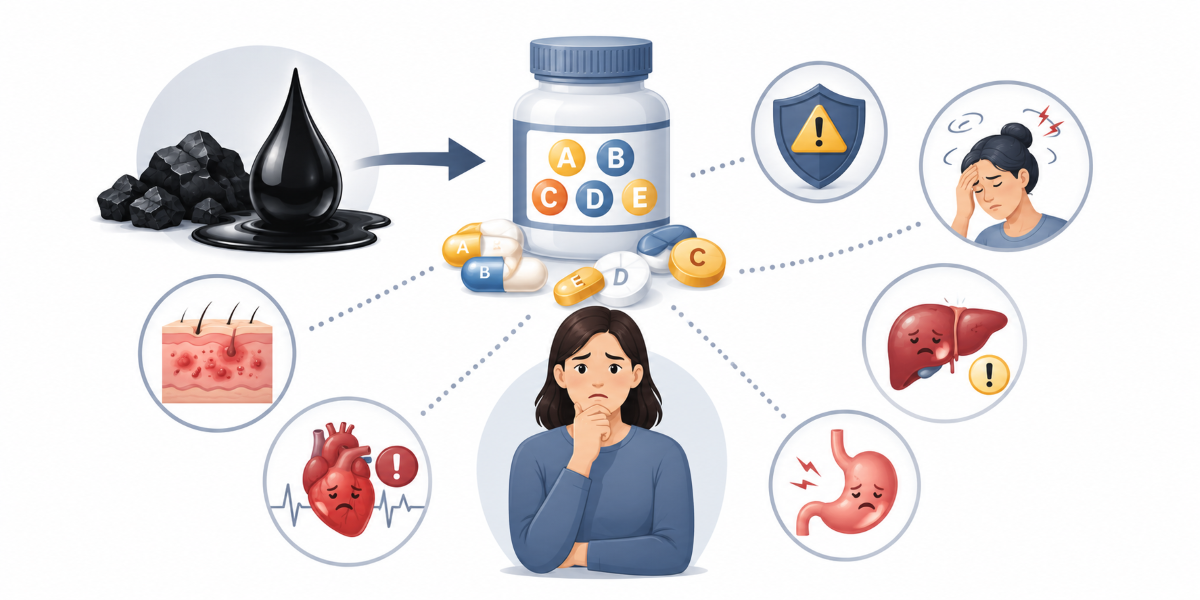


Concerns are sometimes raised about the origin of synthetic vitamins, especially claims that they are derived from petroleum products or “coal tar.”
This idea is often spread through marketing or social media, but it requires scientific clarification to separate fact from exaggeration. The real safety discussion should focus on product quality, purity, dosage, and manufacturing standards rather than fear-based claims about raw materials.
Table of Contents
Are Vitamins Made from Coal Tar?
Some synthetic vitamins may be produced using petroleum-derived compounds or other chemical starting materials during industrial synthesis.
However, this does not mean the final vitamin product contains coal tar, petroleum, or harmful industrial residue in the form people consume.
During manufacturing, chemical reactions and purification steps are used to produce a final molecule that matches the vitamin’s intended chemical structure.
Are Synthetic and Natural Vitamins Different?
From a chemical perspective, many synthetic vitamins are identical to the same vitamins found in nature when the molecular structure is the same.
For example, synthetic ascorbic acid is chemically the same vitamin C molecule used by the body. In such cases, the body recognizes the molecule based on its structure, not the marketing label of “natural” or “synthetic.”
However, some vitamins may exist in different forms, and these forms can vary in absorption, activation, or biological effect. This is why the exact form of the vitamin and the quality of the product matter.
| Claim | Scientific Clarification | What Really Matters |
|---|---|---|
| Synthetic vitamins contain coal tar | The final purified vitamin does not mean coal tar is present in the consumed product | Purity and manufacturing standards |
| Natural vitamins are always better | Some synthetic vitamins are chemically identical to natural forms | Form, dose, absorption, and individual needs |
| Synthetic vitamins are always harmful | There is no strong evidence that properly made synthetic vitamins are inherently harmful | Quality, dosage, and safety testing |
Where Does the Concern Really Come From?
The real concern is usually not the original raw material itself, but the quality of the manufacturing process.
Poor-quality supplements may raise concerns about contamination, inaccurate dosages, unwanted residues, or weak quality control.
Reputable manufacturers use strict purification, testing, and quality assurance processes to help ensure the final product is safe, stable, and free from harmful impurities.
Are There Health Risks?
When taken at appropriate doses and produced by reliable companies, there is no strong evidence that synthetic vitamins are inherently more harmful than natural ones.
Most risks are related to excessive dosing, poor-quality products, unnecessary supplementation, or combining multiple products that contain the same nutrient.
For example, fat-soluble vitamins such as vitamins A, D, E, and K may accumulate when taken in excessive amounts, while high doses of certain minerals or vitamins may cause digestive or systemic side effects.
Why Are Synthetic Vitamins Used?
Synthetic vitamins are widely used because they allow efficient, consistent, stable, and cost-effective production on a large scale.
This makes vitamins more accessible worldwide and helps support public health needs, including fortified foods, multivitamins, and targeted supplementation.
In many cases, extracting vitamins only from natural sources would be more expensive, less stable, and harder to standardize.
How to Choose Safer Vitamin Supplements
Choosing a good supplement should be based on quality, transparency, dosage, and suitability for individual needs.
- Choose products from reputable brands with quality testing standards.
- Check the form of the vitamin used, especially for nutrients with multiple forms.
- Avoid unnecessary high-dose supplements unless recommended by a healthcare professional.
- Read labels carefully to avoid taking the same vitamin from multiple products.
- Look for clear ingredient lists and avoid products with exaggerated claims.
- Use supplements to fill nutritional gaps, not to replace a balanced diet.
A balanced diet rich in whole foods remains the foundation of good nutrition, while supplements can be helpful when used appropriately.
Frequently Asked Questions
Are synthetic vitamins made from coal tar?
Some synthetic vitamins may use industrial chemical starting materials, but this does not mean the final purified vitamin contains coal tar.
Are synthetic vitamins harmful?
Properly manufactured synthetic vitamins are not inherently harmful when used at appropriate doses. The main concerns are poor quality, excessive intake, or unnecessary use.
Does the body know the difference between natural and synthetic vitamins?
If the molecular structure is identical, the body generally uses the vitamin in the same way. However, different forms of some vitamins may vary in absorption or activation.
Are natural vitamins always better?
Not always. Natural sources can provide additional food compounds, but synthetic vitamins can still be effective and safe when properly produced and used correctly.
What should I focus on when buying vitamins?
Focus on product quality, correct dosage, the vitamin form, brand reliability, and whether you actually need the supplement.
Conclusion
The idea that synthetic vitamins are dangerous simply because some may originate from industrial chemical starting materials such as coal tar or petroleum-derived compounds is largely exaggerated and scientifically misleading.
Synthetic vitamins can be chemically identical to natural vitamins, and the real safety concerns depend on dosage, purity, product quality, and individual health needs rather than the original source of production.