
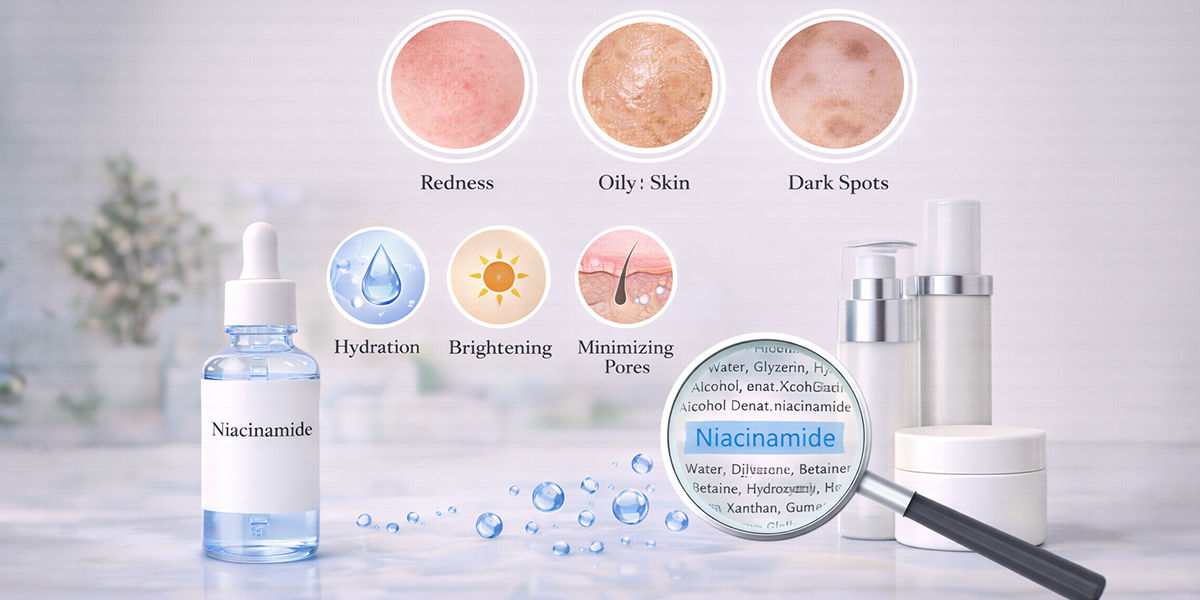


Niacinamide, also known as vitamin B3, has become one of the most popular ingredients in modern skincare formulations. It is widely used in serums, moisturizers, and cleansers because of its ability to support the skin barrier, regulate oil production, and improve overall skin texture.
Because niacinamide is generally well tolerated, it is suitable for many skin types, including sensitive and acne-prone skin. When added to a balanced routine built around face care and beauty care essentials, it can help support clearer, smoother, and more balanced-looking skin over time.
What Is Niacinamide?
Niacinamide is a form of vitamin B3 that plays an important role in maintaining healthy skin. It helps support the skin barrier, improve moisture retention, and enhance overall skin comfort. Because of these benefits, niacinamide is widely used in modern face care products for both daily maintenance and targeted concerns.
According to dermatology guidance from the American Academy of Dermatology, niacinamide can help improve skin tone and reduce visible signs of inflammation, which is one reason it is commonly recommended for a wide range of skin types and concerns.
Key Skin Benefits of Niacinamide
Niacinamide offers several skincare benefits that make it useful in both simple and advanced routines. It supports multiple skin concerns at once, which is why it is often included in serums, moisturizers, and broader beauty care products.
Helps Control Oil Production
Niacinamide may help regulate sebum production, which makes it especially beneficial for oily and acne-prone skin.
Minimizes the Appearance of Pores
With regular use, niacinamide may help improve skin texture and reduce the visible appearance of enlarged pores.
Strengthens the Skin Barrier
Niacinamide supports the production of ceramides, which help protect the skin and reduce moisture loss.
Improves Skin Tone
It may help reduce the appearance of dark spots and uneven tone over time, especially when used consistently within a routine that includes sunscreen.
Research discussed by the Mayo Clinic indicates that niacinamide can contribute to improved skin barrier function and reduced inflammation, which supports its role in daily skincare.
Which Skin Types Benefit Most from Niacinamide?
One of niacinamide’s biggest advantages is its flexibility. It works well for most skin types and can fit easily into routines built around cleansers, serums, and moisturizers.
Oily Skin
Niacinamide helps regulate oil production and may reduce visible shine throughout the day.
Acne-Prone Skin
Its anti-inflammatory properties may help calm visible redness associated with acne and support a more balanced complexion.
Dry Skin
By strengthening the barrier, niacinamide can help reduce moisture loss and improve skin comfort.
Sensitive Skin
Niacinamide is generally well tolerated and may help soothe skin that feels irritated or reactive.
Different Forms of Niacinamide in Skincare Products
Niacinamide is found in several product types, and the best format depends on your routine, skin type, and personal preference.
Niacinamide Serums
Serums usually contain higher concentrations and are designed to target concerns such as oiliness, uneven texture, or dullness.
Niacinamide Moisturizers
These combine hydration with the barrier-supporting benefits of niacinamide, making them a practical option for daily use through a moisturizer step.
Niacinamide Cleansers
Cleansers containing niacinamide can gently support the barrier while helping remove excess oil and impurities.
Niacinamide Toners
Toners may include niacinamide to help refine skin texture and support oil balance before the next skincare steps.
Choosing the right format from the face care and beauty care categories helps make the ingredient easier to use consistently.
How to Use Niacinamide in a Skincare Routine
Niacinamide is a versatile ingredient that can usually be used both morning and evening. It fits well into most routines and can be especially helpful when combined with hydration and daily sun protection.
A simple routine may include:
- Cleanser
- Niacinamide serum
- Moisturizer
- Sunscreen in the morning
Because niacinamide is generally gentle, it can often be used alongside other skincare ingredients without making the routine feel overly aggressive.
Ingredients That Work Well with Niacinamide
Niacinamide pairs well with many other ingredients, which makes it one of the most flexible additions to a routine.
- Hyaluronic acid for added hydration
- Retinol to support renewal
- Salicylic acid for acne-prone skin
- Vitamin C to support a brighter-looking skin tone
These combinations are often found across serum, moisturizer, and face care routines designed for multiple skin concerns.
Common Mistakes When Using Niacinamide
Although niacinamide is easy to use, a few common mistakes can reduce its effectiveness or make your routine feel unnecessarily complicated.
- Using products with very high concentrations when they are not needed
- Layering too many active ingredients at once
- Expecting immediate results instead of giving the product time
- Skipping moisturizer or sunscreen in a routine where overall barrier support matters
FAQ
Can niacinamide be used every day?
Yes. Niacinamide is usually suitable for daily use in both morning and evening routines.
Is niacinamide better in a serum or a moisturizer?
A serum is often better if you want a more targeted effect, while a moisturizer is convenient for daily maintenance and barrier support.
Can niacinamide be used with other active ingredients?
Yes. Niacinamide is generally compatible with many ingredients, including hyaluronic acid, retinol, salicylic acid, and vitamin C.
How long does it take to see results?
Visible improvement usually takes consistent use over several weeks, depending on your skin concern and the rest of your routine.
References
- American Academy of Dermatology
- Mayo Clinic
Niacinamide has become a widely used ingredient in modern skincare because it can support multiple skin concerns at once. From improving texture to strengthening the skin barrier and helping balance oil production, it fits well into many daily routines. When used consistently within a balanced routine built around cleanser, serum, moisturizer, and sunscreen, niacinamide can help support healthier, smoother-looking skin over time.