

Some vitamins cannot be used directly by the body immediately after consumption. Instead, they must first be converted into their active forms in the liver or body tissues before becoming biologically effective.
In certain situations, such as poor absorption, digestive issues, or genetic factors, the body’s ability to perform this conversion may be reduced. This is where active or co-enzymated vitamin forms become important, as they are already prepared for more direct use by the body.
Table of Contents
Why Active Vitamin Forms Matter
Active vitamin forms are nutrients that have already been converted into a form the body can use more easily. This may be helpful for people who have reduced conversion efficiency or higher nutritional needs.
These forms may be especially useful for individuals with digestive concerns, poor nutrient absorption, certain genetic variations, or specific health goals that require more efficient nutrient utilization.
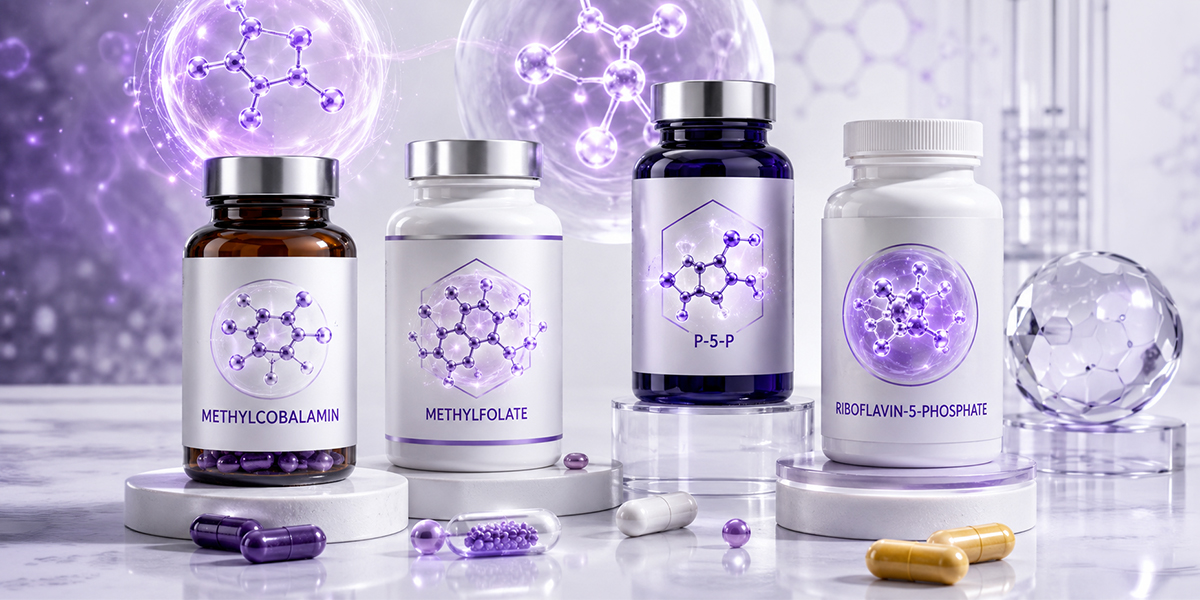
Vitamin B12: Methylcobalamin
Vitamin B12 is one of the most important vitamins that may be more beneficial in its active form. Methylcobalamin is a commonly used active form of vitamin B12.
This form is more easily utilized by the body compared to some other forms and supports energy production, nerve health, and red blood cell formation.
It may be especially useful for individuals with low B12 levels, plant-based diets, absorption issues, or increased needs.
Folate: L-Methylfolate
Folate is essential for cell production, DNA synthesis, and brain health. Instead of traditional folic acid, some individuals may benefit from the active form known as L-methylfolate.
L-methylfolate may be more effective for people who have difficulty converting folic acid into its usable form.
This active form is commonly considered when supporting methylation, pregnancy nutrition planning, mood support, or general cellular health under professional guidance.
Vitamin B6: Pyridoxal-5-Phosphate
Pyridoxal-5-phosphate, also known as P5P, is the active form of vitamin B6.
Unlike standard pyridoxine, P5P can be used directly in many biological reactions without requiring additional conversion.
Vitamin B6 in its active form supports neurotransmitter production, protein metabolism, hormone regulation, and normal nervous system function.
Vitamin B2: Riboflavin-5-Phosphate
Riboflavin-5-phosphate is the active form of vitamin B2. It plays an important role in cellular energy production and enzyme activity.
This form may be utilized more efficiently than standard riboflavin, especially in people who may have difficulty converting riboflavin into its active coenzyme form.
Vitamin B2 also supports antioxidant systems and helps the body process fats, proteins, and carbohydrates for energy.
Vitamin D: Calcifediol or Active Forms
Vitamin D must be converted in the liver and kidneys before it becomes fully active in the body.
Some individuals may benefit from forms closer to the active state, such as calcifediol, especially when conversion efficiency is reduced or when faster correction is required under medical supervision.
Because vitamin D affects calcium balance, bones, immunity, and many body systems, choosing the correct form and dose should be done carefully.
Coenzyme Q10: Ubiquinol
Although Coenzyme Q10 is not technically a vitamin, it is an important nutrient involved in cellular energy production.
The active form, ubiquinol, is generally easier to absorb and use compared to the standard form, ubiquinone.
Ubiquinol may be especially useful for older adults, individuals with higher energy demands, or those looking for more efficient CoQ10 support.
| Nutrient | Active Form | Main Support |
|---|---|---|
| Vitamin B12 | Methylcobalamin | Energy, nerves, red blood cells |
| Folate | L-Methylfolate | Cell production, brain health, methylation |
| Vitamin B6 | Pyridoxal-5-Phosphate | Neurotransmitters, protein metabolism, hormones |
| Vitamin B2 | Riboflavin-5-Phosphate | Cellular energy and enzyme function |
| Vitamin D | Calcifediol or active forms | Bone, calcium balance, immune support |
| CoQ10 | Ubiquinol | Cellular energy and antioxidant support |
Frequently Asked Questions
What does active vitamin form mean?
It means the vitamin is already in a form that the body can use more directly, with less need for conversion.
Are active vitamins better for everyone?
Not necessarily. Many people can use standard vitamin forms effectively, while others may benefit from active forms depending on absorption and conversion needs.
Is methylcobalamin better than regular B12?
Methylcobalamin is an active form of B12 and may be easier for some people to utilize, especially for nerve and energy support.
Who may benefit from L-methylfolate?
People who have difficulty converting folic acid, or those with specific health goals, may benefit from L-methylfolate under professional guidance.
Should I choose active forms without testing?
It is better to consider your diet, symptoms, lab results, and healthcare guidance before choosing high-potency or active vitamin forms.
Conclusion
Choosing vitamins in their active forms may benefit individuals who struggle with nutrient absorption or vitamin conversion processes within the body.
However, not everyone requires these forms, as many people can meet their nutritional needs effectively through a balanced diet or standard supplements. Balance, product quality, and professional guidance remain important when selecting any supplement type.