

A child’s immune system plays an essential role in protecting the body and supporting healthy growth and development. During childhood, the immune system continues to mature, making proper nutrition, adequate sleep, physical activity, and healthy daily habits important parts of overall wellness.
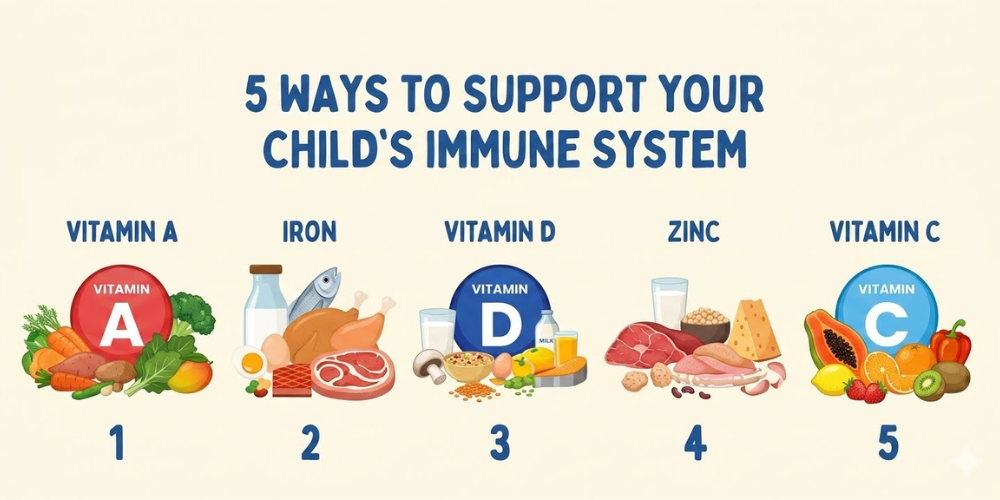
While a balanced diet should provide most of the nutrients children need, certain vitamins and minerals are particularly important for maintaining normal immune function. Nutrients such as vitamin C, vitamin D, zinc, vitamin A, and iron contribute to different aspects of immune health and overall development.
Understanding these nutrients can help parents make informed choices about their children's nutrition. However, supplements should not replace a varied diet, and children generally have different nutritional requirements depending on their age, diet, growth, and individual health needs.
In this guide, we explore the 5 essential nutrients for kids' immune health, how each nutrient supports normal immune function, common food sources, and important considerations when choosing children's vitamins and supplements.
Table of Contents
- Why Is Immune Health Important for Children?
- 1. Vitamin C for Children's Immune Support
- 2. Vitamin D and Children's Immune Health
- 3. Zinc for a Healthy Immune System
- 4. Vitamin A and Immune Function
- 5. Iron and Healthy Immune Function
- How Nutrition Supports a Child's Immune System
- When Do Children Need Vitamin or Mineral Supplements?
- Recommended Children's Supplements
- FAQ
- Conclusion
Why Is Immune Health Important for Children?
The immune system is the body's natural defense network, helping recognize and respond to bacteria, viruses, and other potentially harmful substances. During childhood, supporting normal immune function is an important part of maintaining overall health and development.
A child's immune health is influenced by several factors, including nutrition, sleep, physical activity, hygiene, stress, and overall health. A varied diet provides the vitamins, minerals, protein, healthy fats, and other nutrients needed for normal immune and cellular function.
Children also have changing nutritional needs as they grow. Periods of rapid growth, selective eating, restricted diets, or limited intake of certain food groups may make it more difficult to obtain adequate amounts of some essential nutrients.
However, supporting the immune system does not mean trying to make it "stronger" with large amounts of supplements. The goal is to provide the nutrients the body needs for normal immune function and healthy development.
1. Vitamin C for Children's Immune Support
Vitamin C is one of the best-known nutrients associated with immune health. It contributes to normal immune system function and also acts as an antioxidant, helping protect cells from oxidative stress.
Vitamin C supports several processes involved in the body's natural defenses. It also contributes to normal collagen formation, which is important for healthy skin, blood vessels, bones, and other connective tissues.
Children can obtain vitamin C from a variety of foods, including:
- Oranges and other citrus fruits
- Strawberries and other berries
- Kiwi
- Sweet peppers
- Tomatoes
- Broccoli
Including a variety of fruits and vegetables in a child's diet is generally the best way to provide vitamin C along with other beneficial nutrients and plant compounds.
Although vitamin C is important for normal immune function, taking more than a child needs does not necessarily provide additional immune benefits. Children's supplements should therefore be used according to age-appropriate directions and professional guidance when necessary.
2. Vitamin D and Children's Immune Health
Vitamin D is an essential nutrient that plays an important role in bone health, calcium absorption, and normal immune system function. Because the body can produce vitamin D when skin is exposed to sunlight, it is sometimes referred to as the "sunshine vitamin."
Maintaining adequate vitamin D levels is particularly important during childhood because children are undergoing continuous growth and development. Vitamin D contributes to normal bone and muscle function while also supporting the body's immune defenses.
Dietary sources of vitamin D include fatty fish, egg yolks, and foods fortified with vitamin D. However, dietary intake may not always provide sufficient amounts, depending on a child's diet and individual circumstances.
Children who may be at risk of inadequate vitamin D intake should be evaluated by a healthcare professional before supplementation. The appropriate amount depends on factors such as age, dietary intake, nutritional status, and individual health needs.
3. Zinc for a Healthy Immune System
Zinc is an essential mineral that plays an important role in normal immune system function, growth, development, and numerous processes throughout the body. During childhood, adequate zinc intake is particularly important because children are growing rapidly and their nutritional needs continue to change.
Zinc contributes to the normal function of immune cells and helps support the body's natural defense mechanisms. It also plays a role in normal protein and DNA synthesis, making it an important nutrient for healthy growth and development.
Children can obtain zinc from a variety of foods, including:
- Lean meat and poultry
- Fish and seafood
- Eggs
- Dairy products
- Beans and lentils
- Nuts and seeds
- Fortified cereals
Children following vegetarian or highly restricted diets may need particular attention to their overall zinc intake. However, supplementation should not be started simply because zinc is associated with immune health. Excessive zinc intake can interfere with the absorption of other minerals and may cause unwanted effects.
For this reason, parents should choose age-appropriate children's supplements and follow the recommended serving rather than assuming that a higher amount provides greater immune support.
4. Vitamin A and Immune Function
Vitamin A is an important fat-soluble vitamin that supports normal immune function, healthy vision, growth, and the maintenance of normal skin and mucous membranes. These tissues form important physical barriers that help protect the body from external challenges.
Vitamin A also contributes to the normal development and function of immune cells. Adequate intake is therefore an important part of maintaining overall children's wellness and supporting healthy growth.
Good food sources of vitamin A and provitamin A carotenoids include:
- Carrots
- Sweet potatoes
- Pumpkin
- Spinach and other dark green vegetables
- Eggs
- Dairy products
- Liver
Colorful fruits and vegetables can provide carotenoids that the body can convert into vitamin A, while animal-based foods can provide preformed vitamin A.
Because vitamin A is stored in the body, excessive supplementation can be harmful. Parents should avoid giving children high-dose vitamin A supplements unless specifically recommended by a healthcare professional.
5. Iron and Healthy Immune Function
Iron is best known for its role in transporting oxygen throughout the body, but it also contributes to normal immune function and healthy cognitive and physical development. Adequate iron intake is particularly important during periods of rapid childhood growth.
Iron is involved in the production of hemoglobin, the protein in red blood cells responsible for carrying oxygen. It also participates in several cellular processes that support normal energy metabolism and immune function.
Children can obtain iron from both animal and plant-based foods, including:
- Lean red meat
- Poultry and fish
- Eggs
- Lentils and beans
- Spinach and other leafy green vegetables
- Iron-fortified cereals
Pairing plant-based sources of iron with foods containing vitamin C can help improve the absorption of non-heme iron. A varied diet can therefore provide multiple nutrients that work together to support children's overall nutritional needs.
Iron supplementation should be approached carefully. Children should not receive iron supplements unless there is an identified need or a healthcare professional recommends them, because excessive iron intake can be harmful.
How Nutrition Supports a Child's Immune System
A child's immune system depends on a consistent supply of essential nutrients rather than a single "immune-boosting" food or supplement. A balanced and varied diet can provide many of the vitamins, minerals, proteins, healthy fats, and antioxidants needed for normal immune and cellular function.
Parents can support children's nutritional wellness by regularly offering a variety of:
- Fruits and vegetables
- Whole grains
- Lean proteins
- Fish and other sources of healthy fats
- Dairy products or suitable alternatives
- Beans, lentils, nuts, and seeds when age-appropriate
Nutrition is only one part of children's immune wellness. Consistent sleep, regular physical activity, good hygiene, adequate hydration, and a supportive home environment also contribute to overall health and development.
Supplements can provide targeted nutritional support when dietary intake is insufficient or when a healthcare professional identifies a specific nutritional need. They should complement healthy eating rather than replace it.
When Do Children Need Vitamin or Mineral Supplements?
Many children who eat a varied and balanced diet can obtain the nutrients they need from food. However, supplementation may sometimes be appropriate when dietary intake is limited or when a child has specific nutritional requirements.
Parents may wish to discuss supplementation with a healthcare professional if a child:
- Has a very limited or selective diet
- Avoids entire food groups
- Follows a vegetarian or vegan diet
- Has a diagnosed nutritional deficiency
- Has increased nutritional needs due to a specific health circumstance
- Has difficulty obtaining adequate nutrients through food alone
The right supplement depends on the child's age, diet, nutritional status, and individual health needs. More is not always better, particularly with fat-soluble vitamins and minerals that can accumulate in the body.
Recommended Children's Supplements
If you are looking for children's vitamins and supplements, explore the available options from Dr Nutrition. The children's health range includes different formulations designed to provide nutritional support for growing children and help complement a balanced daily diet.
When choosing a supplement for your child, consider their age, dietary intake, nutritional needs, and individual health circumstances. Always follow the recommended serving on the product label and choose an age-appropriate formulation.
Explore Children's Health Supplements available from Dr Nutrition.
Parents should remember that supplements are intended to complement a healthy diet rather than replace nutritious foods. If your child has a restricted diet, suspected nutrient deficiency, chronic health condition, or takes medication, consult a healthcare professional before starting a new supplement.
FAQ
1. What are the best nutrients for children's immune health?
Vitamin C, vitamin D, zinc, vitamin A, and iron are important nutrients that contribute to normal immune function and children's overall growth and development. A varied, nutrient-rich diet should remain the primary source of these nutrients whenever possible.
2. Does vitamin C help support children's immunity?
Vitamin C contributes to normal immune system function and provides antioxidant support. Children can obtain vitamin C from foods such as citrus fruits, strawberries, peppers, tomatoes, and broccoli. Supplements may be appropriate when dietary intake is inadequate or when recommended by a healthcare professional.
3. Is vitamin D important for children's immune health?
Yes. Vitamin D contributes to normal immune function as well as healthy bones and muscles. The appropriate intake depends on factors such as age, diet, vitamin D status, and individual health circumstances.
4. Can children take immune-support supplements every day?
Some children's supplements are designed for daily use when taken according to the product directions. However, the need for supplementation depends on the child's diet, age, nutritional status, and individual circumstances. Parents should follow age-appropriate serving instructions and seek professional advice when needed.
5. Can children get enough immune-supporting nutrients from food?
Many children can obtain the nutrients they need from a varied and balanced diet. Fruits, vegetables, whole grains, protein-rich foods, dairy products or suitable alternatives, and healthy sources of fats can provide a broad range of essential nutrients. Supplements may be useful when dietary intake is insufficient or a specific nutritional need has been identified.
Conclusion
Supporting a child's immune health starts with the fundamentals: balanced nutrition, adequate sleep, regular physical activity, hydration, good hygiene, and healthy daily routines. Essential nutrients such as vitamin C, vitamin D, zinc, vitamin A, and iron play important roles in normal immune function and healthy growth.
Although children's vitamins and supplements can provide useful nutritional support in certain situations, they should not be viewed as a replacement for a varied diet or healthy lifestyle. The right supplement depends on the child's age, dietary intake, nutritional status, and individual health needs.
For responsible supplementation, choose an age-appropriate product from a reputable manufacturer, follow the recommended serving, and avoid combining multiple products that may contain the same nutrients. When a child has a restricted diet, suspected nutritional deficiency, chronic health condition, or takes medication, professional guidance can help determine whether supplementation is appropriate.
With a balanced approach to nutrition and wellness, parents can help provide the foundation children need for healthy immune function, growth, development, and overall well-being.