

Vitamin C is one of the most essential vitamins for the human body. It supports immune function, promotes collagen production, and enhances iron absorption. It also plays an important role in many vital bodily processes. Despite its many health benefits, consuming very large amounts of Vitamin C, particularly through dietary supplements, may be associated with an increased risk of kidney stone formation in some individuals.
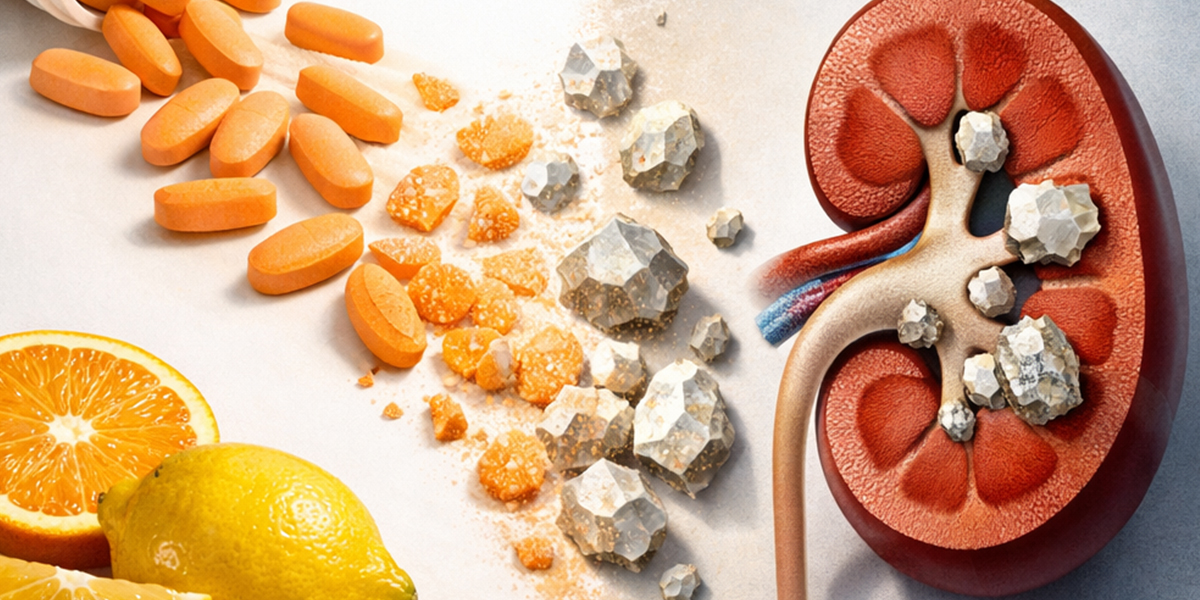
Kidney stones are hard deposits made of minerals and salts that form in the urine. Calcium oxalate stones are the most common type. When the body metabolizes Vitamin C, a portion is converted into oxalate. This substance can bind with calcium in the urine and contribute to the formation of crystals that may later develop into stones.
Medical evidence suggests that very high doses of Vitamin C supplements, especially those exceeding 1000 mg per day, may raise oxalate levels in the urine. As these levels increase, the risk of kidney stone formation may also rise, particularly in people with a personal history of kidney stones or a genetic predisposition to developing them.
Is It Safe to Take Vitamin C Daily?
In most cases, taking Vitamin C in moderate amounts within the recommended daily intake is considered safe and does not usually lead to kidney stone formation. The risk is generally not associated with moderate dietary intake but rather with excessive use of high-dose supplements over long periods without a clear medical need or proper supervision.
The Difference Between Vitamin C from Food and Supplements
Obtaining Vitamin C from natural food sources differs from taking it in supplement form. Foods rich in Vitamin C, such as oranges, lemons, guava, kiwi, strawberries, and bell peppers, typically provide balanced amounts of the vitamin, along with fiber, antioxidants, potassium, and other nutrients that support efficient absorption.
In contrast, high-dose Vitamin C supplements may deliver a large amount at once, often more than the body actually needs. When intake exceeds the body’s requirements, some of the excess Vitamin C may be converted into oxalate and excreted in the urine, which can increase the likelihood of stone formation in more vulnerable people.
For this reason, it is generally better to rely on food as the primary source of Vitamin C and avoid high-dose supplements unless they are truly needed and used appropriately.
Who Is More Likely to Be at Risk?
The risk of kidney stone formation may be higher in certain groups, including:
- People with a previous history of kidney stones
- Individuals who have had calcium oxalate stones before
- Those with a genetic tendency to develop stones
- People who do not drink enough water daily
- Those who consume high amounts of salt or animal protein
- Individuals who regularly use high-dose Vitamin C supplements
Kidney Stone Symptoms You Should Not Ignore
If kidney stones develop, several warning signs may appear, including:
- Sudden and severe pain in the back, side, or lower abdomen
- Pain or burning during urination
- Frequent urination or a strong urge to urinate
- Blood in the urine
- Nausea or vomiting
- Fever along with back pain or side pain
These symptoms may indicate the presence of a kidney stone or a complication that requires prompt medical evaluation.
When Should You Seek Medical Help?
Medical attention should be sought if you experience severe and sudden pain in the side or lower abdomen, notice blood in the urine, or if the pain is accompanied by fever, nausea, or vomiting. Extra caution is also important for people with a previous history of kidney stones, as they may be at greater risk of recurrence.
How to Reduce the Risk of Kidney Stones
You can lower the risk of kidney stone formation by following a few important healthy habits, such as:
- Drinking enough water every day
- Eating a balanced diet rich in fruits and vegetables
- Maintaining an adequate intake of dietary calcium
- Reducing salt consumption
- Limiting excess animal protein
- Avoiding overuse of high-dose Vitamin C supplements
- Reducing high-oxalate foods in higher-risk individuals, such as spinach and beets
Conclusion
Vitamin C is an important nutrient and is not considered harmful when consumed in moderation. However, excessive use of high-dose Vitamin C supplements may increase the risk of kidney stones in some people. The best way to benefit from Vitamin C is to obtain it through natural food sources while avoiding unnecessary high-dose supplementation. Preventing kidney stones is not about Vitamin C alone. It also depends on adequate hydration, a balanced diet, and reducing other risk factors for stone formation.