
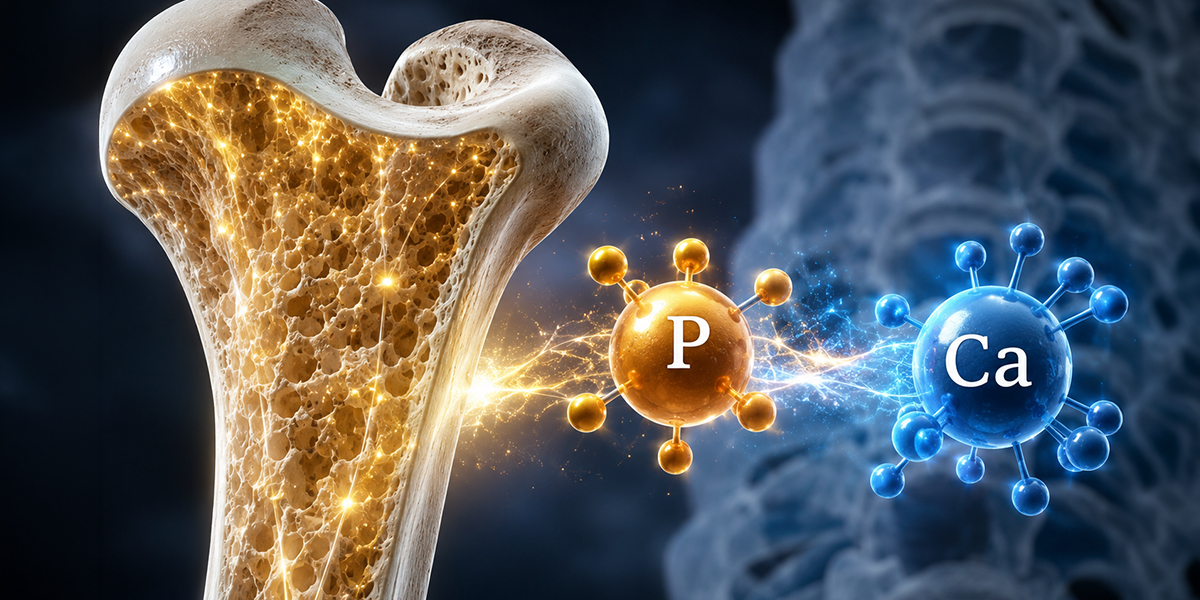


Minerals play a fundamental role in maintaining overall health, especially when it comes to bone strength, skeletal structure, and long-term mobility.
Phosphorus is considered the second most abundant mineral in the body after calcium. It works closely with calcium to support bone formation, bone mineralization, and the maintenance of healthy bone density throughout life.
Table of Contents
What Is the Second Most Abundant Mineral?
Phosphorus is the second most abundant mineral in the human body after calcium, and most of it is stored in bones and teeth.
It is an essential mineral that contributes to bone structure, energy production, cellular function, and the formation of important compounds such as ATP, which the body uses for energy.
Because phosphorus is closely connected to calcium, maintaining the right balance between these minerals is important for strong bones and healthy skeletal function.
Role in Bone Formation
Phosphorus contributes to the formation of the bone matrix, which gives bones their structure and strength.
Together with calcium, phosphorus helps build hydroxyapatite, the mineral complex that makes bones hard, dense, and resistant to stress.
Adequate phosphorus intake supports bone mineralization, which may help maintain bone density and reduce the risk of weak bones over time.
- Supports bone matrix development.
- Helps maintain bone density and strength.
- Works with calcium to support mineralized bone tissue.
- Contributes to healthy teeth and skeletal structure.
- Supports long-term bone health when intake is balanced.
How Phosphorus Works with Calcium
Calcium and phosphorus work together as structural minerals in bones and teeth.
Vitamin D helps regulate the absorption and use of both minerals, while vitamin K supports proteins involved in bone mineralization.
The relationship between calcium and phosphorus is important because too little or too much of one mineral may affect overall mineral balance and bone health.
| Nutrient | Main Role in Bone Health | Why It Matters |
|---|---|---|
| Phosphorus | Supports bone mineral structure | Helps form strong bones and teeth |
| Calcium | Main structural mineral in bones | Supports density, strength, and skeletal stability |
| Vitamin D | Supports mineral absorption and regulation | Helps the body use calcium and phosphorus properly |
| Vitamin K | Supports bone-related proteins | Helps direct minerals toward bone tissue |
Supporting Joint and Cartilage Health
Although phosphorus is best known for its role in bones and teeth, proper mineral balance also supports the structures surrounding joints.
Healthy bones, cartilage, and connective tissues work together to maintain movement, flexibility, and stability during daily activity and exercise.
When the skeletal system is well-supported, joints may experience better mechanical support and reduced stress during movement, especially in physically active individuals.
Impact on Growth in Children and Adolescents
Phosphorus is especially important during childhood and adolescence, when bones are growing rapidly and the skeletal system is developing.
Adequate intake of phosphorus, calcium, vitamin D, protein, and other key nutrients helps support normal bone growth, height development, and skeletal strength.
Deficiency during growth stages may affect bone mineralization and may contribute to weak bones or delayed skeletal development, especially when overall nutrition is poor.
| Life Stage | Why Phosphorus Matters | Nutritional Focus |
|---|---|---|
| Children | Supports growing bones and teeth | Balanced meals with dairy, protein, and whole foods |
| Adolescents | Supports rapid skeletal growth | Calcium, phosphorus, vitamin D, and protein |
| Adults | Maintains bone density and energy metabolism | Balanced mineral intake and regular activity |
| Older Adults | Supports skeletal strength with age | Bone-supportive diet, vitamin D status, and resistance exercise |
Dietary Sources of Phosphorus
Phosphorus is found in many foods, especially protein-rich foods and whole-food sources.
Good dietary sources include milk, yogurt, cheese, meat, fish, eggs, nuts, legumes, whole grains, and dark leafy vegetables.
A varied diet usually provides enough phosphorus for most people, but the quality of the overall diet matters. Whole-food sources are generally preferred over excessive intake from processed foods and phosphate additives.
| Food Source | Examples | Additional Benefit |
|---|---|---|
| Dairy Products | Milk, yogurt, cheese | Provide calcium and protein for bone support |
| Protein Foods | Meat, fish, eggs, poultry | Support muscle and tissue repair |
| Plant-Based Foods | Nuts, legumes, seeds | Provide minerals, fiber, and healthy fats |
| Whole Grains and Vegetables | Oats, whole wheat, leafy greens | Support balanced nutrition and digestion |
Frequently Asked Questions
What is the second most abundant mineral in the body?
Phosphorus is considered the second most abundant mineral in the body after calcium, with most of it stored in bones and teeth.
How does phosphorus support bone formation?
Phosphorus works with calcium to form the mineral structure of bones and teeth, helping support bone density, strength, and mineralization.
Does phosphorus help joints?
Phosphorus mainly supports bones, but healthy mineral balance contributes to skeletal strength, which helps support joint stability and movement.
What foods contain phosphorus?
Phosphorus is found in dairy products, meat, fish, eggs, nuts, legumes, whole grains, seeds, and some vegetables.
Can too much phosphorus be harmful?
Excessive phosphorus intake, especially from processed foods or phosphate additives, may be problematic for some people, particularly those with kidney concerns or low calcium intake.
Conclusion
Phosphorus is the second most abundant mineral in the body and plays a key role in bone formation in collaboration with calcium.
Regular intake through a balanced diet supports bone density, skeletal strength, energy metabolism, and long-term bone and joint health. However, balance is essential, and phosphorus should be consumed as part of a nutrient-rich diet that also provides calcium, vitamin D, vitamin K, protein, and other bone-supportive nutrients.