

Brain health becomes increasingly important with age, affecting memory, focus, learning, and overall wellbeing. While omega-3s and antioxidants often receive attention, dietary fiber is also emerging as an important nutrient because of its role in supporting gut health and the gut-brain connection.
Fiber helps nourish beneficial gut bacteria, which produce compounds that support digestion, metabolism, and overall health. A healthy gut environment may also contribute to healthy brain function as part of normal aging.
Although fiber is not a treatment for age-related cognitive conditions, getting enough fiber through a balanced diet can support digestive health, healthy blood sugar balance, cardiovascular wellness, and healthy aging.
In this guide, you'll learn how fiber supports brain health, the gut-brain connection, the best high-fiber foods, daily fiber recommendations, and simple ways to increase your fiber intake.
Table of Contents
- What Is Dietary Fiber?
- Why Brain Health Changes with Age
- Understanding the Gut-Brain Connection
- How Fiber Supports Brain Health
- Best High-Fiber Foods for Healthy Aging
- How Much Fiber Do You Need?
- Easy Ways to Increase Fiber Intake
- Lifestyle Habits That Support Brain Health
- Recommended Fiber Supplements
- FAQ
- Conclusion
What Is Dietary Fiber?
Dietary fiber is a type of carbohydrate found naturally in fruits, vegetables, whole grains, legumes, nuts, and seeds. Unlike most carbohydrates, fiber is not fully digested, allowing it to support digestive health and feed beneficial gut bacteria.
Fiber also helps maintain healthy cholesterol levels already within the normal range, supports balanced blood sugar levels, and promotes regular bowel movements. These benefits make it an important part of a healthy aging diet.
The two main types of fiber include:
- Soluble fiber: Dissolves in water, supports healthy blood sugar and cholesterol levels, and nourishes beneficial gut bacteria.
- Insoluble fiber: Adds bulk to stool and supports healthy digestive regularity.
Good sources of fiber include:
- Whole grains
- Oats and barley
- Beans and lentils
- Apples and pears
- Leafy vegetables
- Nuts and seeds
Why Brain Health Changes with Age
As we grow older, normal changes occur throughout the body, including the brain. Healthy aging depends on multiple factors such as nutrition, physical activity, sleep, cardiovascular health, and maintaining a healthy gut microbiome.
Several age-related changes may influence cognitive function, including slower cellular communication, increased oxidative stress, reduced circulation, and changes in gut bacteria. While these changes are natural, healthy lifestyle habits may help support long-term brain wellness.
Key factors that support healthy brain aging include:
- Balanced nutrition rich in fiber and antioxidants.
- Regular physical activity.
- Healthy blood circulation.
- Quality sleep.
- Stress management.
- A healthy gut microbiome.
Because fiber helps support many of these areas, researchers continue exploring its role as part of a brain-friendly diet for healthy aging.
Understanding the Gut-Brain Connection
The gut-brain axis is a complex communication system that connects the digestive system and the brain. This connection allows signals to travel between the gut and the brain through nerves, hormones, immune pathways, and gut bacteria.
The gut microbiome, which includes trillions of microorganisms living in the digestive tract, plays an important role in maintaining overall health. These beneficial bacteria help digest certain nutrients and produce compounds that support normal body functions.
Dietary fiber acts as a food source for beneficial gut bacteria. When bacteria ferment fiber, they produce short-chain fatty acids (SCFAs), which help support intestinal health and contribute to a balanced internal environment.
A healthy gut microbiome supports:
- Normal digestive function.
- Healthy nutrient absorption.
- Balanced immune activity.
- Healthy metabolism.
- Communication between the gut and brain.
How Fiber Supports Brain Health
Fiber supports brain health indirectly by improving several systems that influence cognitive wellness. A diet rich in fiber contributes to gut health, cardiovascular health, and metabolic balance—all important parts of healthy aging.
1. Supports the Gut Microbiome
Fiber helps feed beneficial bacteria in the digestive system. A diverse and balanced microbiome supports the production of helpful compounds that contribute to normal gut function and overall wellness.
Supports: Gut health, digestion, and healthy gut-brain communication.
2. Helps Maintain Healthy Blood Sugar Levels
Soluble fiber slows digestion and helps support a steady release of glucose into the bloodstream. Maintaining balanced blood sugar levels helps provide consistent energy for the body and brain.
Supports: Metabolic health, energy balance, and overall wellness.
3. Supports Cardiovascular Wellness
Healthy blood circulation is essential for delivering oxygen and nutrients throughout the body, including the brain. Fiber-rich diets are associated with heart-healthy eating patterns that support overall cardiovascular wellness.
Supports: Healthy circulation and long-term wellbeing.
4. Provides Nutritional Support for Healthy Aging
High-fiber foods such as fruits, vegetables, legumes, and whole grains also provide vitamins, minerals, antioxidants, and plant compounds that contribute to a balanced diet.
Supports: Overall nutrition, cellular health, and healthy aging.
Best High-Fiber Foods for Healthy Aging
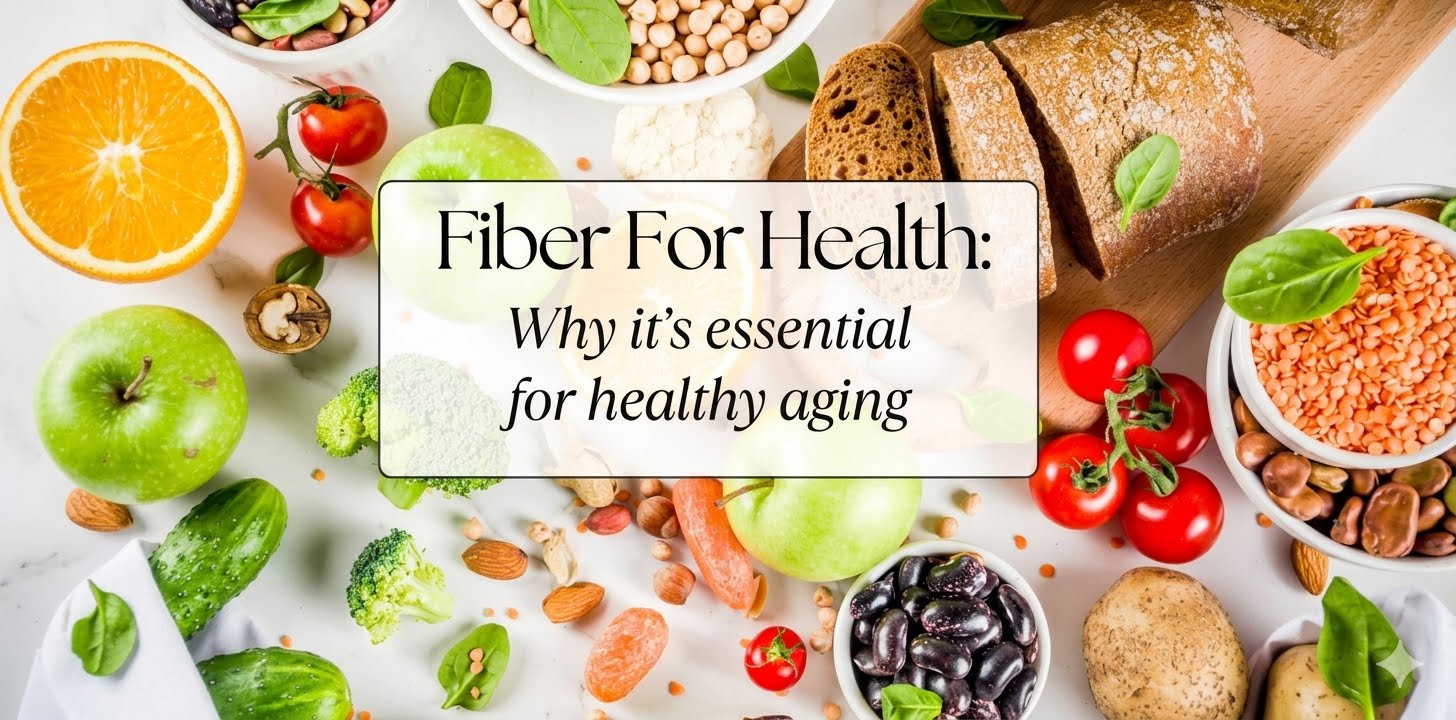
Including a variety of fiber-rich foods in your daily diet is one of the best ways to increase fiber intake while providing additional nutrients that support overall health.
Excellent sources of dietary fiber include:
- Vegetables: Broccoli, carrots, spinach, artichokes, and Brussels sprouts.
- Fruits: Apples, berries, pears, oranges, and avocados.
- Legumes: Lentils, chickpeas, beans, and peas.
- Whole grains: Oats, brown rice, quinoa, and whole wheat products.
- Nuts and seeds: Almonds, chia seeds, flaxseeds, and walnuts.
Choosing a variety of these foods helps provide different types of fiber along with essential nutrients that support healthy aging.
How Much Fiber Do You Need?
The amount of fiber needed daily depends on age, gender, and individual nutritional needs. Many adults do not consume enough fiber, making it important to gradually increase intake through a variety of plant-based foods.
General dietary guidelines recommend approximately:
- Adult women: Around 25 grams of fiber per day.
- Adult men: Around 30–38 grams of fiber per day.
Older adults may especially benefit from maintaining adequate fiber intake because digestive regularity, gut health, and balanced nutrition become increasingly important with age.
Tips for increasing fiber safely:
- Increase fiber gradually to allow your digestive system to adjust.
- Drink enough water because fiber works best with adequate hydration.
- Include different sources of fiber throughout the day.
- Choose whole foods more often instead of highly processed options.
Easy Ways to Increase Fiber Intake
Adding more fiber to your daily routine does not have to be complicated. Small changes can make a meaningful difference over time.
Simple ways to eat more fiber include:
- Add oats or chia seeds to breakfast meals.
- Choose whole-grain bread, pasta, or rice instead of refined options.
- Include vegetables with lunch and dinner.
- Add beans or lentils to soups, salads, and main dishes.
- Keep nuts and seeds as nutrient-rich snack options.
- Eat fruits with their natural fiber instead of relying only on juices.
For individuals who struggle to reach their daily fiber needs through food alone, fiber supplements may provide additional support. However, supplements should complement—not replace—a balanced diet rich in whole foods.
Lifestyle Habits That Support Brain Health
Fiber is only one part of maintaining cognitive wellness as we age. A complete lifestyle approach supports the brain by providing essential nutrients, movement, rest, and healthy daily habits.
Important habits for healthy brain aging include:
- Stay physically active: Regular exercise supports circulation, energy, and overall brain wellness.
- Maintain a balanced diet: Include vegetables, fruits, healthy fats, lean proteins, whole grains, and fiber-rich foods.
- Prioritize quality sleep: Good sleep supports memory, concentration, and overall recovery.
- Manage stress: Relaxation techniques, mindfulness, and social activities support emotional wellbeing.
- Stay mentally active: Reading, learning new skills, puzzles, and social interaction help keep the mind engaged.
- Support heart health: Healthy blood pressure, cholesterol levels, and circulation contribute to overall brain wellness.
Combining a fiber-rich diet with these healthy habits creates a strong foundation for supporting cognitive health throughout the aging process.
Recommended Fiber Supplements
While whole foods are the best source of dietary fiber, fiber supplements can be a convenient option for individuals who need additional support to meet their daily fiber intake.
Dr Nutrition offers a variety of nutritional products designed to support digestive wellness and overall health. Fiber supplements may include ingredients such as psyllium husk, plant fibers, or other sources of soluble fiber.
- Explore Fiber Supplements
Ideal for: Individuals looking for additional daily fiber support to complement a balanced diet and healthy lifestyle.
FAQ
1. Can fiber improve brain health as we age?
Fiber does not directly prevent or treat age-related brain conditions, but it may support brain wellness by improving gut health, supporting healthy blood sugar balance, promoting cardiovascular health, and contributing to overall healthy aging.
2. How does fiber affect the gut-brain connection?
Fiber helps nourish beneficial gut bacteria, which produce compounds that support normal digestive function and contribute to communication between the gut and brain. A healthy gut microbiome is an important part of overall wellness.
3. What foods are highest in fiber?
High-fiber foods include beans, lentils, oats, whole grains, vegetables, fruits, nuts, and seeds. Eating a variety of plant-based foods helps provide different types of fiber and important nutrients.
4. Can I take fiber supplements instead of eating high-fiber foods?
Fiber supplements can help increase daily fiber intake, but they should not replace a balanced diet. Whole foods provide fiber along with vitamins, minerals, antioxidants, and other beneficial plant compounds.
5. Should I drink more water when increasing fiber intake?
Yes. Drinking enough water is important when increasing fiber because fiber absorbs water during digestion. Adequate hydration helps fiber work effectively and supports digestive comfort.
Conclusion
Dietary fiber plays an important role in supporting healthy aging by contributing to digestive wellness, metabolic balance, cardiovascular health, and the gut-brain connection. While fiber cannot directly heal or reverse age-related brain changes, it is an important part of a nutrient-rich lifestyle that supports overall wellbeing.
Including fiber-rich foods such as vegetables, fruits, whole grains, legumes, nuts, and seeds can help nourish beneficial gut bacteria and provide essential nutrients that support the body's natural functions.
The best approach to maintaining brain health as we age is a complete lifestyle strategy that combines a balanced diet, regular physical activity, quality sleep, stress management, and healthy daily habits.
By making fiber a regular part of your nutrition routine and choosing wholesome foods, you can support your digestive system, nourish your body, and promote long-term wellness throughout the aging journey.