

Hashimoto’s disease is an autoimmune disorder that affects the thyroid gland. In this condition, the immune system attacks thyroid tissue, causing inflammation and gradually affecting thyroid function.
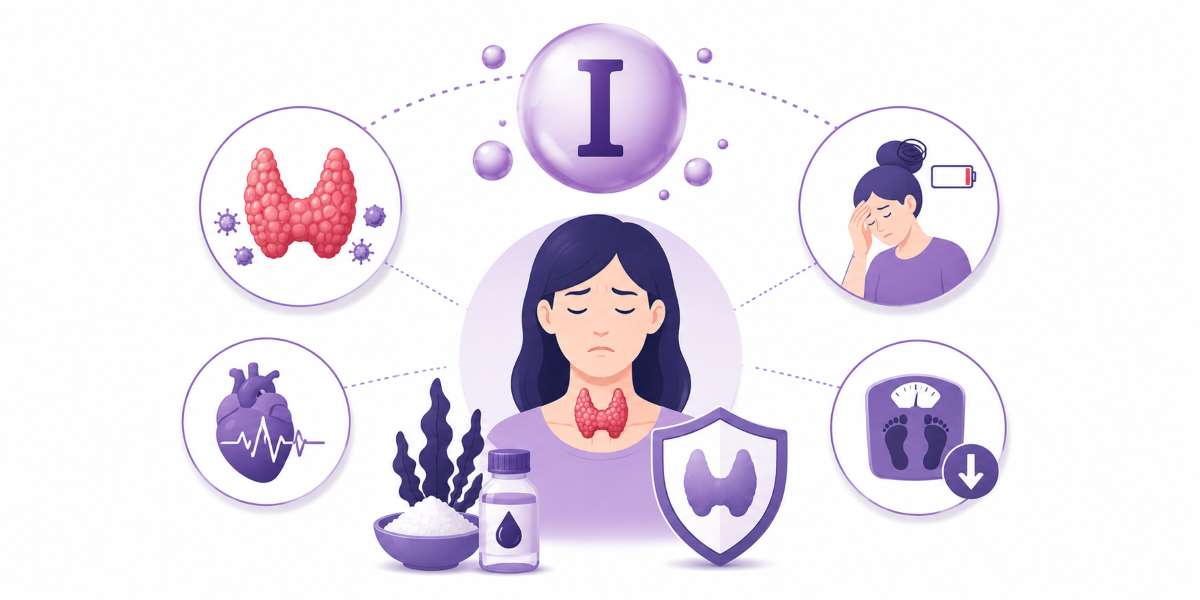
Iodine is essential for thyroid hormone production, but in people with Hashimoto’s disease, excessive iodine intake may worsen thyroid inflammation and negatively affect thyroid balance, especially when taken in high doses without medical supervision.
Table of Contents
Why Iodine Matters for Thyroid Health
Iodine is a key mineral needed for the production of thyroid hormones, which help regulate metabolism, energy levels, body temperature, and many other body functions.
However, the thyroid needs iodine in balanced amounts. Too little iodine may impair thyroid hormone production, while too much iodine may overstimulate or irritate the thyroid in sensitive individuals.
This balance is especially important for people with Hashimoto’s disease, because their thyroid is already affected by autoimmune inflammation.
Effects of High Iodine Intake
Excessive iodine can exacerbate autoimmune inflammation in the thyroid gland of people with Hashimoto’s disease.
This may increase thyroid immune activity and contribute to higher thyroid antibody levels, such as Anti-TPO and Anti-TG, in some individuals.
Over time, excessive iodine exposure may accelerate thyroid cell stress and increase the risk of worsening hypothyroidism, especially when iodine is taken in supplement form without monitoring.
| Factor | Possible Effect | Practical Guidance |
|---|---|---|
| Moderate Dietary Iodine | Supports normal thyroid hormone production | Get iodine from balanced food sources |
| High-Dose Iodine Supplements | May worsen thyroid inflammation in sensitive patients | Avoid unless medically prescribed |
| Seaweed or Kelp Supplements | May contain very high iodine levels | Use caution and check iodine content |
Symptoms of Excess Iodine
Symptoms of excessive iodine intake may vary depending on how the thyroid responds.
In some people, excess iodine may contribute to increased thyroid activity, while in others it may trigger sudden worsening of hypothyroidism.
- Increased or decreased thyroid activity.
- Symptoms of hyperthyroidism or sudden hypothyroidism.
- Rapid heartbeat or irregular pulse.
- Fatigue or muscle weakness.
- Digestive issues such as nausea or diarrhea.
- Neck discomfort or thyroid tenderness in some cases.
- Changes in energy, mood, or temperature sensitivity.
Common Sources of Excess Iodine
Excess iodine is often linked to supplements or concentrated sources rather than normal balanced food intake.
Some products can contain iodine in amounts much higher than daily needs, especially seaweed-based supplements such as kelp or marine algae.
Certain thyroid-related medications or iodine-containing formulas may also increase iodine exposure and should be used only as directed.
- Iodine-containing supplements.
- Kelp supplements and marine algae products.
- Seaweed consumed frequently in large amounts.
- Some thyroid-support formulas.
- Certain medications or medical iodine preparations.
- Multiple supplements that contain iodine at the same time.
Recommendations for Hashimoto’s Patients
People with Hashimoto’s disease should focus on maintaining a balanced iodine intake rather than using high-dose iodine products.
Moderate natural dietary sources, such as fish, dairy products, eggs, and iodized salt in normal amounts, may be suitable for many individuals, depending on their health status and medical advice.
Regular thyroid monitoring is important to detect changes in TSH, free T4, free T3, and thyroid antibody levels when needed.
- Avoid high-dose iodine supplements without medical supervision.
- Use balanced food sources instead of concentrated iodine products.
- Be cautious with kelp, seaweed, and thyroid-support blends.
- Monitor thyroid function regularly.
- Discuss supplement use with a healthcare professional.
How to Maintain a Safe Iodine Balance
A safe approach focuses on consistency, moderation, and individualized medical guidance.
Because Hashimoto’s disease varies from person to person, the ideal iodine intake may differ depending on thyroid function, diet, medications, pregnancy status, and antibody levels.
Avoiding unnecessary high-dose supplementation while eating a balanced diet is often the safest long-term strategy.
Frequently Asked Questions
Is iodine bad for Hashimoto’s disease?
Iodine is not bad by itself, but excessive iodine intake may worsen thyroid inflammation in some Hashimoto’s patients.
Can Hashimoto’s patients take iodine supplements?
High-dose iodine supplements should not be used without medical supervision. Some patients may tolerate normal dietary iodine, but supplementation should be individualized.
Why can too much iodine worsen thyroid function?
Excess iodine may increase thyroid immune activity and oxidative stress, which can aggravate autoimmune inflammation in sensitive individuals.
Are seaweed and kelp supplements safe for Hashimoto’s?
They may contain very high iodine levels, so Hashimoto’s patients should use caution and avoid them unless recommended by a healthcare professional.
What should Hashimoto’s patients monitor?
Thyroid function tests such as TSH, free T4, free T3, and thyroid antibodies may be monitored based on medical advice.
Conclusion
High doses of iodine can be risky for Hashimoto’s patients because they may increase thyroid inflammation and contribute to worsening thyroid function over time.
Maintaining balance, avoiding unnecessary high-dose supplements, using natural dietary sources in moderation, and monitoring thyroid function with medical guidance can help preserve thyroid health and long-term well-being.