

Chelated supplements have gained significant popularity among athletes, active individuals, and health-conscious consumers looking to optimize nutrient absorption. While these supplements are often more expensive than traditional mineral products, their unique formulation and manufacturing process help explain both their higher price and their potential advantages.
Table of Contents
What Are Chelated Supplements?
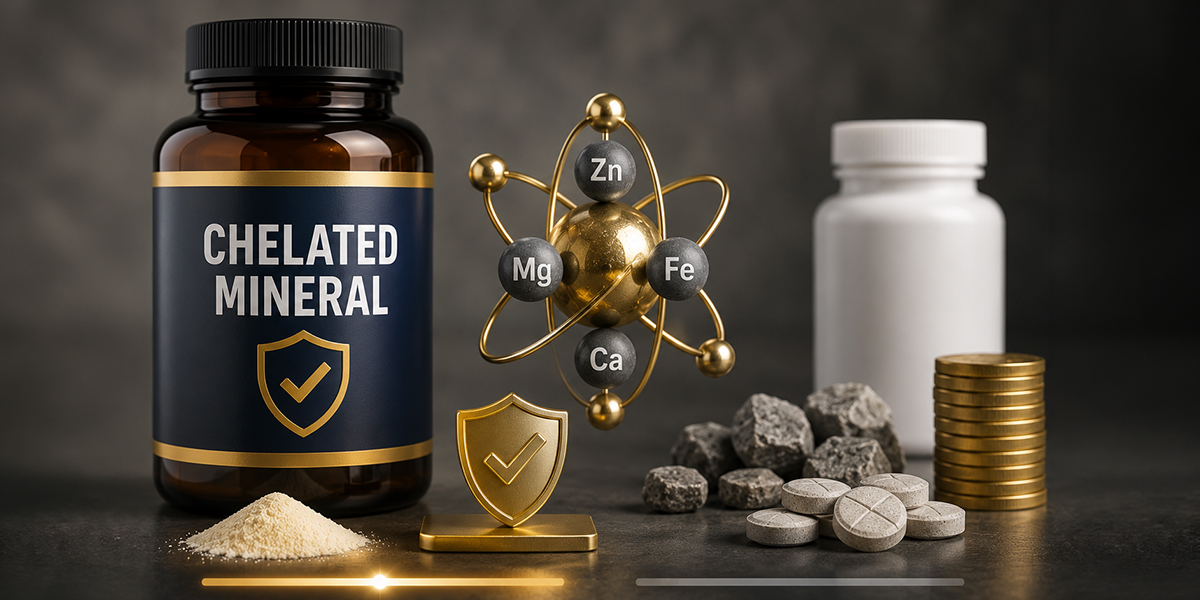
Chelated minerals are minerals that have been chemically bound to organic compounds such as amino acids or peptides. This process creates a more stable complex that may help the mineral pass through the digestive system more efficiently.
Common examples include:
- Magnesium Bisglycinate
- Zinc Bisglycinate
- Iron Bisglycinate
- Chelated Copper
The term "chelated" refers to the way the mineral is attached to another molecule, which may help improve stability and utilization within the body.
Why Are They Believed to Be Better Absorbed?
One of the primary reasons for the popularity of chelated supplements is their potential for improved bioavailability.
When minerals are bound to amino acids, they may be less likely to interact with other compounds in the digestive tract that can interfere with absorption. This can allow a greater percentage of the mineral to reach circulation and become available for physiological functions.
Chelated forms may also be gentler on the digestive system, making them a preferred choice for individuals who experience stomach discomfort from certain traditional mineral supplements.
Why Are Chelated Supplements More Expensive?
Chelated supplements typically cost more because the manufacturing process is significantly more complex than producing standard mineral supplements.
Factors that contribute to the higher price include:
- Higher-quality raw materials.
- Advanced chelation technology.
- Additional quality-control procedures.
- Specialized production equipment.
- Testing to verify mineral binding and stability.
These additional manufacturing requirements increase production costs, which are reflected in the final retail price.
Who May Benefit Most from Chelated Supplements?
Chelated supplements may be particularly useful for:
- Individuals with digestive sensitivity.
- People with reduced mineral absorption.
- Athletes with increased nutritional demands.
- Older adults seeking efficient nutrient utilization.
- Individuals following restrictive diets.
For some people, the improved tolerance and absorption may justify the higher price, while others may achieve satisfactory results with traditional mineral forms.
Practical Tips Before Buying
- Check the exact chelated form listed on the label.
- Look for minerals bound to amino acids such as glycine.
- Compare ingredient quality rather than price alone.
- Choose products from reputable manufacturers.
- Review third-party testing or quality certifications when available.
- Consult a healthcare professional if you have specific nutritional needs.
Frequently Asked Questions
What does “chelated” mean?
It means a mineral is attached to an organic compound, often an amino acid, to improve stability and potential absorption.
Are chelated minerals always better?
Not necessarily. Their benefits depend on individual nutritional needs, digestive health, and the specific mineral being used.
Why do athletes often choose chelated supplements?
Many athletes prefer them because of their potential for improved absorption and digestive comfort.
Do chelated supplements cause fewer digestive issues?
Some individuals report better digestive tolerance with certain chelated minerals compared to traditional forms.
Are they worth the extra cost?
For individuals with absorption challenges or sensitive digestion, the additional cost may be worthwhile. Others may do well with standard mineral supplements.
Conclusion
Chelated supplements offer a specialized form of mineral delivery designed to improve stability, absorption, and digestive tolerance. Their higher cost reflects the advanced manufacturing processes, quality-control measures, and specialized ingredients required to produce them.
Whether they are worth the additional investment depends on your nutritional needs, digestive health, and personal goals. Evaluating ingredient quality, product reputation, and individual requirements is often more important than focusing on price alone.