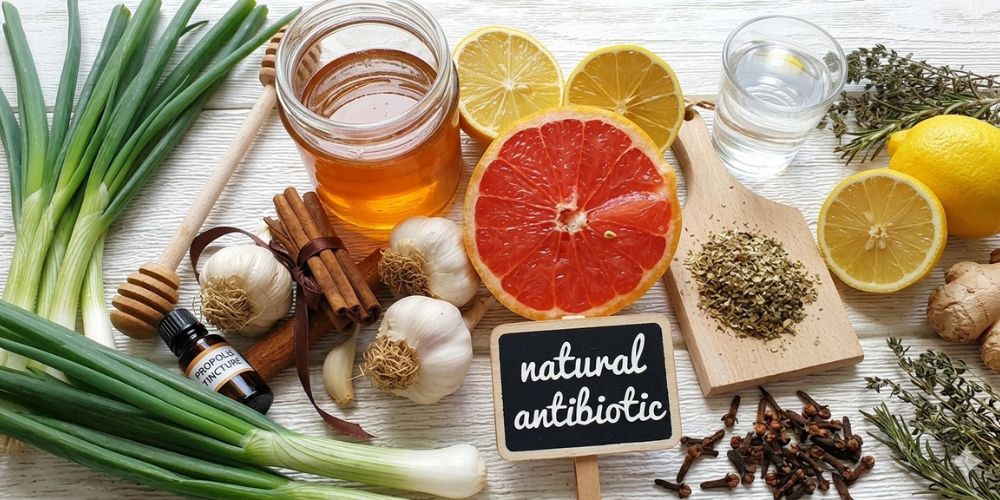


From garlic in the kitchen to aromatic herbs and honey, many natural ingredients contain compounds that have attracted scientific interest for their potential antimicrobial properties. These ingredients have been used in traditional food and wellness practices for generations, while modern research continues to explore how their naturally occurring compounds interact with different microorganisms.
Interest in natural antimicrobials has also grown as more people look for food-based and botanical ingredients that can complement an everyday wellness routine. However, it is important to understand what the research actually shows. An ingredient demonstrating antimicrobial activity in laboratory studies does not necessarily mean it can prevent or treat an infection in the human body.
In this guide, we look at 5 natural antimicrobials that are commonly discussed for their antimicrobial properties: garlic, oregano, thyme, tea tree oil, and honey. We will explore the compounds behind their potential activity, common uses, and important safety considerations so you can better understand where these ingredients may fit into a balanced approach to wellness.
Table of Contents
What Are Natural Antimicrobials?
Natural antimicrobials are naturally occurring substances found in foods, herbs, plants, and other botanical ingredients that may have activity against certain microorganisms. Depending on the compound, antimicrobial activity may involve bacteria, fungi, or other types of microorganisms.
Some natural ingredients contain specific compounds that have been investigated for their ability to interfere with microbial growth or affect microbial structures. For example, garlic contains sulfur compounds, while oregano and thyme contain aromatic compounds that have been studied for their antimicrobial activity.
However, the term natural antimicrobial should be understood carefully. Results observed in laboratory studies do not automatically mean that consuming an ingredient will produce the same effect in the human body. Factors such as concentration, preparation, absorption, and the type of microorganism involved can all influence the outcome.
For this reason, natural antimicrobial ingredients are best viewed as interesting components of food and wellness rather than automatic substitutes for medical treatment. If an infection is suspected, appropriate medical evaluation remains important.
5 Natural Antimicrobials to Know
1. Garlic
Garlic is one of the most widely studied food-based ingredients when it comes to natural antimicrobial activity. When fresh garlic is chopped, crushed, or chewed, it forms allicin, a sulfur-containing compound responsible for much of garlic's characteristic aroma and flavor. Allicin and other sulfur compounds have been investigated for their ability to interact with certain microorganisms.
Research has explored garlic's activity against various bacteria and fungi, although results can vary depending on the preparation, concentration, and microorganism being studied. Fresh garlic used as part of a balanced diet is different from a concentrated garlic supplement, so the effects observed with extracts should not automatically be applied to ordinary dietary amounts.
For everyday use, garlic can be easily incorporated into meals, sauces, soups, and dressings. If you're interested in garlic supplements, follow the product's serving instructions and consider any potential medication interactions.
2. Oregano
Oregano is another aromatic herb that has attracted attention for its potential antimicrobial properties. Two of its best-known compounds, carvacrol and thymol, have been studied for their effects on certain microorganisms, particularly in laboratory research.
Oregano can be enjoyed as a culinary herb, while concentrated oregano extracts and oregano oil provide a much higher concentration of its naturally occurring compounds. This difference is important because a concentrated preparation should not be treated in the same way as the herb used in cooking.
Adding oregano to everyday meals is a simple way to enjoy its flavor and naturally occurring plant compounds. If using oregano supplements, check the recommended serving size and product directions carefully, particularly with concentrated formulations.
3. Thyme
Thyme is a fragrant culinary herb that contains several naturally occurring compounds, including thymol and carvacrol. These compounds have been investigated for antimicrobial activity and may interact with microorganisms in different ways.
Thyme is commonly used in cooking, teas, and botanical preparations. However, concentrated thyme extracts and essential oils are considerably more potent than the herb used in food. Their appropriate use depends on the specific preparation, and essential oils should not be assumed to be safe for internal use simply because the source plant is edible.
4. Tea Tree Oil
Tea tree oil is an essential oil derived from the leaves of Melaleuca alternifolia. It is particularly well known for its topical use and has been studied for antimicrobial activity against certain bacteria and fungi.
One of its important components is terpinen-4-ol, along with several other naturally occurring compounds. Tea tree oil is commonly found in topical personal-care products, but concentrated essential oil requires careful handling.
Tea tree oil should not be swallowed. Ingestion can cause toxic effects, so it should only be used externally and according to appropriate product directions. For topical products, choose a reputable formulation and follow the instructions carefully. You can explore tea tree oil products for suitable topical options.
5. Honey
Honey is more than a natural sweetener. It has a long history of traditional use and contains several characteristics that have contributed to scientific interest in its potential antimicrobial properties. Its low water activity, acidic environment, and naturally occurring compounds can create conditions that are less favorable to the growth of some microorganisms.
Honey can also contain naturally occurring hydrogen peroxide and other bioactive compounds. The exact composition varies depending on the floral source, processing, and type of honey. Manuka honey, in particular, has attracted considerable attention because of its unique compounds and research into its antimicrobial activity.
For everyday nutrition, honey can be enjoyed as part of a balanced diet. If you're interested in exploring different varieties, you can browse Manuka honey products. However, ordinary food-grade honey should not be confused with medical-grade honey, which is specially prepared for specific clinical applications.
How Do Natural Antimicrobials Work?
Natural antimicrobial ingredients do not all work in the same way. Their effects depend on the specific compounds they contain and the microorganism being studied. Some compounds may interact with microbial cell membranes, interfere with enzymes, affect microbial growth, or create conditions that make it more difficult for certain microorganisms to survive.
For example, compounds such as allicin in garlic and thymol and carvacrol in herbs such as oregano and thyme have been investigated for their antimicrobial activity. However, much of the evidence comes from laboratory or experimental research. The concentration used in a laboratory setting may be very different from the amount a person would consume or apply in everyday life.
Natural Antimicrobials vs. Antibiotics
Although both natural antimicrobial compounds and antibiotics can be discussed in relation to microorganisms, they are not interchangeable. Antibiotics are medications specifically developed to treat certain bacterial infections, while natural antimicrobial compounds occur naturally in foods, herbs, and botanical ingredients.
Natural ingredients should not be used as a replacement for prescribed antibiotics or to delay medical care when a bacterial infection is suspected. Their potential antimicrobial properties are an area of research, but this does not mean that a food, herb, or supplement can treat an infection on its own.
How to Use Natural Antimicrobial Ingredients Safely
Natural does not automatically mean risk-free. Safety can depend on the ingredient, concentration, preparation, serving size, and how it is used. A culinary herb or food is very different from a concentrated extract or essential oil.
Follow product directions when using supplements and concentrated botanical preparations. Essential oils require particular caution and should not be swallowed unless a specific medical preparation has been prescribed or recommended by a qualified professional. It is also important to consider possible allergies, medication interactions, and individual health circumstances.
If you are pregnant, breastfeeding, giving a concentrated supplement to a child, taking prescription medication, or managing a health condition, consult a healthcare professional before using concentrated herbal products.
Frequently Asked Questions
What is the strongest natural antimicrobial?
There is no single natural ingredient that can universally be considered the strongest. Antimicrobial activity varies according to the compound, microorganism, concentration, and method of use.
Is garlic a natural antimicrobial?
Garlic contains sulfur compounds, including allicin, that have demonstrated antimicrobial activity in laboratory research. Garlic can be included as part of a balanced diet, while concentrated supplements should be used according to product directions.
Can natural antimicrobials replace antibiotics?
No. Natural antimicrobial ingredients should not be considered replacements for prescribed antibiotics when treating a bacterial infection. Medical advice is important when an infection is suspected.
Can I ingest tea tree oil?
No. Tea tree oil should not be swallowed because ingestion can cause toxic effects. It is generally intended for appropriate topical use and should be handled according to product directions.
Are natural antimicrobials safe for everyone?
Not necessarily. Safety depends on the ingredient, dose, preparation, and individual circumstances. Concentrated extracts and essential oils require particular caution, especially for children, pregnant or breastfeeding individuals, and people taking medications.
Conclusion
Natural antimicrobial compounds can be found in familiar foods and botanical ingredients, including garlic, oregano, thyme, tea tree oil, and honey. Their unique compounds have attracted scientific interest because of their activity against certain microorganisms, but natural does not automatically mean universally safe or medically effective.
These ingredients can be part of an informed approach to nutrition, wellness, and personal care when used appropriately. However, they should not replace appropriate medical treatment. Understanding the difference between traditional use, laboratory research, and proven clinical applications can help you make safer and more informed choices about natural antimicrobial ingredients.