
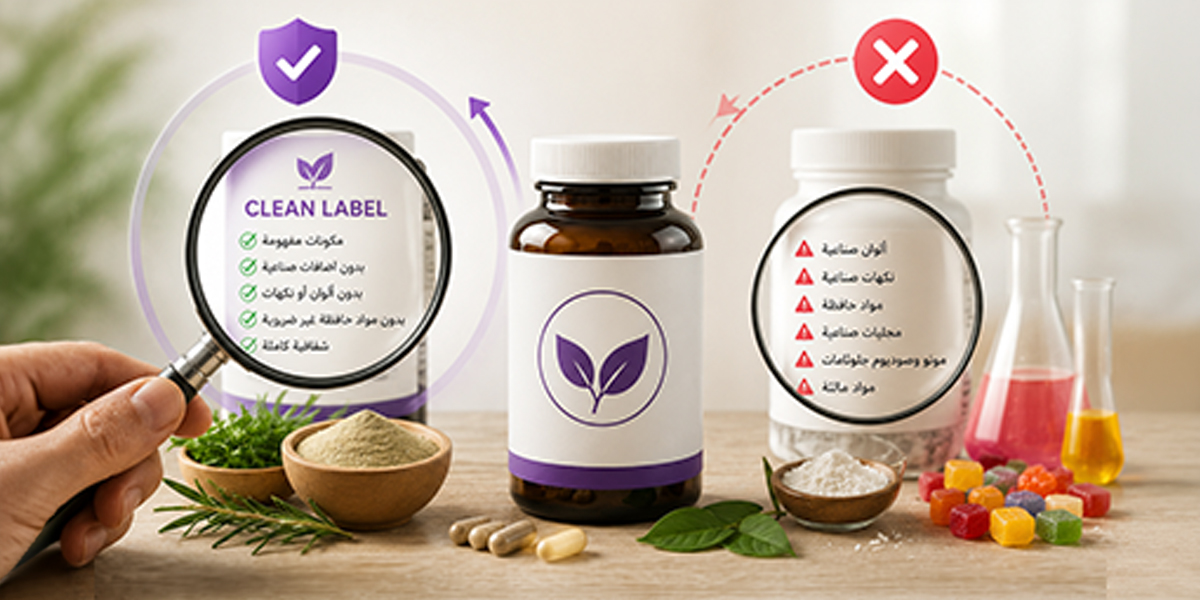


The term "Clean Label" has become increasingly popular in the dietary supplement industry. It generally refers to products formulated with simple, transparent ingredient lists and minimal use of unnecessary additives. While there is no single universal definition, many consumers seek clean-label supplements as a way to make more informed choices about what they put into their bodies.
Understanding how to evaluate ingredient lists, manufacturing transparency, and product quality can help consumers identify supplements that align with their personal preferences and nutritional goals.
Table of Contents
What Does "Clean Label" Mean?
Clean-label supplements are typically characterized by straightforward ingredient lists that focus on delivering active nutrients while limiting unnecessary additives.
Many clean-label products aim to reduce the use of artificial colorings, excessive fillers, preservatives, sweeteners, and other ingredients that do not directly contribute to the supplement's intended nutritional purpose.
Read the Ingredient List Carefully
One of the most important steps when evaluating a supplement is reviewing the ingredient list, particularly the section often labeled as "Other Ingredients."
This section contains inactive ingredients used during manufacturing, such as fillers, binders, capsule materials, anti-caking agents, or stabilizers. A shorter and easier-to-understand ingredient list may help consumers identify products with fewer unnecessary additives.
Consumers should become familiar with commonly used inactive ingredients and understand why they are included in the product.
Look for Transparency from Manufacturers
Companies that prioritize clean-label principles often provide detailed information about ingredient sourcing, manufacturing standards, and quality-control procedures.
Transparency may include information about third-party testing, ingredient origins, manufacturing certifications, and quality assurance programs.
When manufacturers openly share this information, consumers can make more confident and informed purchasing decisions.
Evaluate the Purpose of Added Ingredients
Not every inactive ingredient should automatically be viewed as undesirable. Many additives perform important manufacturing functions that contribute to product quality and stability.
| Ingredient Type | Purpose | Example |
|---|---|---|
| Fillers | Provide volume and consistency | Microcrystalline cellulose |
| Binders | Help tablets maintain shape | Plant-based binders |
| Capsule Materials | Form the capsule shell | Vegetable cellulose |
| Stabilizers | Maintain product quality | Natural stabilizing agents |
The goal is not necessarily to avoid all inactive ingredients, but to understand whether they serve a legitimate purpose within the formulation.
Consider Individual Needs and Sensitivities
Consumers with allergies, food sensitivities, or specific dietary preferences may benefit from selecting products free from ingredients that do not fit their needs.
Examples may include supplements free from artificial colorings, lactose, gluten, soy, or animal-derived ingredients.
The ideal clean-label supplement is one that aligns with both personal health considerations and individual lifestyle preferences.
Frequently Asked Questions
What is a clean-label supplement?
A clean-label supplement typically contains a simple and transparent ingredient list with minimal unnecessary additives.
Are all inactive ingredients bad?
No. Many inactive ingredients serve important roles in manufacturing, stability, dosing accuracy, and capsule formation.
Should I avoid products with fillers?
Not necessarily. Some fillers are essential for proper manufacturing and do not negatively affect supplement quality.
How can I identify a cleaner formula?
Look for transparent labeling, understandable ingredient lists, reputable manufacturers, and products that match your dietary preferences.
Does clean-label automatically mean higher quality?
No. Product quality depends on ingredient quality, manufacturing standards, testing procedures, and overall formulation, not just the number of ingredients.
Conclusion
Choosing a clean-label supplement requires looking beyond marketing claims and carefully evaluating ingredient transparency, formulation quality, and manufacturer credibility.
By understanding the role of inactive ingredients and selecting products that align with personal needs and values, consumers can make more informed decisions about the supplements they incorporate into their daily routines while maintaining confidence in product quality and safety.