
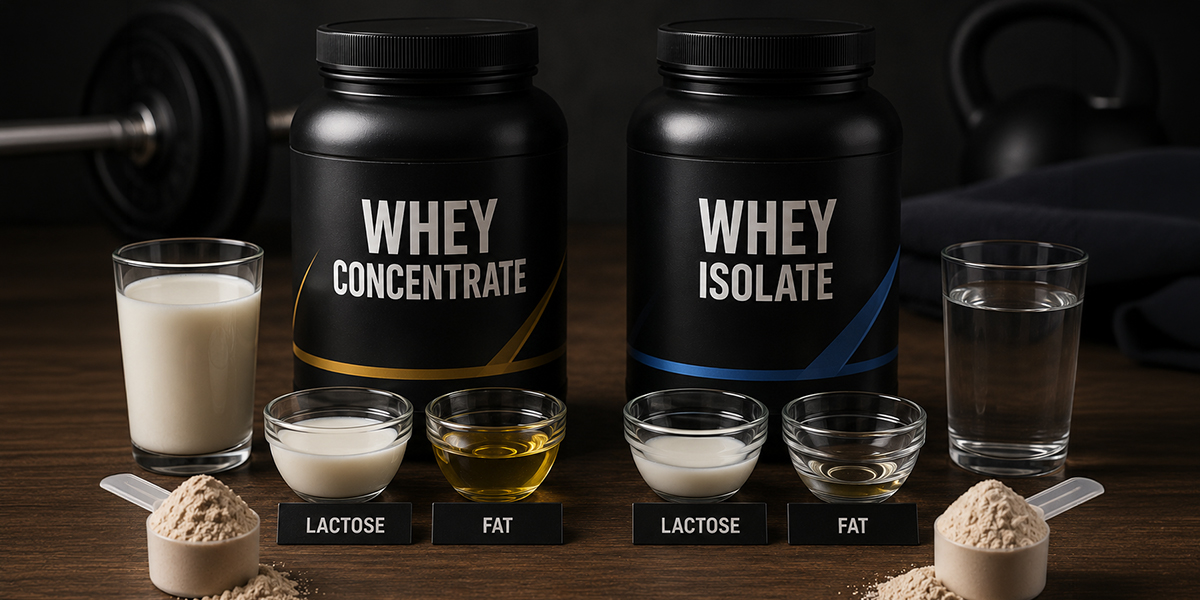


When choosing a whey protein supplement, the differences between whey protein concentrate and whey protein isolate can be important, especially for people with lactose sensitivity, digestive discomfort, or strict nutrition goals.
Both forms come from milk whey and provide high-quality protein, but they differ in processing level, purity, lactose content, fat content, calories, and cost.
Table of Contents
Lactose Content in Whey Protein Concentrate
Whey protein concentrate usually contains a higher amount of lactose because it goes through less filtration compared to isolate. Although the lactose level is often low to moderate, it may still cause bloating, gas, or digestive discomfort in people with strong lactose sensitivity.
For individuals who tolerate dairy well, whey concentrate can still be a practical and effective choice for daily protein support.
Lactose Content in Whey Protein Isolate
Whey protein isolate undergoes more advanced filtration processes that remove most of the lactose. As a result, isolate products usually contain very low lactose levels and are often better tolerated by individuals with lactose intolerance.
High-quality whey isolate is commonly preferred by athletes and consumers who want a cleaner protein source with fewer milk sugars.
Fat Content in Whey Protein Concentrate
Whey protein concentrate retains some of the natural fats found in milk whey. The fat content is usually not very high, but it is still greater than what is typically found in whey isolate.
This makes whey concentrate suitable for general fitness goals, muscle building, and daily protein intake, but it may not be ideal for very low-fat diets or strict calorie-controlled plans.
Fat Content in Whey Protein Isolate
Whey protein isolate contains significantly less fat due to additional filtration and isolation methods. This makes it a popular choice during cutting phases, weight management plans, or for athletes who want maximum protein with minimal extra calories.
Because isolate is more refined, it usually provides a higher percentage of protein per serving compared to concentrate.
Practical Impact on Supplement Choice
The choice between whey concentrate and whey isolate depends on digestive tolerance, nutrition goals, and budget.
| Feature | Whey Concentrate | Whey Isolate |
|---|---|---|
| Lactose Content | Higher | Very low |
| Fat Content | Slightly higher | Lower |
| Protein Purity | Moderate to high | Higher |
| Digestive Tolerance | May cause discomfort in lactose-sensitive users | Usually easier to tolerate |
| Cost | Usually more affordable | Usually more expensive |
Whey protein concentrate is suitable for general daily use and people who digest dairy well. Whey protein isolate is often preferred for people with lactose sensitivity, strict calorie targets, or those seeking higher protein purity.
Frequently Asked Questions
Which has less lactose, whey concentrate or isolate?
Whey protein isolate usually contains much less lactose because it undergoes more advanced filtration.
Is whey isolate better for lactose intolerance?
Yes, whey isolate is often better tolerated by people with lactose intolerance, although individual tolerance may vary.
Which has more fat?
Whey protein concentrate usually contains slightly more fat than whey protein isolate.
Is whey concentrate still good for muscle building?
Yes, whey concentrate is still a high-quality protein source and can support muscle growth when total daily protein intake is sufficient.
Why is whey isolate more expensive?
Whey isolate requires more processing and filtration, which increases purity but also raises production cost.
Conclusion
Whey protein concentrate and whey protein isolate both provide high-quality protein, but they differ clearly in lactose and fat content. Concentrate is more affordable and suitable for general use, while isolate offers higher purity, lower lactose, and lower fat.
Choosing the right form depends on digestive tolerance, dietary goals, calorie needs, and budget. For people with lactose sensitivity or strict nutrition targets, whey isolate is often the more suitable option.