

Creatine is one of the most researched and widely used supplements for supporting muscle strength, power, endurance, and athletic performance. It is available in several forms, with creatine monohydrate and creatine HCL being among the most popular choices.
Although both forms are designed to increase creatine availability in the body, they differ in concentration, solubility, dosage, and digestive tolerance. Understanding these differences can help athletes choose the form that best fits their goals and personal preference.
Table of Contents
Creatine Monohydrate: Core Benefits
Creatine monohydrate is the most studied and commonly used form of creatine. It has a long history of scientific support and is widely recognized for its ability to increase muscle creatine stores effectively.
Creatine monohydrate contains approximately 88% pure creatine by weight and is commonly used in daily doses of 3 to 5 grams. Some athletes use an optional loading phase to saturate muscle creatine stores faster, although this is not required for long-term results.
Creatine HCL: Concentration and Solubility
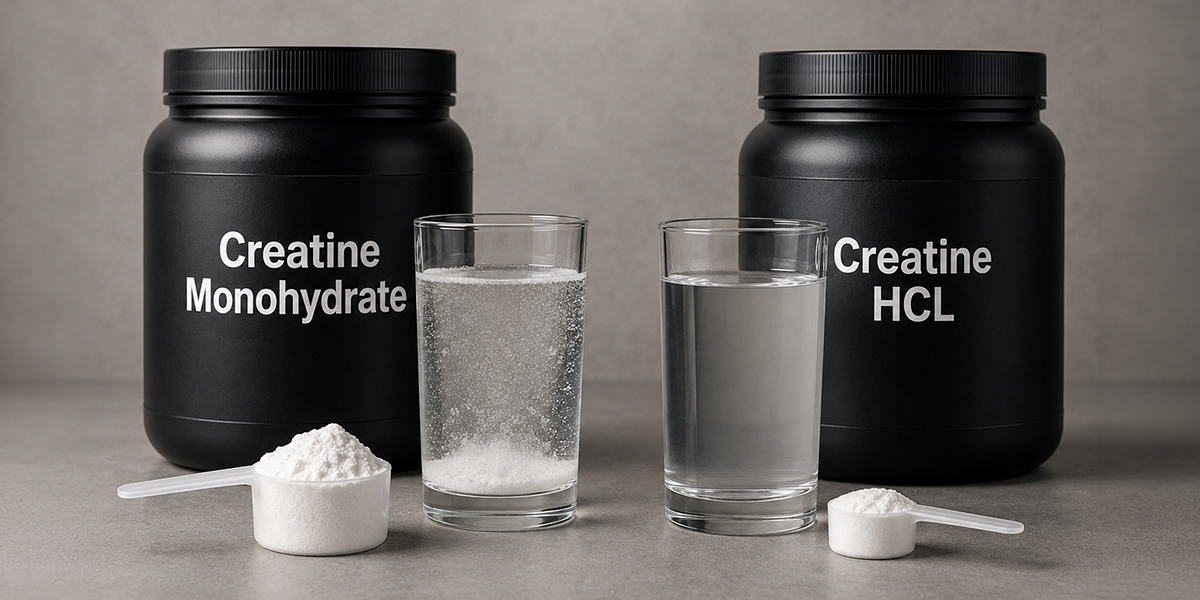
Creatine HCL, or creatine hydrochloride, is creatine bound with hydrochloric acid. This form is known for its high water solubility, which means it dissolves more easily in liquid compared to creatine monohydrate.
Because of its higher solubility and concentration, creatine HCL is often used in smaller doses, usually around 1 to 2 grams daily. Some users prefer it because it may feel lighter on the stomach and may reduce bloating or digestive discomfort that can occur with larger doses of creatine monohydrate.
Absorption and Effectiveness Comparison
Creatine HCL may dissolve faster in water, which can make it easier to mix and more convenient for users who dislike the texture of creatine monohydrate.
However, creatine monohydrate has the strongest body of research proving its effectiveness in increasing muscle creatine stores, improving strength, and supporting muscle growth.
While creatine HCL may be a suitable option for individuals who experience digestive discomfort with monohydrate, there is less long-term research comparing it directly against monohydrate for strength and muscle-building outcomes.
Practical Benefits of Each Type
Both forms can support strength, power, and performance when used consistently. The best choice depends on personal tolerance, budget, and preference.
| Feature | Creatine Monohydrate | Creatine HCL |
|---|---|---|
| Research Support | Very strong | Moderate |
| Typical Dose | 3 to 5 grams daily | 1 to 2 grams daily |
| Solubility | Lower | Higher |
| Digestive Comfort | Generally good, but may cause bloating in some users | Often preferred by users with sensitive digestion |
| Cost | Usually more affordable | Usually more expensive |
Usage Tips
For best results, consistency matters more than exact timing. Both creatine monohydrate and creatine HCL should be taken regularly to maintain elevated muscle creatine levels.
- Use creatine monohydrate at 3 to 5 grams daily.
- Use creatine HCL according to the product label, commonly 1 to 2 grams daily.
- Take creatine daily, including rest days.
- Drink enough water throughout the day.
- Combine creatine with resistance training for best strength and muscle results.
- If monohydrate causes bloating, creatine HCL may be worth trying.
Frequently Asked Questions
Is creatine HCL better than creatine monohydrate?
Not necessarily. Creatine HCL is more soluble and may be easier on digestion for some users, but creatine monohydrate has stronger scientific evidence.
Does creatine HCL require a loading phase?
Usually no. Creatine HCL is commonly taken in smaller daily doses without a loading phase.
Which form is better for beginners?
Creatine monohydrate is usually the best starting option because it is effective, affordable, and well researched.
Can creatine monohydrate cause bloating?
Some users may experience mild bloating or digestive discomfort, especially with high doses or poor mixing.
Do both forms support strength and muscle performance?
Yes, both forms can support strength and performance when used consistently, but monohydrate has the strongest research support.
Conclusion
Choosing between creatine monohydrate and creatine HCL depends on personal preference, digestive tolerance, budget, and supplement goals. Creatine monohydrate remains the most researched and proven option, while creatine HCL offers higher solubility and smaller serving sizes.
Both forms can support strength, endurance, and muscle performance when taken consistently and combined with proper training, hydration, and balanced nutrition.