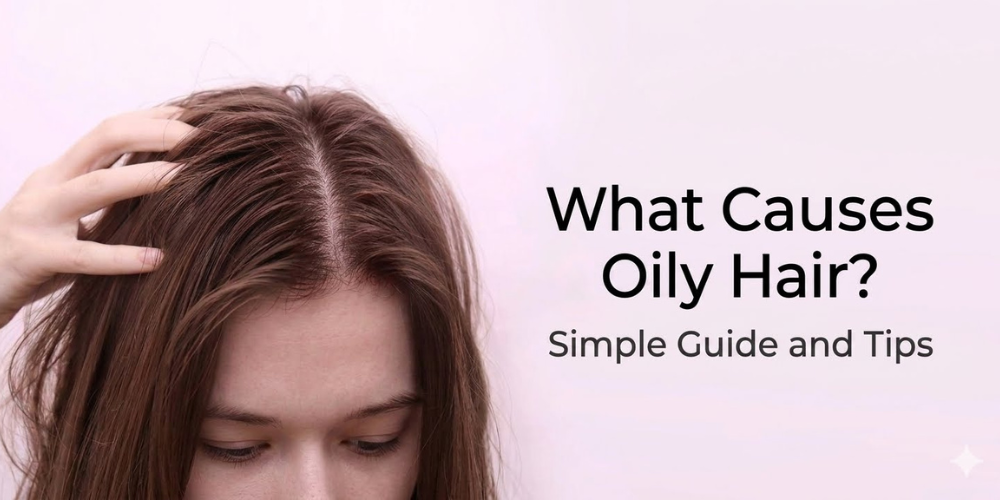


Ever washed your hair in the morning and noticed it looking greasy again by the afternoon? This is a very common concern affecting both men and women, and it can quickly make the hair appear flat, heavy, and less clean than expected.
The main reason behind oily hair is excessive sebum production from the scalp’s sebaceous glands. Sebum is a natural oil that plays an important role in protecting the hair, maintaining moisture, and supporting scalp health. However, when it is produced in excess, it begins to accumulate on the scalp and hair strands, leading to buildup, clogged follicles, and an unbalanced scalp environment.
What makes oily hair more complex is that it is rarely caused by a single factor. Instead, it is usually the result of multiple influences working together, such as genetics, hormonal fluctuations, hair care habits, dietary patterns, stress levels, and environmental conditions like heat and humidity.
The encouraging part is that oily hair can be effectively managed once the underlying triggers are understood. With the right routine and awareness, it becomes much easier to restore balance, improve scalp freshness, and maintain healthier-looking hair throughout the day.
Table of Contents
- What Is Oily Hair? Understanding Sebum Production
- How the Scalp Produces Natural Oils
- Main Causes of Oily Hair
- Environmental Factors That Affect Oily Hair
- How to Identify Your Oily Hair Type
- Tips to Control Excess Oil Naturally
- When Oily Hair Becomes a Medical Concern
- Best Practices for a Healthy Scalp
- Recommended Products for Oily Hair
- FAQ
- Conclusion
What Is Oily Hair? Understanding Sebum Production
Oily hair occurs when the scalp produces more sebum than the hair actually needs. Sebum is a natural oily substance secreted by sebaceous glands to keep the scalp moisturized and protected from dryness and external damage.
When production becomes excessive, the oil spreads quickly across the hair shaft, creating a greasy appearance and reducing volume and freshness.
How the Scalp Produces Natural Oils
The scalp contains thousands of microscopic sebaceous glands, each connected to individual hair follicles. These glands are responsible for the continuous production and secretion of sebum, a lipid-rich substance composed of fatty acids, wax esters, and triglycerides that play a critical role in maintaining scalp homeostasis.
Sebum production is a biologically regulated process influenced primarily by androgen hormones, particularly testosterone and dihydrotestosterone (DHT). Genetic predisposition also plays a significant role in determining gland activity, while external factors such as climate, humidity, pollution, and skincare habits can further modulate secretion levels.
Under normal physiological conditions, sebum forms a thin protective layer over the scalp and hair shaft. This lipid barrier helps prevent moisture loss, supports the skin microbiome, and provides natural protection against environmental stressors.
However, when sebaceous glands become hyperactive, sebum production exceeds the scalp’s ability to distribute or remove it effectively. This imbalance leads to rapid oil accumulation at the root level, resulting in a greasy appearance, follicular congestion, and reduced scalp comfort. Over time, this condition may also contribute to product buildup and impaired follicle function if not properly managed.
Main Causes of Oily Hair
Several internal and external factors contribute to oily hair. Understanding them helps in managing the condition effectively.
Hormonal Imbalance
Hormonal changes, especially during puberty, stress, or hormonal disorders, can increase sebum production significantly.
Genetics
Some individuals naturally have more active sebaceous glands due to genetic predisposition, making oily hair a long-term trait.
Overwashing or Underwashing
Washing hair too frequently can strip natural oils, causing the scalp to compensate by producing even more oil. On the other hand, infrequent washing leads to buildup.
Wrong Hair Products
Heavy conditioners, silicone-based products, and non-scalp-friendly shampoos can contribute to residue and oil accumulation.
Diet and Lifestyle
High intake of processed foods, sugar, and unhealthy fats may influence oil production. Stress and lack of sleep can also worsen the condition.
Environmental Factors That Affect Oily Hair
Climate plays a major role in scalp health. Hot and humid weather increases sweat and oil production, making hair greasy faster.
Pollution, dust, and exposure to environmental toxins can also clog pores and contribute to scalp imbalance.
How to Identify Your Oily Hair Type
Oily hair does not present in a single uniform pattern; it varies depending on scalp activity, sebum distribution, and hair structure. Recognizing the specific type is essential for selecting the most effective care routine and oil-control strategy.
- Oily roots only: Excess sebum is concentrated at the scalp, while hair lengths remain relatively normal or dry.
- Combination hair: Greasiness appears at the roots with dryness or brittleness at the ends, often due to product imbalance or uneven moisture distribution.
- Fully oily hair: Sebum spreads along the entire hair shaft, resulting in a consistently greasy texture from root to tip.
Tips to Control Excess Oil Naturally
Managing oily hair requires consistency and proper scalp care habits.
- Use a gentle shampoo designed for oily scalp
- Avoid overwashing to prevent rebound oil production
- Rinse hair thoroughly to remove residue
- Limit heavy styling products
- Maintain a balanced diet and hydration
- Massage scalp gently to improve circulation
When Oily Hair Becomes a Medical Concern
In some cases, excessive oiliness may be linked to seborrheic dermatitis or hormonal disorders. If oily hair is accompanied by itching, flaking, or irritation, professional evaluation is recommended.
Best Practices for Maintaining a Healthy Scalp
- Wash hair 2–3 times per week depending on oil level
- Use lukewarm water instead of hot water
- Clean combs and brushes regularly
- Avoid touching hair frequently during the day
- Protect hair from excessive heat styling
Recommended Products for Oily Hair
Vichy Dercos Oil Control Shampoo Oily Hair, 200 ML
View Product
Ideal for: Deep scalp cleansing, excess oil removal, and long-lasting freshness without stripping natural moisture.
ISDIN Shampoo Oily Dandruff Nutradeica, 200 ML
View Product
Ideal for: Oily scalp with dandruff, helping rebalance the scalp microbiome and reduce flaking.
Vichy Dercos Shampoo Normal To Oily Hair, 390 ML
View Product
Ideal for: Gentle daily oil control and maintaining scalp balance for normal to oily hair types.
Uriage DS Hair Anti-Dandruff Treatment Shampoo, 200 ML
View Product
Ideal for: Oily scalp with irritation, flaking, and discomfort control.
Sebamed Hair Care Anti-Dandruff Shampoo, 400 ML
View Product
Ideal for: Sensitive scalp prone to oil imbalance and dandruff formation.
FAQ
1. Why does my hair get oily so fast?
It is mainly caused by increased sebum production influenced by genetics, hormones, or hair care habits.
2. Does daily washing make hair oilier?
Yes, frequent washing can trigger the scalp to compensate by producing more oil.
3. Can diet affect oily hair?
Yes, diets high in processed foods and sugar may contribute to increased oil production.
4. Is oily hair a hygiene problem?
No, it is primarily a biological and hormonal condition rather than a cleanliness issue.
Conclusion
Oily hair is a natural scalp condition caused by excess sebum production. While it can be frustrating, it is manageable with the right understanding of its causes and triggers.
By maintaining a consistent hair care routine, choosing suitable products, and adopting a balanced lifestyle, it is possible to restore scalp balance and achieve healthier, fresher-looking hair over time.