

Iron is an essential mineral needed for hemoglobin production, oxygen transport, energy metabolism, immune function, and overall vitality.
However, iron absorption can be affected by several dietary factors, including calcium-rich foods, calcium supplements, coffee, tea, and caffeine-containing beverages. Understanding these interactions is especially important for people using iron supplements or trying to correct low ferritin, anemia, or iron deficiency symptoms.
Table of Contents
Why Iron Absorption Matters
Iron is needed to produce hemoglobin, the protein in red blood cells that carries oxygen throughout the body.
When iron intake or absorption is low, the body may struggle to maintain healthy iron stores, which can contribute to fatigue, weakness, poor concentration, shortness of breath, brittle nails, hair shedding, or anemia-related symptoms.
Because iron absorption is sensitive to food timing and nutrient interactions, the way iron is taken can be just as important as the amount consumed.
Effect of Calcium on Iron Absorption
Calcium may interfere with iron absorption when both are consumed together, especially in supplement form or in meals containing high amounts of calcium.
This interaction may affect both heme and non-heme iron to some degree, but non-heme iron from plant sources and many supplements is usually more sensitive to dietary inhibitors.
The effect is most relevant when iron supplements are taken at the same time as calcium supplements, dairy products, or calcium-fortified foods.
| Calcium Source | Possible Effect on Iron | Practical Advice |
|---|---|---|
| Calcium Supplements | May reduce iron absorption when taken together | Separate from iron by a few hours when possible |
| Dairy Products | May lower absorption from iron-rich meals | Avoid taking iron tablets with milk or yogurt |
| Calcium-Fortified Foods | May compete with iron absorption | Keep fortified foods away from iron supplements |
| Balanced Meal Calcium | Usually less concerning in normal mixed meals | Focus on timing when treating deficiency |
Effect of Caffeine and Coffee Compounds on Iron Absorption
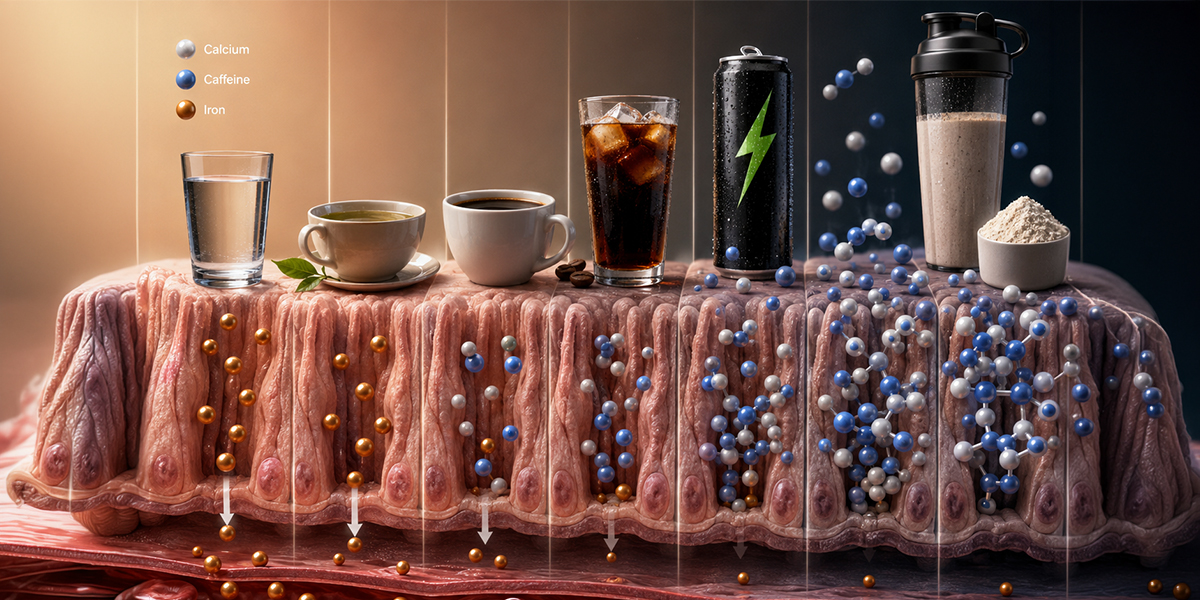
Coffee and tea can reduce non-heme iron absorption, mainly because they contain polyphenols and tannins that can bind iron in the digestive tract.
Although caffeine is often blamed, the strongest inhibitory effect is usually related to these plant compounds found in coffee and tea rather than caffeine alone.
When these beverages are consumed with iron-rich meals or iron supplements, the body may absorb less iron, especially from plant-based foods, fortified foods, and many standard iron supplements.
| Beverage or Compound | Main Concern | Best Timing |
|---|---|---|
| Coffee | Polyphenols may bind non-heme iron | Avoid near iron supplements or iron-rich meals |
| Black Tea | Tannins may strongly reduce iron absorption | Separate from iron intake |
| Green Tea | Contains polyphenols that may inhibit absorption | Take away from iron-rich meals |
| Caffeine Alone | May be less important than tannins and polyphenols | Still avoid caffeine beverages during iron dosing |
Differences According to Iron Concentration
The effect of calcium, coffee, and tea on iron absorption may vary depending on the amount and form of iron consumed.
Higher iron concentrations may provide more total iron available for absorption, but they do not completely eliminate the inhibitory effects of calcium or coffee and tea compounds.
For people correcting deficiency, simply increasing the iron dose is not always the best solution. Improving timing, choosing a suitable iron form, and enhancing absorption with vitamin C may provide better results with fewer digestive side effects.
| Iron Intake Level | Effect of Calcium or Coffee/Tea | Practical Recommendation |
|---|---|---|
| Low Iron Intake | Inhibitors may have a stronger practical impact | Avoid calcium, coffee, and tea around iron meals |
| Moderate Iron Intake | Absorption may still be reduced | Add vitamin C and improve meal timing |
| High-Dose Iron Supplement | Inhibition may be partially offset but not removed | Take separately from calcium and caffeinated drinks |
| Medical Iron Therapy | Absorption quality becomes very important | Follow professional dosing and monitoring |
Heme Iron vs. Non-Heme Iron
Iron exists in two main dietary forms: heme iron and non-heme iron.
Heme iron is found in animal foods such as meat, poultry, and fish. It is usually absorbed more efficiently and is less affected by dietary inhibitors.
Non-heme iron is found in plant foods, fortified foods, and many supplements. It is more sensitive to inhibitors such as calcium, tea, coffee, phytates, and some fibers, but its absorption can be improved significantly with vitamin C.
| Iron Type | Main Sources | Sensitivity to Calcium and Coffee/Tea |
|---|---|---|
| Heme Iron | Meat, poultry, fish | Generally less affected |
| Non-Heme Iron | Legumes, spinach, grains, fortified foods, supplements | More affected by inhibitors |
| Supplemental Iron | Ferrous salts, bisglycinate, complexes | Depends on form, dose, and timing |
Strategies to Enhance Iron Absorption
Improving iron absorption is often about timing and meal composition rather than taking higher doses.
Iron supplements are usually better absorbed when taken away from calcium supplements, dairy products, coffee, tea, and high-fiber blockers, unless a healthcare professional gives different instructions.
Combining iron with vitamin C-rich foods or drinks can help improve non-heme iron absorption and may be especially useful for people who rely mostly on plant-based iron sources.
- Take iron away from calcium supplements and dairy products.
- Avoid coffee and tea close to iron-rich meals or iron supplements.
- Combine non-heme iron with vitamin C sources such as citrus, berries, kiwi, or bell peppers.
- Do not increase iron doses without medical guidance.
- Choose a well-tolerated iron form if digestive discomfort occurs.
- Monitor ferritin, hemoglobin, and related markers when treating deficiency.
Frequently Asked Questions
Does calcium reduce iron absorption?
Yes. Calcium may reduce iron absorption when taken at the same time, especially with iron supplements or non-heme iron sources.
Does coffee block iron absorption?
Coffee may reduce non-heme iron absorption because it contains polyphenols that can bind iron in the digestive tract. Tea may have a similar or stronger effect due to tannins.
Is heme iron affected by caffeine and calcium?
Heme iron from animal foods is generally absorbed more efficiently and is less affected by dietary inhibitors compared with non-heme iron.
Can vitamin C improve iron absorption?
Yes. Vitamin C can significantly support non-heme iron absorption by helping keep iron in a more absorbable form.
Should I take iron with milk, coffee, or tea?
It is usually better to avoid taking iron supplements with milk, coffee, or tea because they may reduce absorption. Water or a vitamin C-rich drink is often a better option.
Conclusion
Calcium and coffee or tea compounds can clearly affect iron absorption, especially non-heme iron from plant foods, fortified foods, and many supplements.
Although higher iron concentrations may increase the total amount available, they do not fully cancel the inhibitory effects of calcium, tannins, or polyphenols. Proper timing, separating iron from calcium and caffeinated beverages, and combining non-heme iron with vitamin C are practical strategies that help support better iron utilization and overall health.