

Iodine is an essential trace element required for thyroid health and the production of thyroid hormones that help regulate metabolism, energy use, growth, and normal body functions.
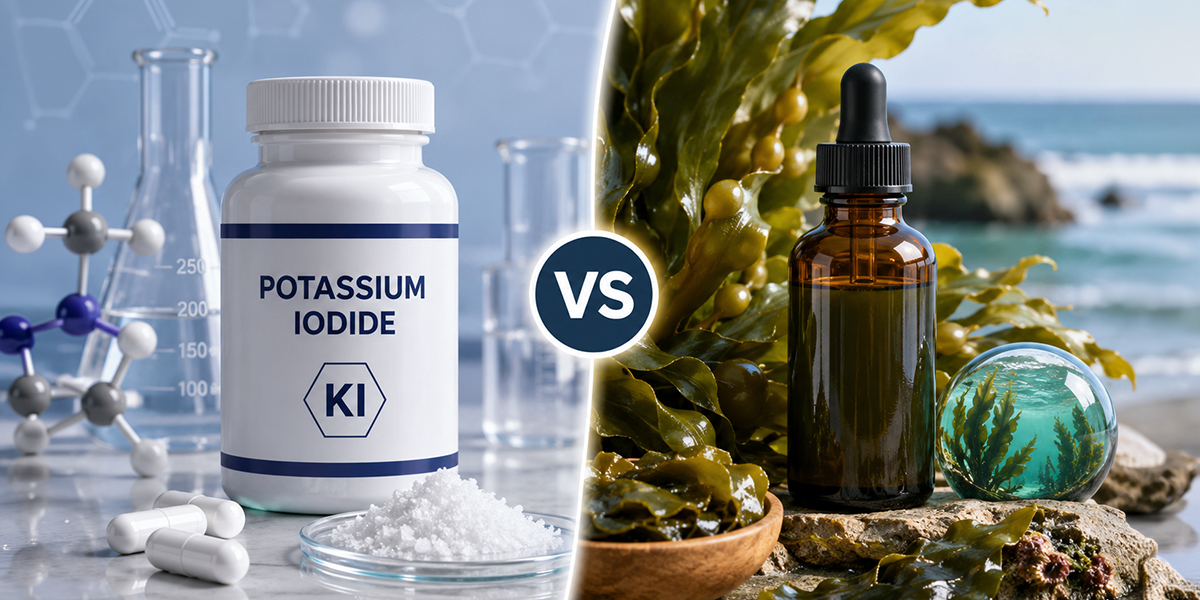
In dietary supplements, iodine is available in different forms, including potassium iodide and iodine derived from kelp. Although both forms can supply iodine to the body, they differ in source, concentration consistency, dosing precision, and product standardization.
Table of Contents
Why Iodine Matters for Thyroid Health
Iodine is needed to produce thyroid hormones, mainly T3 and T4. These hormones influence metabolism, body temperature, energy production, growth, and nervous system development.
When iodine intake is too low, thyroid hormone production may be affected. However, excessive iodine intake may also disturb thyroid function in sensitive individuals.
For this reason, the goal is not to consume the highest possible amount of iodine, but to maintain a balanced and appropriate intake based on individual needs.
What Is Potassium Iodide?
Potassium iodide is a stable chemical compound that provides iodine in the form of iodide, a form the body can use for thyroid hormone production.
It is commonly used in dietary supplements because it offers a precise and standardized iodine concentration. This makes it easier to control the dose and reduce variation between servings.
Potassium iodide is also used in certain medical and public health situations related to thyroid protection, but these uses should only be followed under professional guidance.
- Provides iodine in a stable iodide form.
- Offers precise and standardized dosing.
- Commonly used in iodine supplements.
- Useful when controlled iodine intake is needed.
- Less affected by natural variation compared with kelp sources.
What Is Iodine Derived from Kelp?
Kelp-derived iodine comes from seaweeds such as Laminaria, which naturally absorb iodine from seawater.
This form is often preferred by people looking for a natural source of iodine. Kelp may also contain additional trace minerals, depending on the seaweed source and processing method.
However, iodine levels in kelp can vary significantly depending on where the seaweed was grown, how it was harvested, and how the supplement was manufactured.
| Form | Source | Main Advantage | Main Consideration |
|---|---|---|---|
| Potassium Iodide | Standardized mineral compound | Precise and consistent iodine dose | Less “natural” for those seeking whole-food sources |
| Kelp-Derived Iodine | Seaweed such as kelp | Natural source with possible trace minerals | Iodine content may vary between products |
Differences in Stability and Concentration
One of the biggest differences between potassium iodide and kelp-derived iodine is consistency.
Potassium iodide usually provides a stable and measurable iodine amount, which allows for accurate dosing. This is useful for people who need a controlled iodine intake.
Kelp supplements, on the other hand, may vary in iodine concentration from one product to another. This can make the actual iodine dose less predictable unless the product is carefully tested and standardized.
| Comparison Point | Potassium Iodide | Kelp-Derived Iodine |
|---|---|---|
| Dose Precision | High | Depends on standardization |
| Iodine Stability | Generally stable and measurable | May vary by seaweed source and processing |
| Source Type | Mineral compound | Natural seaweed source |
| Additional Minerals | Usually focused on iodine | May contain trace minerals |
| Best For | Controlled iodine dosing | Natural-source preference with verified quality |
Absorption and Thyroid Effects
Both potassium iodide and kelp-derived iodine can provide iodine needed for thyroid hormone production when used in appropriate amounts.
When equivalent iodine doses are provided, there may not be a major practical difference in iodine availability for thyroid hormone support. The more important factor is often the accuracy of the dose and the person’s individual thyroid status.
Excessive iodine intake from either source may negatively affect thyroid function in some people, potentially contributing to overstimulation or suppression of thyroid activity, especially in sensitive individuals or those with thyroid conditions.
- Both forms can support thyroid hormone production.
- Dose accuracy is very important.
- Excessive iodine may affect thyroid balance.
- People with thyroid disorders should seek professional guidance.
- Supplement quality matters, especially with kelp-based products.
Which One Is Preferable?
The preferred form depends on the person’s goal, health status, and preference.
Potassium iodide may be preferable when a precise, predictable, and standardized iodine dose is needed. This is useful for individuals who need controlled supplementation.
Kelp-derived iodine may be suitable for people who prefer a natural seaweed-based source, as long as the product clearly states iodine content and is tested for quality, purity, and consistency.
| Goal | Better Option | Reason |
|---|---|---|
| Precise Iodine Dose | Potassium Iodide | More standardized and predictable |
| Natural Source Preference | Kelp-Derived Iodine | Comes from seaweed and may include trace minerals |
| Sensitive Thyroid Management | Professional Guidance Needed | Both deficiency and excess can affect thyroid function |
| Long-Term Supplement Use | Standardized Product | Consistency and quality control are important |
Frequently Asked Questions
What is the main difference between potassium iodide and kelp-derived iodine?
The main difference is source and dose consistency. Potassium iodide is a standardized compound, while kelp-derived iodine comes from seaweed and may vary in iodine content.
Is kelp iodine better because it is natural?
Not necessarily. Kelp can be a good natural source, but the iodine content may vary. A tested and standardized product is important for safe and consistent intake.
Is potassium iodide absorbed well?
Yes. Potassium iodide provides iodine in iodide form, which is commonly used by the body for thyroid hormone production.
Can too much iodine affect the thyroid?
Yes. Excessive iodine intake from either potassium iodide or kelp may affect thyroid function, especially in people with thyroid sensitivity or existing thyroid conditions.
Which iodine supplement should I choose?
Choose potassium iodide if you need precise dosing. Choose kelp-derived iodine if you prefer a natural source, but only when the iodine content and product quality are clearly verified.
Conclusion
The main differences between potassium iodide and iodine derived from kelp are source, concentration stability, and dosing precision.
Potassium iodide offers a stable and controlled iodine dose, while kelp-derived iodine provides a natural seaweed-based option that may contain additional trace minerals but can vary in iodine concentration. Both forms can support thyroid health when used appropriately, but balanced intake, product quality, and professional guidance are especially important for people with thyroid concerns.