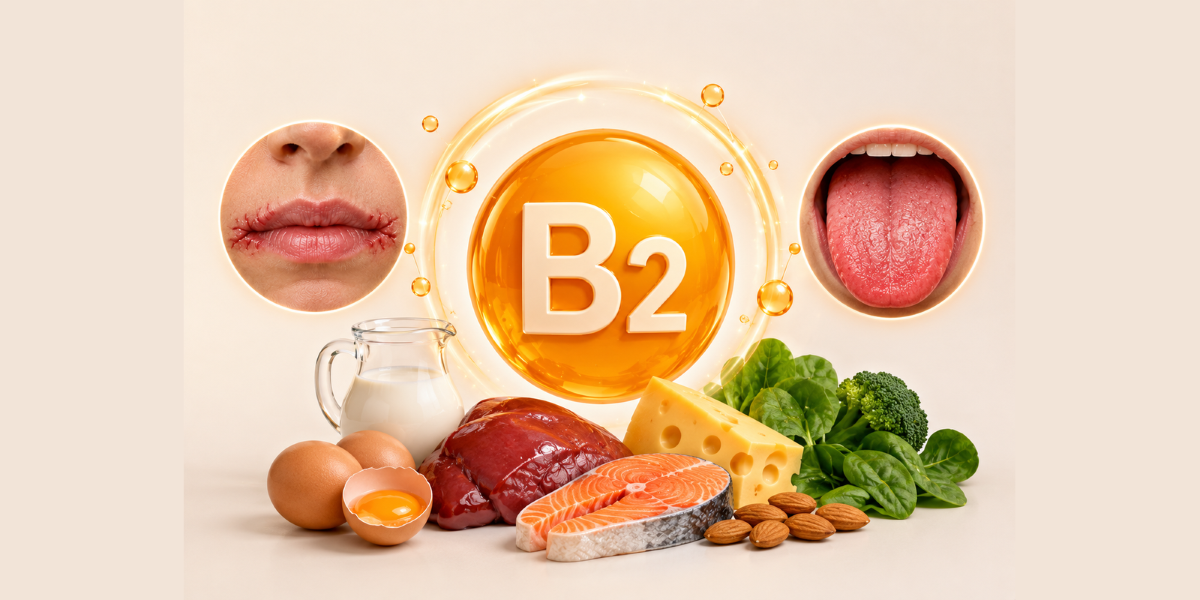


Vitamin B2, also known as riboflavin, is an essential water-soluble vitamin that supports energy production, skin health, oral health, and normal cellular function.
When riboflavin levels are low, noticeable symptoms may appear around the mouth and tongue, such as cracked corners of the mouth and tongue inflammation. These symptoms can affect daily comfort, eating, speaking, and overall nutrition.
Table of Contents
Why Vitamin B2 Is Important
Vitamin B2 helps the body convert food into energy and supports the normal function of the skin, mouth, tongue, eyes, and nervous system.
Because riboflavin is water-soluble, the body does not store large amounts for long periods. This means regular intake through food or supplements may be needed to maintain adequate levels.
A deficiency may occur alone or alongside deficiencies in other B vitamins, especially when the diet is unbalanced or absorption is poor.
Cracked Corners of the Mouth
Cracked corners of the mouth, also known as angular cheilitis, may appear as redness, soreness, burning, or painful splits at one or both corners of the lips.
Vitamin B2 deficiency can affect the health of the skin and mucous membranes, making the corners of the mouth more vulnerable to cracking and irritation.
These cracks may worsen with poor nutrition, stress, dry weather, frequent lip licking, or irritation from saliva.
- Redness at the corners of the mouth.
- Small cracks or splits in the skin.
- Burning or stinging sensation.
- Pain when opening the mouth widely.
- Possible irritation while eating spicy or acidic foods.
Tongue Inflammation
Vitamin B2 deficiency may also contribute to tongue inflammation, known as glossitis.
The tongue may become red, swollen, smooth, sore, or sensitive, especially when eating hot, spicy, or acidic foods.
Glossitis can affect chewing, swallowing, appetite, and overall food intake, especially when discomfort persists for several days or weeks.
| Symptom | Possible Appearance | Possible Impact |
|---|---|---|
| Angular Cheilitis | Cracks, redness, soreness at mouth corners | Pain while eating, speaking, or opening the mouth |
| Glossitis | Red, swollen, smooth, or painful tongue | Reduced appetite and discomfort while chewing |
| Skin and Mouth Irritation | Dryness, burning, sensitivity, or inflammation | Daily discomfort and lower food tolerance |
Causes of Vitamin B2 Deficiency
Riboflavin deficiency may result from low dietary intake, poor absorption, increased body needs, or certain lifestyle and health factors.
People with restricted diets, poor overall nutrition, digestive disorders, chronic illness, or increased nutritional demands may be more likely to develop low B2 levels.
Needs may also increase during pregnancy, breastfeeding, periods of intense physical activity, or recovery from illness.
- Unbalanced or low-nutrient diet.
- Low intake of dairy products, eggs, meats, or leafy vegetables.
- Poor absorption due to digestive issues.
- Pregnancy or breastfeeding.
- Intense physical activity or increased metabolic demand.
- Alcohol overuse or chronic health conditions.
Prevention and Treatment
Prevention starts with a balanced diet that includes natural sources of riboflavin.
Good food sources include dairy products, eggs, lean meats, fish, organ meats, almonds, mushrooms, spinach, broccoli, and fortified grains.
When deficiency is suspected or confirmed, vitamin B2 supplements may be used if necessary, preferably under professional guidance, especially if symptoms are persistent or combined with other deficiencies.
When to Seek Medical Advice
Medical advice may be needed if mouth cracks, tongue pain, burning, swelling, or difficulty eating persists despite improving nutrition.
A healthcare professional may check for riboflavin deficiency, other B-vitamin deficiencies, iron status, oral infections, digestive conditions, or other causes of inflammation.
Identifying the correct cause is important because treatment may differ depending on whether the issue is nutritional, infectious, inflammatory, or related to another health condition.
Frequently Asked Questions
Can vitamin B2 deficiency cause cracked mouth corners?
Yes. Low riboflavin levels may contribute to cracked, red, or painful corners of the mouth, also known as angular cheilitis.
Can vitamin B2 deficiency cause tongue inflammation?
Yes. Riboflavin deficiency may cause glossitis, which can make the tongue red, swollen, smooth, sore, or sensitive while eating.
What foods are high in vitamin B2?
Vitamin B2 is found in dairy products, eggs, meats, fish, almonds, mushrooms, leafy vegetables, and fortified grains.
Are mouth cracks always caused by vitamin B2 deficiency?
No. Mouth cracks may also be caused by fungal infection, irritation, dehydration, iron deficiency, vitamin B12 deficiency, folate deficiency, or other conditions.
When should I use vitamin B2 supplements?
Vitamin B2 supplements may be useful when deficiency is suspected or confirmed, but persistent symptoms should be evaluated to identify the true cause.
Conclusion
Cracked corners of the mouth and tongue inflammation are key signs that may be linked to vitamin B2 deficiency.
Maintaining adequate riboflavin intake through a balanced diet, monitoring persistent oral symptoms, and using supplements when needed can help support oral health, skin comfort, and daily energy.