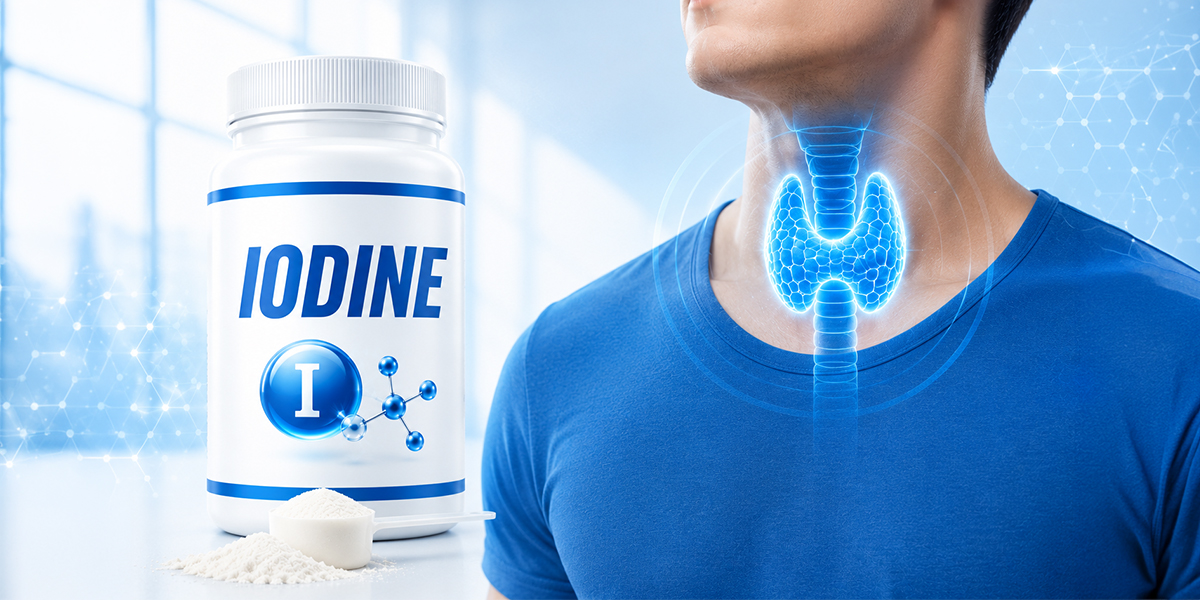


Iodine is an essential mineral that plays a central role in regulating metabolic rate through its direct effect on thyroid gland function. Although the body needs iodine in small amounts, its impact on energy production, body weight, temperature regulation, and fat metabolism is significant.
Any imbalance in iodine levels may affect thyroid hormone production, which can influence metabolism speed, energy levels, and overall well-being.
Table of Contents
Iodine and Thyroid Hormone Production
Iodine is a key component of the thyroid hormones T3 and T4, which are responsible for regulating the body’s metabolic rate.
Without adequate iodine, the thyroid gland cannot produce these hormones efficiently, which may lead to reduced thyroid activity and slower metabolic function.
The Thyroid Gland’s Effect on Metabolism
Thyroid hormones help regulate calorie burning, fat utilization for energy, body temperature, and overall energy expenditure.
When thyroid activity is reduced, the body may burn calories more slowly, leading to fatigue, lower energy levels, cold sensitivity, and possible weight gain even when food intake is moderate.
This is why iodine status is closely linked to metabolism speed and overall metabolic health.
Symptoms of Iodine Deficiency
Iodine deficiency may reduce thyroid hormone production and lead to symptoms associated with slower metabolism.
Common signs may include:
- Fatigue and persistent tiredness.
- Unexplained weight gain.
- Cold sensitivity.
- Hair thinning or hair loss.
- Dry skin.
- Reduced energy and sluggishness.
These symptoms may also be related to other health conditions, so proper evaluation is important when they persist.
Dietary Sources of Iodine
Iodine can be obtained through several food sources. Maintaining a balanced diet helps support healthy iodine levels and normal thyroid function.
| Food Source | Iodine Support |
|---|---|
| Iodized Salt | Common dietary source when used moderately |
| Seafood | Naturally rich in iodine |
| Seaweed | Can be very high in iodine |
| Dairy Products | May contribute to daily iodine intake |
| Eggs | Provide moderate iodine amounts |
Supplements and Thyroid Health Support
In some cases, iodine supplements may be useful for individuals who do not regularly consume iodine-rich foods or who have a confirmed deficiency.
However, iodine supplementation should be taken in controlled amounts. Excess iodine may also disturb thyroid function in some individuals, especially those with thyroid disorders.
Frequently Asked Questions
Why is iodine important for metabolism?
Iodine is required to produce thyroid hormones, which regulate calorie burning, energy production, and metabolic speed.
Can iodine deficiency cause weight gain?
Low iodine may reduce thyroid hormone production, which can slow metabolism and contribute to weight changes in some individuals.
What are the best food sources of iodine?
Iodized salt, seafood, seaweed, dairy products, and eggs are common sources of iodine.
Should everyone take iodine supplements?
No. Supplementation should depend on dietary intake, health status, and professional guidance when needed.
Can too much iodine be harmful?
Yes. Excessive iodine intake may negatively affect thyroid function in some people, especially those with thyroid disorders.
Conclusion
Iodine may be needed in small amounts, but it plays a major role in controlling metabolism speed through its influence on thyroid hormone production.
Maintaining adequate iodine levels through a balanced diet can support energy, healthy weight management, body temperature regulation, and overall thyroid health. When supplementation is needed, it should be used carefully and based on individual requirements.