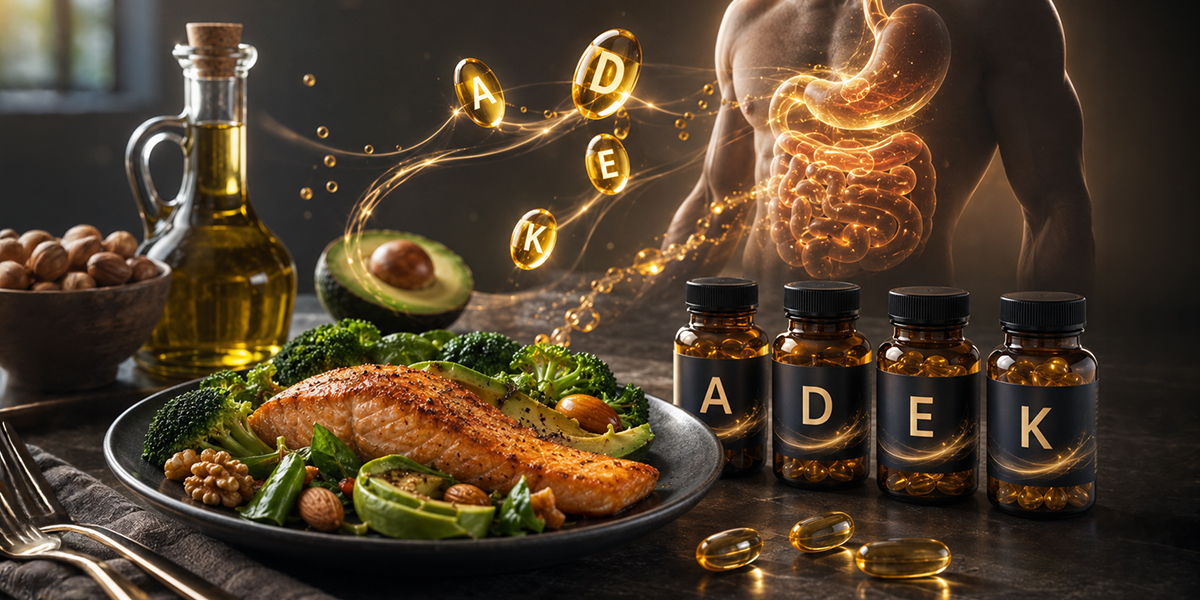


Fat-soluble vitamins play a vital role in supporting immunity, bone health, skin integrity, antioxidant protection, and several essential body functions.
Unlike water-soluble vitamins, vitamins A, D, E, and K require dietary fat for proper absorption. This makes the timing and method of intake important, especially when using supplements to correct deficiency or support long-term health.
Table of Contents
What Are Fat-Soluble Vitamins?
Fat-soluble vitamins are vitamins that dissolve in fat and are absorbed together with dietary fats during digestion.
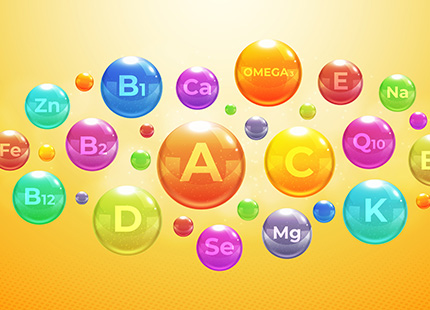
The main fat-soluble vitamins are vitamins A, D, E, and K. These nutrients are stored in body tissues and the liver, which means the body can keep reserves of them for later use.
Because they are stored in the body, both deficiency and excessive intake can be important to monitor, especially when supplements are used regularly or in high doses.
Why Do These Vitamins Need Fat?
Fat-soluble vitamins need dietary fat because their absorption depends on digestive processes that handle fats inside the intestines.
When fat is present in a meal, the body releases bile and digestive enzymes that help form small fat-based particles. These particles help transport fat-soluble vitamins through the intestinal wall.
If these vitamins are taken on an empty stomach or with a very low-fat meal, absorption may be reduced, meaning the body may not receive the full benefit of the supplement.
- Dietary fat helps stimulate bile release.
- Bile supports fat digestion and vitamin absorption.
- Fat-soluble vitamins are carried with fat-based particles.
- Low-fat meals may reduce absorption efficiency.
- Taking them with food may improve overall utilization.
The Effect of Fat-Containing Meals on Absorption
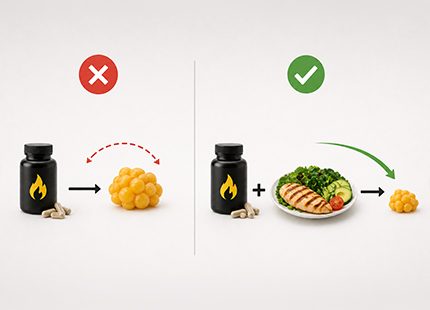
Taking fat-soluble vitamins with a balanced meal that includes healthy fats may improve their bioavailability.
Healthy fats such as olive oil, avocado, nuts, seeds, eggs, fatty fish, or dairy products can help create a better digestive environment for absorbing vitamins A, D, E, and K.
This does not mean a meal needs to be high in fat. A moderate amount of healthy fat is usually enough to support better absorption.
| Intake Method | Absorption Effect | Best Practice |
|---|---|---|
| On an Empty Stomach | May reduce absorption | Avoid unless advised otherwise |
| With a Very Low-Fat Meal | Absorption may be limited | Add a healthy fat source |
| With a Meal Containing Healthy Fat | Supports better absorption | Most practical option |
Benefits of Improved Absorption
Better absorption of fat-soluble vitamins supports several important body functions.
Vitamin A contributes to immune function, skin integrity, and vision. Vitamin D supports bone health, immune balance, and calcium metabolism. Vitamin E helps protect cells from oxidative stress, while vitamin K supports bone health and normal blood clotting.
When these vitamins are absorbed properly, the body can use them more effectively to support long-term health and normal physiological function.
| Vitamin | Main Functions | Why Fat Helps |
|---|---|---|
| Vitamin A | Vision, immunity, skin health | Supports intestinal absorption and transport |
| Vitamin D | Bone health, immunity, calcium balance | Improves uptake with fat-containing meals |
| Vitamin E | Cell protection and antioxidant support | Requires fat digestion for better absorption |
| Vitamin K | Bone health and normal blood clotting | Absorbs better when taken with dietary fat |
Practical Tips for Supplement Use
For optimal results, fat-soluble vitamin supplements are usually best taken with a main meal that contains a source of healthy fat.
This can be breakfast, lunch, or dinner, depending on your routine. The most important point is not the exact time of day, but taking the supplement with food that supports absorption.
People taking high-dose vitamin A, D, E, or K supplements should follow proper dosing guidance, because these vitamins can accumulate in the body when taken excessively.
- Take fat-soluble vitamins with a main meal.
- Include a healthy fat source such as olive oil, avocado, nuts, or eggs.
- Avoid taking them on an empty stomach when possible.
- Be careful with high-dose long-term supplementation.
- Follow label directions or professional advice.
- Use consistent timing to build a reliable routine.
Best Healthy Fat Sources to Take with Vitamins
A small to moderate amount of healthy fat is usually enough to support absorption of fat-soluble vitamins.
The goal is not to eat a heavy or greasy meal, but to include a quality fat source that supports normal digestion and nutrient transport.
| Healthy Fat Source | Examples | How to Use |
|---|---|---|
| Olive Oil | Extra virgin olive oil | Add to salad, vegetables, or main meals |
| Nuts and Seeds | Almonds, walnuts, chia seeds, flaxseeds | Take with breakfast, yogurt, or snacks |
| Avocado | Avocado slices or spread | Add to toast, salads, or meals |
| Eggs and Fatty Fish | Eggs, salmon, sardines | Use as part of a balanced meal |
Frequently Asked Questions
Which vitamins are fat-soluble?
The main fat-soluble vitamins are vitamins A, D, E, and K.
Why should fat-soluble vitamins be taken with food?
They absorb better when taken with a meal that contains dietary fat, because fat digestion helps transport these vitamins through the intestines.
Can I take vitamin D on an empty stomach?
It can be taken on an empty stomach, but absorption may be better when vitamin D is taken with a meal containing healthy fat.
Do I need a high-fat meal for these vitamins?
No. A moderate amount of healthy fat, such as olive oil, nuts, eggs, or avocado, is usually enough to support absorption.
Can taking too much fat-soluble vitamins be harmful?
Yes. Because these vitamins can be stored in the body, excessive long-term intake may cause problems. High-dose supplementation should be monitored carefully.
Conclusion
Taking fat-soluble vitamins A, D, E, and K with a meal that contains healthy fats is a simple but important step for better absorption and nutrient utilization.
Including foods such as olive oil, nuts, avocado, eggs, or fatty fish with your supplement can help the body absorb these vitamins more effectively. For best results, use supplements responsibly, avoid unnecessary high doses, and combine them with a balanced diet and healthy lifestyle.