

Minerals in the body work within a delicate system of balance and interaction. Some nutrients support each other’s absorption, while others may compete when taken at the same time.
Understanding these supplement interactions can help improve absorption, support better nutrient utilization, and reduce the risk of taking minerals in a way that limits their effectiveness.
Table of Contents
Why Mineral Timing Matters
Minerals often share similar absorption pathways in the digestive system. When taken together in high doses, they may compete for uptake and reduce each other’s absorption.
This does not mean these minerals are harmful together in normal foods. The concern is usually stronger with high-dose supplements or when multiple mineral products are taken at the same time.
Separating certain supplements throughout the day may help the body absorb each mineral more efficiently.
Zinc and Copper
Zinc and copper are essential trace minerals involved in immune function, antioxidant defense, connective tissue health, and many enzymatic processes.
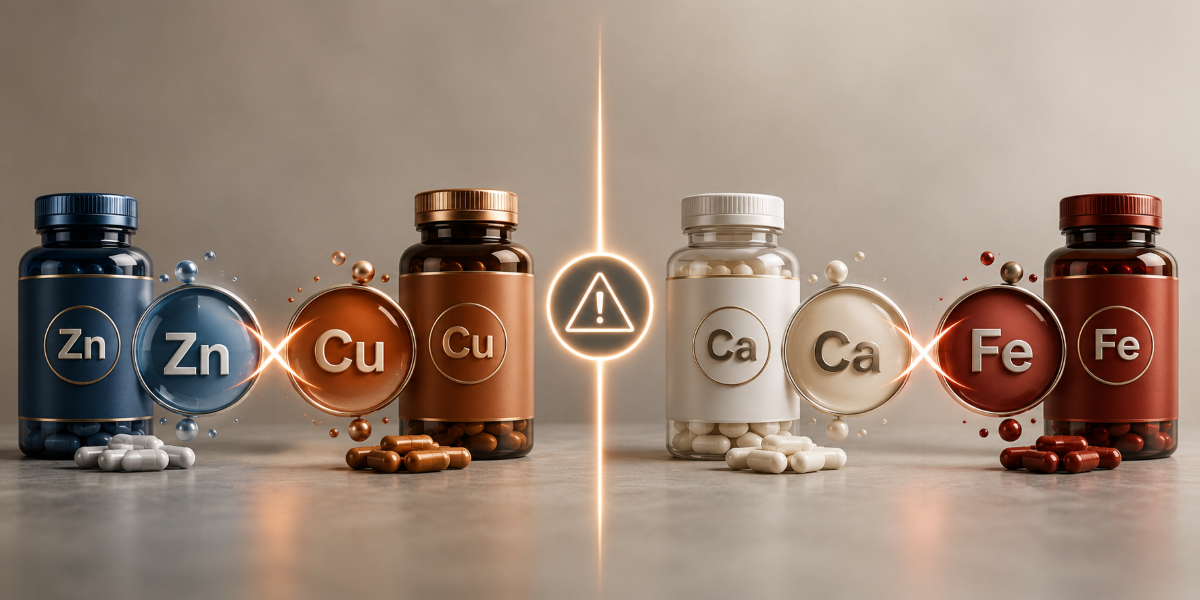
However, when zinc and copper are taken together at high doses, they may compete for absorption in the intestines because they can use similar transport pathways.
Long-term high-dose zinc intake may also affect copper status if copper intake is not adequate. For this reason, balance between these two minerals is important.
If both supplements are needed, they are often taken at different times of the day, or used in a professionally balanced formula that accounts for the proper ratio.
Calcium and Iron
Iron is essential for oxygen transport in the blood, red blood cell production, and energy metabolism.
Calcium is important for bone strength, muscle contraction, nerve signaling, and normal heart rhythm.
When taken together in supplement form, calcium may interfere with iron absorption and reduce its efficiency, especially when the iron supplement is being used to correct low iron levels.
For better absorption, iron is often taken away from calcium supplements, dairy products, and high-calcium meals.
| Combination | Possible Interaction | Better Timing Approach |
|---|---|---|
| Zinc + Copper | May compete for intestinal absorption, especially at high doses | Separate doses or use a balanced formula when appropriate |
| Calcium + Iron | Calcium may reduce iron absorption | Take iron away from calcium, dairy, tea, and coffee |
| Multiple Mineral Products | Higher risk of competition and ingredient duplication | Review labels and spread intake throughout the day |
Why Do These Interactions Happen?
These interactions happen because some minerals rely on similar absorption mechanisms in the gut.
When two minerals are present in high amounts at the same time, one may reduce the uptake of the other by competing for transport.
In addition, some minerals or foods may alter the digestive environment, making it less favorable for the absorption of another nutrient.
- Minerals may compete for similar transporters.
- High-dose supplements create stronger competition than normal food intake.
- Some foods and drinks can reduce mineral absorption.
- Taking several mineral products together may increase duplication risk.
- Spacing supplements can help improve overall nutrient utilization.
How to Optimize Timing
Improving supplement effectiveness can often be achieved by spacing mineral intake across the day.
For example, iron may be taken in the morning or between meals, while calcium may be taken later with food if needed.
Zinc and copper can also be separated if taken as individual high-dose supplements, unless they are included together in a properly balanced multivitamin or mineral formula.
- Take iron away from calcium supplements and dairy products.
- Avoid tea and coffee close to iron intake.
- Separate zinc and copper when using high-dose individual supplements.
- Check multivitamin labels for overlapping minerals.
- Use balanced formulas instead of combining several high-dose single minerals.
- Follow professional guidance if treating a confirmed deficiency.
Should They Always Be Avoided Together?
Not necessarily. The impact depends on dosage, diet, timing, supplement form, and individual health status.
Small amounts of minerals found together in food or moderate multivitamin formulas are usually less concerning than high-dose single-mineral supplements.
However, when using higher-dose supplements for iron deficiency, zinc support, calcium needs, or copper correction, separating them is often a more effective and safer approach.
People taking medications, managing anemia, osteoporosis, digestive disorders, kidney disease, or chronic health conditions should review supplement timing with a healthcare professional.
Frequently Asked Questions
Can zinc and copper be taken together?
They can be included together in balanced formulas, but high-dose individual zinc and copper supplements may compete for absorption and are often better separated.
Why should calcium and iron be separated?
Calcium may interfere with iron absorption, especially when iron is taken as a supplement to correct low iron levels.
How far apart should iron and calcium be taken?
Many people separate them by a few hours to reduce interaction, but the best timing may depend on dosage, tolerance, and professional guidance.
Is it a problem if my multivitamin contains both minerals?
Not always. Moderate amounts in a balanced multivitamin are usually different from taking separate high-dose minerals together.
Can I take iron with vitamin C?
Yes, vitamin C may support iron absorption. Iron is often taken with water and vitamin C, away from calcium, dairy, tea, and coffee.
Conclusion
Certain minerals, such as zinc and copper or calcium and iron, may interfere with each other’s absorption when taken together, especially in higher-dose supplement form.
Proper timing, balanced formulations, and periodic review of supplement routines can help reduce these interactions and improve overall nutrient efficiency within the body.