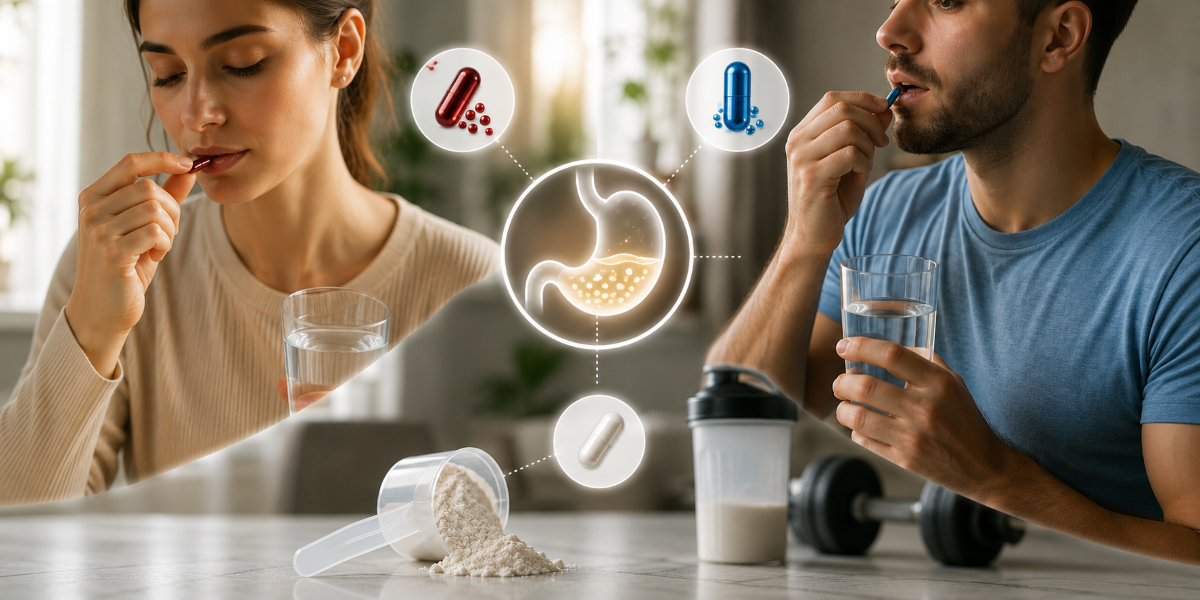


Some dietary supplements may be absorbed more efficiently when taken on an empty stomach, especially when food or other nutrients can interfere with their uptake.
Iron, vitamin B12, and certain amino acid supplements are common examples where timing may influence absorption or effectiveness. However, tolerance is also important, because some supplements may cause stomach discomfort when taken without food.
Table of Contents
Why Timing Matters for Supplement Absorption
Absorption depends on several factors, including stomach acidity, competition with other nutrients, food composition, and the form of the supplement.
Some supplements are better absorbed when taken away from meals because food may slow absorption or reduce uptake. Others may be easier to tolerate with food, even if absorption is slightly reduced.
The best timing should balance maximum absorption with digestive comfort and individual health needs.
Iron on an Empty Stomach
Iron is often recommended on an empty stomach because food, calcium, tea, coffee, and some minerals can reduce its absorption.
Taking iron away from meals may help the body absorb more of it, especially in people with low iron stores or increased iron needs.
Vitamin C may support iron absorption, so some people take iron with water and a source of vitamin C, such as citrus juice or a vitamin C supplement.
However, iron can irritate the stomach and may cause nausea, constipation, or abdominal discomfort. If this happens, taking it with a small amount of food may improve tolerance.
Vitamin B12 and Absorption Timing
Vitamin B12 is important for nerve function, red blood cell production, energy metabolism, and DNA synthesis.
B12 may be taken on an empty stomach, especially in supplement forms such as tablets, capsules, sprays, or sublingual forms. Taking it in the morning is common because it is often used to support energy metabolism.
Some people absorb B12 well with or without food, but taking it away from heavy meals may be preferred when using it for targeted supplementation.
People with low stomach acid, digestive disorders, vegan diets, or absorption issues may require specific forms or higher doses based on medical advice.
| Supplement | Best Timing | Important Notes |
|---|---|---|
| Iron | Empty stomach, away from calcium, tea, and coffee | Take with vitamin C if tolerated; use with food if it causes nausea |
| Vitamin B12 | Morning, with or without food; empty stomach may be preferred | Sublingual forms may be useful for some people |
| Amino Acids | Between meals or before training | Best when taken away from whole-protein meals for faster uptake |
Amino Acids on an Empty Stomach
Free-form amino acids, such as essential amino acids, branched-chain amino acids, or specific amino acids like L-glutamine, L-tyrosine, or L-carnitine, are often taken on an empty stomach.
This may help reduce competition with amino acids from whole proteins and allow faster absorption.
For workout support, amino acids are commonly taken before training, during training, or between meals, depending on the goal.
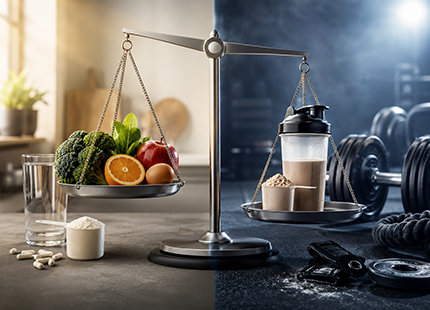
However, protein powders and complete meals do not need to be taken on an empty stomach. This timing advice mainly applies to isolated amino acid supplements.
What to Avoid Around These Supplements
Certain foods, drinks, and supplements may reduce absorption or interfere with the intended effect.
- Avoid taking iron with calcium supplements or dairy products.
- Avoid tea and coffee close to iron intake.
- Avoid combining iron with high-dose zinc or magnesium at the same time.
- Avoid taking amino acids immediately with a large protein-heavy meal if the goal is rapid absorption.
- Avoid taking too many supplements together without checking ingredient overlap.
Practical Timing Guide
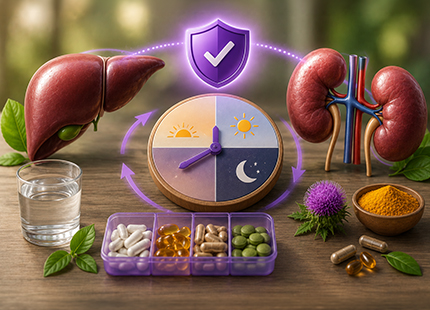
A simple supplement schedule can improve consistency and reduce interaction between nutrients.
- Morning empty stomach: Vitamin B12 or iron if tolerated.
- Iron option: Take with water and vitamin C, away from coffee, tea, calcium, and dairy.
- Between meals: Free-form amino acids for faster absorption.
- Before workout: Amino acids may be taken 20–30 minutes before training.
- With food: Take any supplement with food if it causes stomach discomfort, unless otherwise advised.
- Separate minerals: Avoid taking iron, zinc, calcium, and magnesium all together if absorption is the goal.
For people taking medications, prescription minerals, thyroid medication, antibiotics, or supplements for medical conditions, timing should be reviewed with a healthcare professional.
Frequently Asked Questions
Is iron better absorbed on an empty stomach?
Yes, iron is often better absorbed on an empty stomach, but it may cause nausea or stomach discomfort. If needed, it can be taken with a small amount of food.
Can I take iron with coffee?
It is better to avoid coffee close to iron intake because compounds in coffee may reduce iron absorption.
Should vitamin B12 be taken before or after food?
Vitamin B12 can often be taken with or without food, but many people prefer taking it in the morning on an empty stomach for targeted use.
Are amino acids better on an empty stomach?
Free-form amino acids are often taken on an empty stomach or between meals to reduce competition with amino acids from whole foods.
What if supplements upset my stomach?
If a supplement causes nausea or irritation, taking it with a light meal may improve tolerance. Persistent symptoms should be discussed with a healthcare professional.
Conclusion
Iron, vitamin B12, and free-form amino acids may often be taken on an empty stomach to support absorption or faster uptake.
However, supplement timing should always consider individual tolerance, health status, medication use, and actual nutritional need. The best routine is one that improves absorption while remaining safe, simple, and comfortable to follow.