
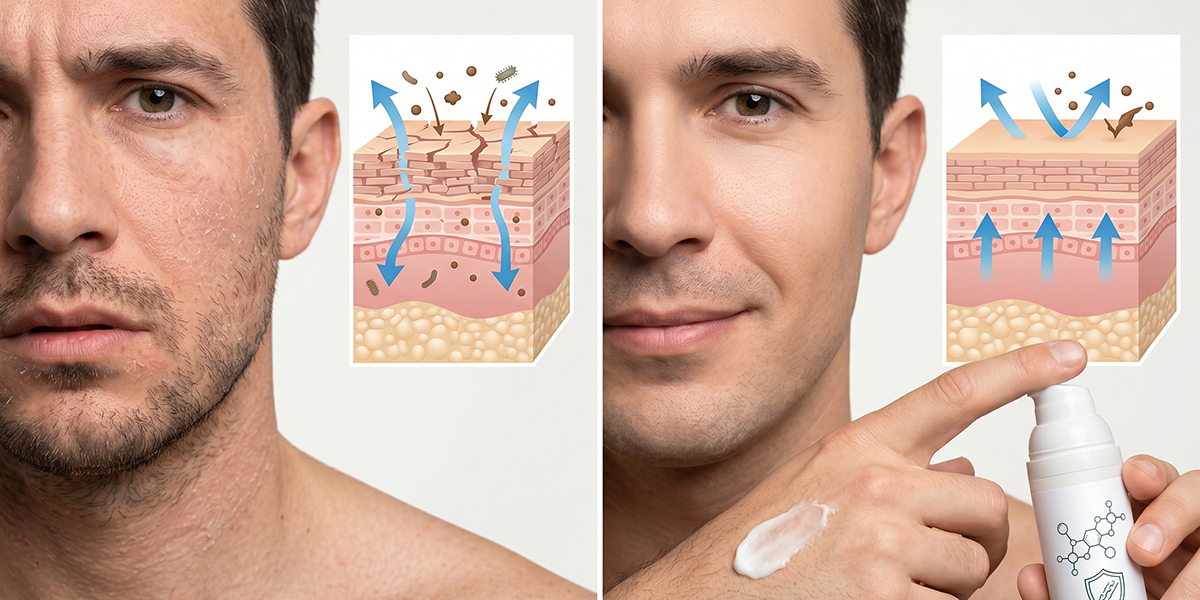


If your skin suddenly feels tight, irritated, or unusually reactive, even to products that used to work well, the problem may not be the product itself. In many cases, the real issue is a compromised skin barrier.
The skin barrier plays a central role in maintaining hydration, protecting against environmental stressors, and keeping the skin balanced. When it becomes damaged, the entire skin ecosystem is affected. Understanding how this barrier works, and how to repair it, can help you build a healthier routine using essentials such as a gentle cleanser, a hydrating serum, a barrier-supportive moisturizer, daily sun screen, and targeted face care products from your broader beauty care routine.
- What Is the Skin Barrier?
- Why the Skin Barrier Is So Important
- Signs of a Damaged Skin Barrier
- What Damages the Skin Barrier?
- The Science Behind Barrier Damage
- How to Repair a Damaged Skin Barrier
- How Long Does Recovery Take?
- How to Maintain a Healthy Skin Barrier
- Common Mistakes to Avoid
- FAQ
- References
What Is the Skin Barrier?
The skin barrier, also known as the outermost layer of the skin or stratum corneum, acts as a protective shield. It is often described as a brick and mortar structure.
- Skin cells act as the bricks
- Lipids such as ceramides, cholesterol, and fatty acids act as the mortar
This structure is responsible for preventing water loss, blocking harmful substances, and maintaining overall skin integrity. When intact, it helps keep the skin smooth, hydrated, and resilient. That is why many supportive face care and moisturizer formulas are designed specifically to strengthen barrier function.
Why the Skin Barrier Is So Important
A healthy barrier is the foundation of all skincare results. Without it, even the most advanced routines can become ineffective or irritating.
Its key functions include:
- Moisture retention: helps prevent dehydration and dryness
- Protection: helps shield skin from bacteria, pollutants, and irritants
- Tolerance: helps skin handle active ingredients more comfortably
- Repair support: helps skin recover from daily stress
When the barrier is weakened, the skin often becomes more reactive, less comfortable, and harder to manage. This is why even a simple routine with a gentle cleanser, hydrating serum, and barrier-focused moisturizer can be more effective than a complicated routine filled with too many actives.
Signs of a Damaged Skin Barrier
Barrier damage can show up differently depending on your skin type, but there are several warning signs that appear frequently when the skin is no longer functioning properly.
- Persistent dryness and tightness
- Redness and visible irritation
- Increased sensitivity to products
- Unexpected breakouts
- Rough or flaky texture
- Burning or stinging sensation
Skin that suddenly reacts to everything is often dealing with barrier dysfunction rather than a lack of stronger products.
What Damages the Skin Barrier?
Many everyday habits and skincare mistakes can weaken the barrier over time, especially when they happen repeatedly or in combination.
Over-Exfoliation
Frequent use of acids or physical scrubs can strip away essential lipids and weaken the protective structure of the skin.
Overuse of Active Ingredients
Layering multiple actives such as retinol, acids, and vitamin C can overwhelm the skin, especially if the routine lacks enough hydration and barrier repair.
Harsh Cleansers
Stripping cleansers remove the natural oils that the skin needs for protection. Choosing a gentle cleanser is often one of the most important steps in recovery.
Sun Exposure
Ultraviolet radiation weakens structural proteins and lipids, which is why daily sun screen is essential for prevention and repair.
Environmental Stress
Air conditioning, heat, pollution, and low humidity can all contribute to a weaker skin barrier.
The Science Behind Barrier Damage
On a deeper level, barrier damage involves several biological changes that reduce the skin’s ability to protect and repair itself.
- Loss of lipids: lower ceramides and cholesterol weaken the barrier structure
- Increased transepidermal water loss: this leads to dehydration and discomfort
- Micro-inflammation: contributes to redness, irritation, and sensitivity
- Impaired cell turnover: may slow the skin’s ability to recover properly
When these changes happen together, the skin becomes less resilient and more prone to irritation. That is why routines focused on hydrating serums, barrier creams, and gentle face care often work best during recovery.
How to Repair a Damaged Skin Barrier
Repairing the skin barrier requires a supportive, minimal approach. The goal is not to treat every skin concern at once, but to help the skin return to a more stable and comfortable state.
1. Simplify Your Routine
Reduce your routine to the essentials:
Avoid strong actives temporarily until the skin feels more stable.
2. Focus on Hydration
Hydration helps restore comfort, flexibility, and softness. Helpful ingredients often include:
- Hyaluronic acid
- Glycerin
These are commonly found in serum and moisturizer formulas made for dehydration support.
3. Rebuild the Lipid Layer
Lipids are essential for barrier repair. Look for products containing:
- Ceramides
- Fatty acids
- Cholesterol
4. Use Gentle Cleansing
Choose products that clean the skin without stripping it. A mild cleanser is usually far better than a foaming or harsh formula during recovery.
5. Protect with Sunscreen
Sun screen is essential because UV exposure can delay healing and make barrier damage worse.
How Long Does Recovery Take?
Recovery time depends on how severe the damage is and how quickly you simplify your routine.
- Mild damage: about 1 to 2 weeks
- Moderate damage: around 3 to 6 weeks
- Severe damage: may take longer and may require professional care
Patience and consistency matter more than trying to speed the process with extra products.
How to Maintain a Healthy Skin Barrier
Once the barrier is repaired, keeping it healthy becomes the next goal. Maintenance is usually easier than recovery if the routine stays balanced.
- Limit exfoliation to two or three times per week at most
- Introduce active ingredients gradually
- Maintain consistent hydration with a supportive moisturizer
- Avoid overloading the routine with too many products
- Protect the skin daily with sunscreen
Consistent face care and carefully chosen beauty care products help the skin stay balanced instead of repeatedly falling into a cycle of irritation and repair.
Common Mistakes to Avoid
Many people slow their recovery by making a few common mistakes:
- Trying to fix damage with more active ingredients
- Ignoring early signs of irritation
- Frequently switching products
- Following trends without understanding what the skin actually needs
Healthy skin is usually built through balance, patience, and consistency rather than constant experimentation.
FAQ
Can oily skin have a damaged barrier?
Yes. Oiliness does not prevent dehydration or barrier damage. Oily skin can still feel irritated, tight, and reactive when the barrier is compromised.
Should all actives be stopped?
In many cases, yes, at least temporarily. Giving the skin time to recover with a simpler routine is often the most effective approach.
Is moisturizer alone enough?
Moisturizer helps a lot, but full recovery usually needs both hydration support and lipid restoration, often through a combination of serum and moisturizer.
References
- American Academy of Dermatology
- Cleveland Clinic
- Mayo Clinic
The skin barrier is the foundation of healthy, resilient skin. When it becomes compromised, even the most advanced routines can become ineffective or irritating. By simplifying your routine, focusing on hydration and lipid repair, and relying on a gentle cleanser, supportive serum, barrier-friendly moisturizer, and daily sun screen, you can restore balance and build healthier skin over time.
This content is for informational purposes only and does not replace professional medical advice. If symptoms persist or worsen, consult a dermatologist.