

Niacin flush is a common reaction that may occur when taking high doses of niacin, especially the nicotinic acid form of vitamin B3.
Although this reaction is usually harmless, it can feel uncomfortable for many people because it may cause warmth, redness, tingling, or a burning sensation on the skin.
Table of Contents
What Is Niacin Flush?
Niacin flush is a temporary skin reaction that may happen after taking niacin, particularly in higher doses.
It usually appears as redness, warmth, tingling, or a burning sensation on the face, neck, chest, or upper body.
The reaction often starts within 15 to 30 minutes after taking niacin and gradually fades within about an hour, although the duration may vary from person to person.
Why Does Niacin Flush Happen?
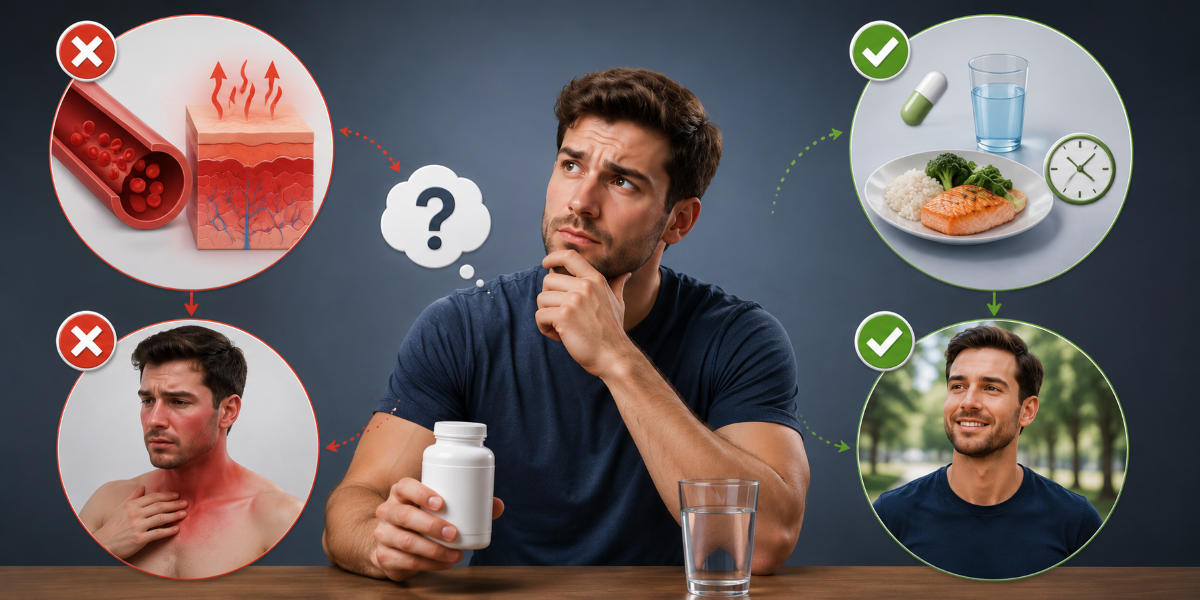
Niacin flush occurs because niacin can cause vasodilation, which means widening of the small blood vessels near the surface of the skin.
When these blood vessels expand, more blood flows to the skin, causing warmth, redness, and tingling.
This reaction is more common with higher doses of nicotinic acid and may be stronger when niacin is taken on an empty stomach.
How Long Does It Last?
In most cases, niacin flush begins within 15 to 30 minutes after taking niacin.
The symptoms usually fade gradually within 30 to 60 minutes, but the experience can vary depending on the dose, form of niacin, food intake, and individual sensitivity.
Some people may experience flushing more strongly at the beginning of supplementation, and the reaction may become less intense with gradual use.
| Factor | Effect on Flush | Practical Tip |
|---|---|---|
| High Dose | May increase flushing intensity | Start low and increase gradually |
| Empty Stomach | May make flushing stronger | Take niacin with food |
| Niacinamide Form | Usually does not cause flushing | Consider it if flushing is uncomfortable |
Ways to Avoid or Reduce Flushing
There are several practical steps that may help reduce niacin flushing and make supplementation more comfortable.
- Start with a low dose and increase gradually if needed.
- Take niacin with food to reduce its effect on the skin.
- Avoid taking high doses on an empty stomach.
- Choose the niacinamide form if your goal does not require nicotinic acid specifically.
- Follow the recommended dosage on the product label or healthcare provider’s advice.
These steps can help the body adapt and may reduce the intensity of warmth, redness, and tingling.
Niacin vs. Niacinamide
Niacin and niacinamide are both forms of vitamin B3, but they may affect the body differently.
Nicotinic acid is the form most commonly associated with flushing. Niacinamide usually does not cause flushing and is often preferred by people who want vitamin B3 support without the skin reaction.
However, these forms may not always be used for the same purpose, so it is important to choose the right form based on your goal and professional guidance when needed.
Practical Tips for Safe Use
Niacin flush is usually not dangerous, but it can feel uncomfortable. Staying calm and understanding the cause can help reduce concern when it happens.
If flushing is severe, painful, associated with dizziness, breathing difficulty, swelling, rash, or other unusual symptoms, medical advice should be sought immediately.
For daily wellness use, it is best to stay within recommended doses and avoid unnecessary high-dose supplementation.
Frequently Asked Questions
Is niacin flush dangerous?
Niacin flush is usually harmless and temporary, but severe or unusual symptoms should be checked by a healthcare professional.
How long does niacin flush last?
It usually starts within 15 to 30 minutes and fades within about 30 to 60 minutes, depending on the person and dose.
How can I reduce niacin flushing?
Start with a low dose, take niacin with food, avoid high doses, and consider niacinamide if flushing is uncomfortable.
Does niacinamide cause flushing?
Niacinamide usually does not cause flushing, unlike nicotinic acid. However, it may not serve the same purpose in every case.
Should I take high-dose niacin?
High-dose niacin should only be used under professional supervision because it may cause side effects and may not be suitable for everyone.
Conclusion
Niacin flush is a natural response that can occur after taking higher doses of nicotinic acid. It is usually temporary and harmless, but it may feel uncomfortable.
This reaction can often be minimized by starting with a low dose, taking niacin with food, following recommended dosages, or using niacinamide when appropriate while still supporting vitamin B3 intake.