
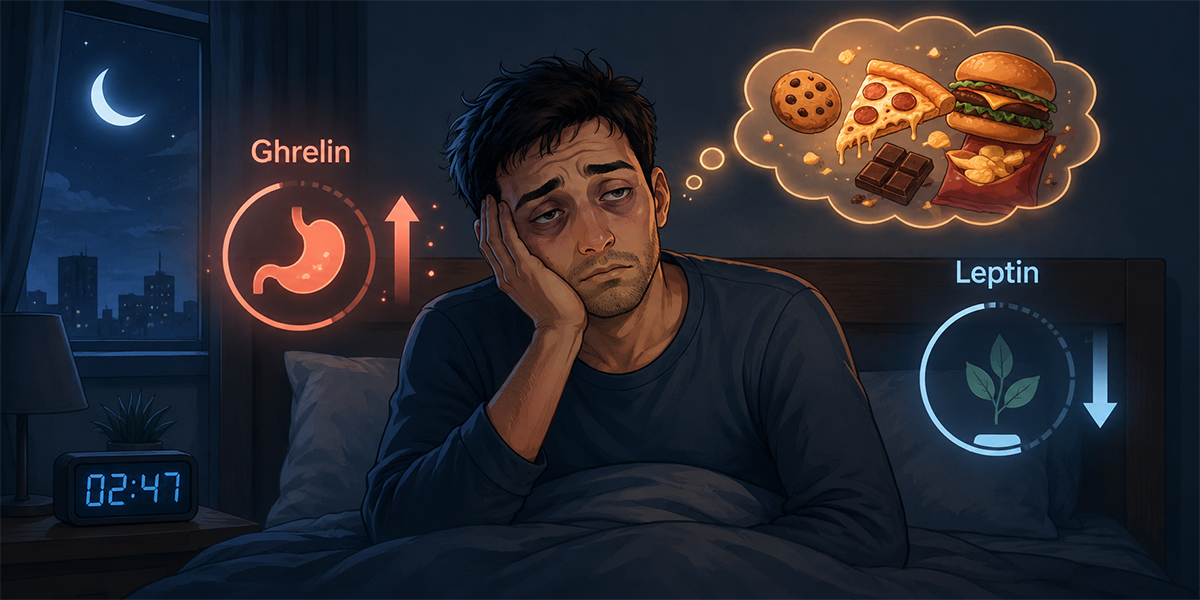


Lack of sleep is not only about feeling tired the next day. It can directly affect the hormones that regulate hunger, fullness, appetite, and food choices.
When sleep is insufficient, the body may experience stronger cravings, increased appetite, lower energy, and reduced motivation for physical activity. Over time, this can make weight management more difficult and increase the likelihood of overeating.
Table of Contents
Why Sleep Matters for Appetite Control
Sleep plays an important role in hormone regulation, energy balance, metabolism, and appetite control.
When sleep is reduced or disrupted, the body may respond by increasing hunger signals and reducing satiety signals. This can make a person feel hungrier than usual, even if they are eating enough calories.
Poor sleep may also affect decision-making and cravings, making high-calorie foods, sweets, and fatty snacks more appealing, especially at night or the following day.
Effects on Hunger and Satiety Hormones
Two important hormones involved in appetite regulation are ghrelin and leptin.
Ghrelin stimulates hunger, while leptin helps signal fullness to the brain. When sleep is insufficient, ghrelin may increase and leptin may decrease, creating a stronger drive to eat.
| Hormone | Main Role | Effect of Poor Sleep |
|---|---|---|
| Ghrelin | Stimulates hunger | May increase appetite and cravings |
| Leptin | Signals fullness and satiety | May decrease, making fullness harder to feel |
| Cortisol | Stress-related hormone | May rise with poor sleep and increase cravings |
| Insulin | Helps regulate blood sugar | Poor sleep may affect glucose control and appetite |
Increase in Ghrelin: The Hunger Hormone
Ghrelin is known as the hunger hormone because it sends signals to the brain that encourage eating.
When sleep is insufficient, ghrelin levels may rise, making a person feel hungrier throughout the day.
This can increase cravings for high-calorie foods, especially foods rich in sugar, refined carbohydrates, and fat. Nighttime cravings may also become more common when the body is tired and looking for quick energy.
- Increases appetite signals.
- May intensify cravings for calorie-dense foods.
- Can make late-night snacking more likely.
- May reduce control over portion sizes.
Decrease in Leptin: The Satiety Hormone
Leptin is a hormone that helps signal to the brain that the body has enough energy and does not need more food.
Poor sleep may reduce leptin levels, which can make a person feel less satisfied after meals.
As a result, someone may continue feeling hungry even after eating enough food, which can lead to larger portions, frequent snacking, and difficulty maintaining a calorie deficit.
| Sleep-Related Change | Possible Appetite Effect | Practical Result |
|---|---|---|
| Higher Ghrelin | More hunger | More frequent eating |
| Lower Leptin | Less fullness | Larger portions and less satisfaction |
| Lower Energy | Reduced movement | Lower daily calorie burn |
| More Cravings | Preference for sugar and fat | Harder weight control |
How Poor Sleep May Lead to Weight Gain
Insufficient sleep can affect weight through several pathways. It may increase hunger, reduce fullness, increase cravings, lower motivation to exercise, and reduce daily activity.
When a person feels tired, they may also choose faster, higher-calorie foods and may find it harder to prepare balanced meals.
Over time, these changes can increase total calorie intake and reduce energy expenditure, making weight gain more likely.
- Increased cravings for sugary and fatty foods.
- Eating larger quantities without noticing.
- More late-night snacking.
- Lower physical activity due to fatigue.
- Reduced workout intensity and consistency.
- Poorer appetite control the next day.
Tips to Improve Sleep Quality
Improving sleep quality can support appetite regulation, energy levels, exercise performance, and weight management.
Simple changes in daily habits may help the body maintain a more consistent sleep rhythm and reduce nighttime cravings.
| Sleep Tip | Why It Helps | Practical Action |
|---|---|---|
| Sleep 7–9 Hours | Supports hormone balance | Set a realistic bedtime routine |
| Avoid Screens Before Bed | Helps reduce sleep disruption | Stop screens at least one hour before sleep |
| Reduce Evening Caffeine | Supports deeper sleep | Avoid caffeine late in the day |
| Keep a Consistent Schedule | Supports circadian rhythm | Wake up and sleep at similar times daily |
- Keep the bedroom dark, quiet, and cool.
- Avoid heavy meals right before bedtime.
- Practice relaxation, stretching, or breathing exercises.
- Get morning sunlight when possible.
- Stay active during the day, but avoid intense exercise too late at night.
Frequently Asked Questions
Can lack of sleep increase hunger?
Yes. Poor sleep may increase ghrelin, the hunger hormone, which can make appetite stronger during the day.
Does poor sleep reduce fullness?
Yes. Insufficient sleep may reduce leptin, the hormone that helps signal fullness to the brain.
Why do I crave sugar when I do not sleep well?
When sleep is poor, the body may look for quick energy, and appetite hormones may shift in a way that increases cravings for sugar and high-calorie foods.
Can better sleep help with weight management?
Yes. Better sleep can support appetite control, energy levels, physical activity, and more consistent food choices.
How many hours of sleep are recommended?
Most adults should aim for about 7–9 hours of quality sleep per night, although individual needs may vary.
Conclusion
Insufficient sleep can disrupt the balance of hunger and satiety hormones by increasing ghrelin and reducing leptin, which may lead to stronger appetite and more cravings.
Good sleep is an essential part of any diet or fitness plan because it supports better appetite control, energy, exercise performance, and long-term weight management.