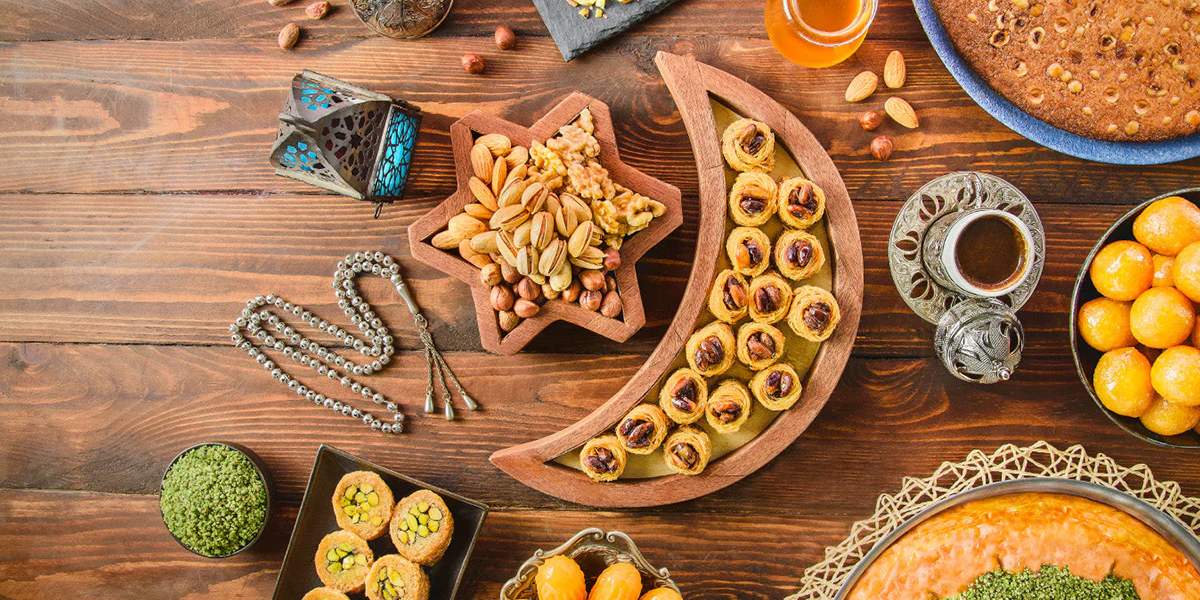


Eid al-Fitr brings joy, family visits, and beloved desserts such as maamoul, kahk, baklava, and butter cookies. The healthiest way to enjoy these treats is not to avoid them completely, but to eat them in moderation, keep portions small, and fit them into a balanced day. In practical terms, you can eat Eid sweets with fewer health risks by choosing one small serving, having it after a meal instead of on an empty stomach, drinking water instead of sugary beverages, and avoiding repeated snacking during visits. This simple strategy helps limit blood sugar spikes, excess calories, digestive discomfort, and the urge to keep eating.
Why Eid sweets can affect health
Traditional Eid desserts are often high in added sugar, refined flour, and saturated fat. That combination makes them energy-dense and easy to overeat. A few small pieces can deliver many calories without creating lasting fullness.
For many people, this leads to:
-
Rapid rises and drops in blood sugar
-
Increased cravings later in the day
-
Bloating, heaviness, or acid reflux
-
Extra calorie intake that may contribute to weight gain
The problem is usually not one dessert. It is grazing on sweets from morning to night, often with sweet drinks and little attention to portion size.
How to eat Eid sweets more safely
1. Start with a balanced meal
Do not begin the day with sweets. After a long fasting month, eating sugary foods on an empty stomach may increase hunger and make energy levels less stable. A better start is a meal that includes protein, fiber, and healthy fat, such as eggs, yogurt, cheese, oats, fruit, or whole grains. These foods slow down digestion and help you feel satisfied for longer.
2. Practice portion control
Portion control is one of the most effective ways to enjoy desserts without overdoing them. Instead of tasting everything, choose one favorite sweet and eat a small piece slowly.
Helpful strategies include:
-
Put one serving on a plate
-
Avoid eating from the box or tray
-
Share rich desserts when possible
-
Stop before feeling too full
This approach is more realistic than strict deprivation, which can increase the chance of overeating later.
3. Eat sweets after meals, not before
Having dessert after a balanced meal may reduce how quickly sugar enters the bloodstream. Protein, fat, and fiber slow stomach emptying and can soften the blood sugar response. This also reduces the temptation to eat several pieces quickly because you are already less hungry.
4. Watch sugary drinks
Many people underestimate the sugar in drinks served during Eid. Sweet tea, coffee drinks, juices, and soft drinks can easily double the sugar load of a visit. Water, sparkling water, unsweetened tea, or coffee with little sugar are better choices. Staying hydrated may also help control appetite.
Special advice for people with diabetes or weight concerns
People with diabetes, prediabetes, obesity, or high triglycerides need a more structured approach. That does not always mean complete avoidance, but it does mean planning ahead.
Reduce the total sugar load
If you plan to eat dessert, try to reduce other refined carbohydrates in the same meal, such as white bread, sweet drinks, or rice. The body responds to the total carbohydrate load, not just the dessert alone.
Move after eating
A short walk after a meal can help the muscles use glucose more efficiently. Even light movement for 10 to 20 minutes may support better digestion and post-meal blood sugar control.
Smart habits during Eid gatherings
Social occasions often lead to mindless eating. To stay in control without feeling deprived, use a simple routine:
-
Do not arrive very hungry
-
Look at all options before choosing
-
Pick one dessert you truly enjoy
-
Eat slowly and mindfully
-
Politely decline extra servings
Mindful eating matters because it gives your brain time to register satisfaction. When you eat quickly or while distracted, you are more likely to miss fullness signals and keep snacking.
FAQs
Can I eat Eid sweets every day?
Yes, but keep portions small and balance them with healthy meals.
What is the best time to eat Eid desserts?
After a balanced meal is usually better than eating them on an empty stomach.
Are homemade sweets healthier?
They can be, especially if they contain less sugar and smaller portions.
Should people with diabetes avoid Eid sweets completely?
Not always, but portion size, timing, and total carbohydrate intake should be managed carefully.