

Introduction
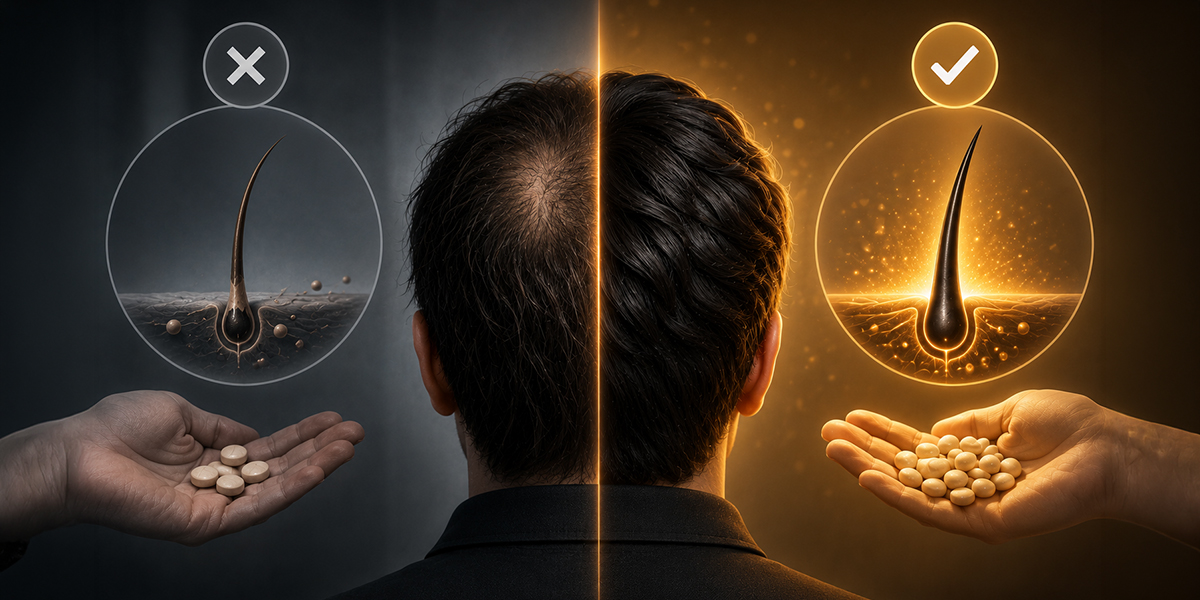
In recent years, high-dose biotin supplements ranging from 5000 to 10000 mcg have become widely popular, often marketed as solutions for thicker hair and reduced hair loss. While biotin is known to support hair and skin health, an important scientific question remains: do these high doses provide real benefits, or are they simply excessive without added effect?
Biotin is part of the vitamin family and plays a role in normal metabolism, but hair loss is often influenced by multiple factors, including minerals, protein intake, hormones, and overall health.
The Role of Biotin in Hair Health
Biotin plays a key role in the metabolism of fatty acids and amino acids, which are essential for producing keratin, the primary structural protein of hair.
In cases of true biotin deficiency, symptoms may include:
- Hair loss
- Brittle nails
- Dry skin
Correcting a real deficiency can lead to noticeable improvements in these symptoms. However, this does not mean that everyone with hair loss needs high-dose biotin.
Do High Doses Provide Additional Benefits?
For individuals who are not deficient in biotin, current evidence does not clearly show additional improvements in hair growth or thickness from taking very high doses such as 5000 to 10000 mcg.
The body only requires small amounts of biotin, and any excess:
- It is not directly used to produce more hair growth
- Is excreted through urine
This means that more biotin does not automatically equal better hair results, especially if the real cause of hair loss is unrelated to biotin levels.
When Might High Doses Be Justified?
Higher doses of biotin may be used temporarily in specific situations where there is a clear clinical reason.
Examples include:
- Laboratory-confirmed biotin deficiency
- Malabsorption conditions
- After bariatric or weight-loss surgery
- Severe brittle nails accompanied by hair loss
Even in these cases, high-dose biotin should not be used long-term without medical supervision.
Potential Risks of High Biotin Intake
Although biotin is generally considered safe, high doses may interfere with laboratory test results. This is one of the most important concerns with excessive intake.
High biotin intake may interfere with tests such as:
- Thyroid function tests
- Certain cardiac biomarkers
This interference can lead to misleading results, misdiagnosis, or delayed detection of serious conditions.
The Real Causes of Hair Loss
In most cases, biotin deficiency is not the primary cause of hair loss. More common causes may have a much greater impact.
Common causes include:
- Iron deficiency
- Zinc deficiency
- Vitamin D deficiency
- Thyroid disorders
- Low protein intake
- Stress and hormonal imbalances
This is why a proper evaluation is important before relying on high-dose biotin. In many cases, correcting deficiencies in minerals, vitamin D, or protein intake may be more relevant than simply increasing biotin.
FAQ
1. Does biotin really help hair growth?
Biotin may help if you have a true deficiency, but it may not improve hair growth in people with normal biotin levels.
2. Is 10000 mcg of biotin too much?
It is a high dose and is not necessary for most people. It should be used only when there is a clear need or professional recommendation.
3. Can high-dose biotin affect blood tests?
Yes. High doses can interfere with some lab tests, including thyroid and cardiac marker tests, so you should inform your healthcare provider before testing.
4. What should I check before taking biotin for hair loss?
It is better to check common causes such as iron, zinc, vitamin D, thyroid function, protein intake, stress, and hormonal factors.
Conclusion
High-dose biotin supplements, such as 5000 to 10000 mcg, are not necessarily beneficial for everyone. Their effectiveness is mainly limited to individuals with an actual deficiency or specific medical need.
Relying on high-dose biotin without proper evaluation may lead to overlooking the real causes of hair loss. A balanced diet, adequate protein, key vitamins, important minerals, and accurate diagnosis remain the foundation for long-term hair health.