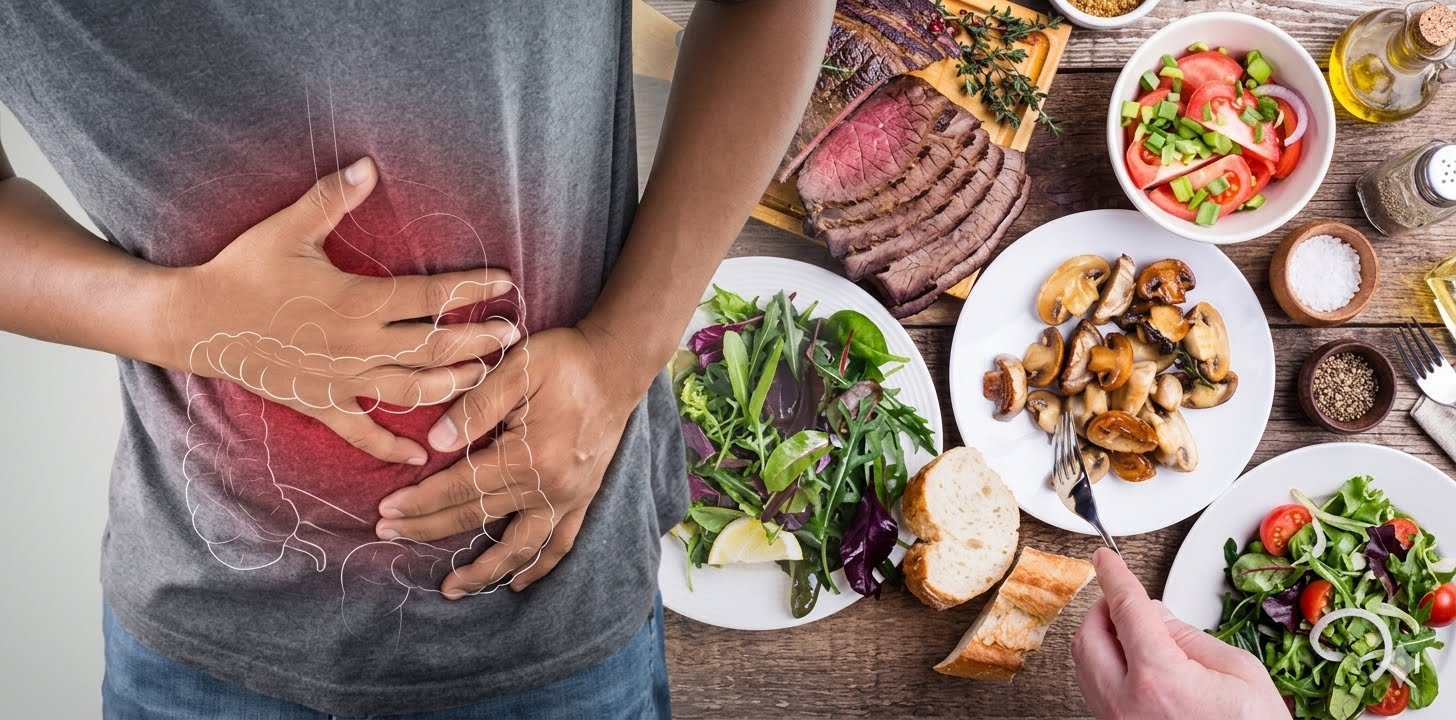


Bloating and gas after a large meal are among the most common digestive complaints experienced by adults worldwide. Whether it happens after a holiday feast, restaurant dinner, family gathering, or simply eating too quickly, the uncomfortable feeling of abdominal fullness, tightness, and excess gas can make an enjoyable meal feel unpleasant.
In many cases, occasional bloating is a normal response to eating a large volume of food. Heavy meals slow stomach emptying, increase pressure within the digestive tract, and provide more material for gut bacteria to ferment, leading to gas production. Certain foods—including fatty meals, carbonated beverages, beans, onions, and high-fiber foods—may further increase the likelihood of bloating in some individuals.
Fortunately, small lifestyle adjustments can make a significant difference. Simple habits such as eating more slowly, choosing balanced portions, staying hydrated, and taking a gentle walk after meals may help improve digestion and reduce discomfort. While occasional bloating is usually harmless, persistent or severe symptoms should always be evaluated by a healthcare professional to rule out underlying digestive conditions.
In this guide, you'll learn why heavy meals often cause bloating and discover five practical, evidence-based tips that may help reduce gas, improve digestion, and keep you feeling more comfortable after eating.
Table of Contents
Why Do Heavy Meals Cause Bloating and Gas?
Bloating develops when excess gas or food stretches the stomach and intestines. After a large meal, the digestive system works harder to break down food, which can temporarily slow digestion and create a feeling of fullness. Swallowing air while eating quickly, drinking carbonated beverages, or talking while eating may also increase the amount of gas trapped in the digestive tract.
Some foods naturally produce more gas during digestion because they contain fermentable carbohydrates that are broken down by beneficial gut bacteria. High-fat meals may also delay stomach emptying, allowing food to remain in the stomach longer and increasing feelings of heaviness and bloating. Although occasional bloating is common, frequent symptoms may sometimes be associated with food intolerances, irritable bowel syndrome (IBS), constipation, or other digestive disorders.
5 Tips to Reduce Bloating and Gas After Heavy Meals
1. Eat Slowly and Chew Your Food Thoroughly
One of the simplest ways to reduce bloating is to slow down while eating. Eating too quickly increases the amount of air swallowed, which can contribute to gas buildup and abdominal discomfort. Thorough chewing also breaks food into smaller particles, making it easier for digestive enzymes to process your meal efficiently.
Benefits may include:
- Reduces swallowed air.
- Supports more efficient digestion.
- May decrease post-meal bloating.
- Promotes better portion awareness.
Best tip: Take small bites, chew each mouthful well, and avoid rushing through meals.
2. Take a Gentle Walk After Eating
Light physical activity after a meal can help stimulate normal digestion. A gentle walk encourages movement of food and gas through the digestive tract, which may reduce feelings of fullness and abdominal pressure. Even a short walk can make a noticeable difference after a large meal.
Benefits may include:
- Supports healthy digestion.
- Helps move trapped gas through the intestines.
- May reduce stomach discomfort.
- Promotes overall digestive motility.
Best tip: Walk for 10–20 minutes after eating instead of lying down immediately.
3. Stay Hydrated Throughout the Day
Drinking enough water supports healthy digestion and normal bowel function. Proper hydration helps food move smoothly through the digestive tract and may reduce bloating related to constipation. While drinking excessive amounts during a meal is unnecessary, maintaining good hydration throughout the day supports overall digestive health.
Benefits may include:
- Supports normal digestion.
- Helps prevent constipation-related bloating.
- Promotes healthy bowel function.
- Supports overall hydration.
Best tip: Drink water regularly throughout the day and choose water instead of sugary or carbonated beverages with meals.
4. Limit Carbonated Drinks and Eating Too Quickly
Carbonated beverages introduce extra gas into the digestive system, while eating rapidly increases the amount of air swallowed. Together, these habits can worsen bloating after large meals.
Benefits of avoiding these habits include:
- Reduces excess gas buildup.
- May decrease abdominal pressure.
- Supports greater digestive comfort.
- Helps minimize post-meal bloating.
Best tip: Choose still water or herbal tea with meals and eat at a relaxed pace.
5. Watch Your Portion Sizes
Large meals place greater demands on the digestive system. Eating moderate portions allows the stomach to empty more comfortably and may reduce the likelihood of bloating and gas. If you tend to overeat at one sitting, consider eating smaller, balanced meals throughout the day instead.
Benefits may include:
- Reduces digestive overload.
- Supports more comfortable digestion.
- May decrease bloating after meals.
- Helps maintain steady energy levels.
Best tip: Eat until comfortably satisfied rather than overly full, especially during large celebrations or restaurant meals.
Foods That May Help Reduce Bloating
While no single food can eliminate bloating completely, certain foods and beverages may support healthy digestion and help reduce occasional gas after meals. Their benefits often come from providing hydration, fiber, digestive enzymes, or naturally soothing compounds that support normal gastrointestinal function.
Foods that may help include:
- Ginger: Traditionally used to support digestion and help reduce feelings of fullness.
- Peppermint: May help relax the digestive tract and ease occasional abdominal discomfort.
- Yogurt with live cultures: Provides probiotics that may help maintain a healthy gut microbiome.
- Kiwi: Contains fiber and natural enzymes that support regular digestion.
- Bananas: Rich in potassium, which helps maintain normal fluid balance.
- Water: Supports healthy digestion and helps reduce constipation-related bloating.
Including these foods as part of a balanced diet may help improve digestive comfort over time, particularly when combined with healthy eating habits.
Foods and Habits That Can Make Bloating Worse
Certain foods and everyday habits can increase gas production or slow digestion, making bloating more noticeable after heavy meals. Identifying your personal triggers may help reduce recurring digestive discomfort.
Common contributors include:
- Eating very large portions.
- Fatty or fried foods.
- Carbonated beverages.
- Eating too quickly or swallowing excess air.
- Chewing gum frequently.
- Large amounts of beans, onions, cabbage, broccoli, or other gas-producing vegetables if you're sensitive to them.
- Excess sugar alcohols found in some sugar-free products.
Keeping a simple food diary may help identify foods that consistently trigger bloating so you can make informed dietary adjustments without unnecessarily restricting your diet.
When Should You See a Doctor?
Occasional bloating after a large meal is usually normal. However, frequent or severe bloating may indicate an underlying digestive condition that requires medical evaluation.
Seek medical advice if bloating is accompanied by:
- Persistent or worsening abdominal pain.
- Unexplained weight loss.
- Blood in the stool.
- Persistent constipation or diarrhea.
- Difficulty swallowing.
- Repeated vomiting.
- Bloating that occurs almost every day despite lifestyle changes.
Your healthcare provider may recommend further evaluation to identify possible causes such as food intolerances, irritable bowel syndrome (IBS), celiac disease, inflammatory bowel disease (IBD), constipation, or other digestive disorders.
FAQ
1. Why do I feel bloated after every heavy meal?
Large meals take longer to digest and may increase gas production or slow stomach emptying. Eating too quickly, consuming fatty foods, or drinking carbonated beverages can also contribute to post-meal bloating.
2. What is the fastest way to reduce bloating after eating?
A gentle walk, staying hydrated, avoiding lying down immediately after eating, and allowing time for digestion may help relieve mild bloating. Eating slowly during future meals can also reduce symptoms.
3. Which foods commonly cause gas and bloating?
Foods such as beans, onions, broccoli, cabbage, carbonated drinks, fatty meals, and some sugar-free products containing sugar alcohols may increase gas in sensitive individuals.
4. Can probiotics help reduce bloating?
Some studies suggest that certain probiotic strains may support a healthy gut microbiome and help reduce occasional bloating. The effects vary depending on the individual and the specific probiotic strain.
5. When should I be concerned about bloating?
You should consult a healthcare professional if bloating is persistent, severe, associated with unexplained weight loss, blood in the stool, persistent vomiting, severe abdominal pain, or significant changes in bowel habits.
Conclusion
Occasional bloating and gas after heavy meals are common and are often related to eating habits, meal size, and food choices. Fortunately, simple lifestyle changes—such as eating more slowly, choosing moderate portions, staying hydrated, taking a short walk after meals, and identifying personal food triggers—can significantly improve digestive comfort for many people.
While these strategies can help manage occasional symptoms, persistent or severe bloating should not be ignored. If digestive discomfort becomes frequent or is accompanied by other concerning symptoms, seeking medical evaluation can help identify any underlying digestive conditions and ensure appropriate treatment. Combining mindful eating habits with a balanced diet and regular physical activity remains one of the most effective approaches for supporting long-term digestive health.